Dear Younger Me

In the last blog, I mentioned in passing my ongoing education in spiritual music. Although it was certainly a revelation to be told last weekend that there is no scriptural reason why I might not precent in church, there remain several very good musical (and, indeed, social) reasons why this would not work. I am in this, as in everything else, a follower and not a leader.

Of course, I was brought up in a tradition of singing Psalms. I love them for their sustaining wisdom, for their ability to speak to me in all circumstances. They have the power to heal and, just sometimes, the power to wound. If I am feeling vulnerable, Psalm 100 can tip me over into lip-trembling wobbliness, simply because it was sung at our wedding and . . . well, I’m only human.

There is, however, more to spiritual music than psalms. I have, by virtue of living in the world and having a mother who grew up in the Church of Scotland, some idea of popular hymns. Once, as a child, I surprised my mother by quoting ‘Blessed Assurance’, probably to help me win an argument.

A couple of years ago, I went to a women’s conference where, on the programme, the – to me – mysterious word ‘praise’ was printed at various intervals. I glanced about me, mildly nonplussed as to who would precent in a room full of dames.

Imagine, then, my surprise at what ensued. Musical accompaniment, and something calling itself ’10, 000 Reasons’. Not a clue. I scanned the song selection. Nope, nothing familiar here. A Christian gathering consisting only of women and no psalms, with added music.  To say that I had been catapulted out of my comfort zone would not be an exaggeration.

The women thing, I realised, was just a blip. Once the Session got to hear about it, I was certain that those responsible would be punished and normal services would resume. But, my eyes – and ears – were opened to the possibility that there was another kind of music out there; that there were ways of singing your faith that didn’t have to be metrical.

My exploration of the possibilities turned up a few singers that I could get along with. There is, after all, absolutely no excuse for bad Christian music. Who has got more reason to sing than us? Like the hymn says, ‘I sing because I’m happy, I sing because I’m free’.

Yes, I’m still quoting hymns. Old habits die hard. But I am also having my musical horizons broadened.

A friend supplies me with seemingly random links to songs he likes, sometimes when I least expect. During a recent public trial by secularist hate mob, he sent Matthew West’s ‘Grace Wins’ – ‘Take a breath smile and say: Right here right now I’m ok because the cross was enough’.

The best songs will do that, just like the word in season, the shared reading: God speaks through it, reminding you who He is and that nothing will overwhelm the person who puts their whole life in His hands.

But then there was the intriguingly-titled, ‘Dear Younger Me’. This is something different because it explores what we might say if we could go back and speak to a younger version of ourselves. The dilemma, of course, is whether you would warn the young you about the pitfalls that lie ahead; whether you would try to head yourself away from dangers and bad experiences. Would you not try to spare yourself pain?

Perhaps there was a time when I would have answered that question very quickly in the affirmative. Why would you not want to spare yourself suffering? It is, after all, how we are expected to behave towards others; why would we not want to do ourselves the same kindness?

Is it a kindness, though? Yes, if you look on that span of life between cradle and grave as what concerns us most. But for the Christian, that can never be the case. The journey we are on here is towards a destination in heaven, yet we are not simply plodding, there, head down; we are being equipped for it as we go.

Not a day passes without me thinking of my late husband, and missing him in countless ways. This time of year, though, I think of how hard it was to fear losing him, to be told I would lose him, and to watch him die. And how much easier it was to know he had gone, and to Whom he had gone.

That is the difference, I think, between wanting to spare yourself burdens, and knowing what pain and loss and thoroughly unwanted providence can do for you in the longer-run.

The song says, ‘every moment brings you closer to who you were meant to be’. I know that if I could go back to Christmas 2000, to that person I used to be, I would not say, ‘See the man you met the other night, maybe don’t meet him for that drink. It doesn’t end well’.

In fact, if I was forced to meet her, 25 year-old Catriona, I would tell her two things you will also find in the song. First, I would tell her that life will bring sadness and joy, but that the deeper peace in her soul has nothing to do with either of those; and then I would tell her that whatever challenges come, she was never meant to carry them beyond the cross.

And if she asked me about the man she had just met. I would smile, and nod, and she would do it all exactly like I already have.

Other Christians I know, too, are a bit battle-scarred, and wondering the same sort of thing – trying to make sense of what they have gone through. If I had the courage, I would tell them the precious truth I have learned:

The roadmap may be hidden from my sight, but it’s hidden in God’s hand. He’s got this, dear younger me. And I would not have Him change a thing.


A Servant is for Life, Not Just Sundays

Last Sunday I was arrested in church. Before you imagine a group of burly policemen pushing past the elders – who would undoubtedly have tried to stop them – in order to cart me off, I didn’t mean it like that. In fact, I mean I heard something which struck me in its beauty and truth; something, believe it or not, about the deacons. Or, more specifically, about the duty of deacons.

It was this: deacons bring the love of Christ to the church in a practical way.

Yes, deacons – those guys who, in our tradition anyway, are seen as the money men, the fellows who hold the purse-strings and authorise paint jobs for the church vestibule. They are the ones who ‘do’. And their office is all too easily dismissed as being a bit, well, mundane.

Put it this way, if you were writing a novel about the Free Church (and, believe me, I’ve considered it), your hero probably wouldn’t be a deacon. They’d be there alright, but only in a supporting role.

Well, I say ‘only’ but, in Christian terms, a supporting role is the best kind. The main part has already been fulfilled.

There’s a song I love, (introduced to me by someone who has somehow ended up being responsible for my spiritual music education) in which Jesus is resembled to a hero who takes the stage when everything looks hopeless. Which, when you think about it, is exactly what He did.

Historically, He did. Spiritually, He does.

Almost three years ago, I thought my life was over. The person on whom I thought my world depended died. He left our home for what we thought might be an overnight in hospital; a week later I returned there, a widow at the age of thirty-nine, and wondering how many years I might have to get through alone.

The answer? None.

I was not alone, because Christ was there, waiting for me to notice Him. Christ had been there a long time. Maybe even since, as a child of nine, I asked Him into my heart simply because I couldn’t bear to think of Him knocking and not being heard.

He is the main event, the all in all, the ultimate star billing. Yet, He waits in the wings like a supporting actor, and appears to take His cues from us. Only when I turned my grieving heart towards His did I even know He was there.

That was when He took centre stage in my life. Just when I thought everything was finished, He walked on.

So, the bit-parts are for the rest of us. He is the hero; we are the supporting cast, as Christians. Deacons bring His love to the church in a practical way . . . but what are deacons? Yes, I know I said they’re the money men, the guys with the chequebook. But, in a wider sense, what?

Well, ‘deacon’ comes from the Greek, ‘diakonos’, meaning ‘servant’. And all Christians are called upon to have a spirit of service. That is why, in the best sense, we are, all of us, deacons. Yes, even the women. It isn’t about status, or titles – service never is – but about the satisfaction of serving a worthy Master.

This is an unusual Master, though. He is the starring role content to wait for a cue from the support act; and He is the Master who willingly became a servant. It is from Him we learn how to be the walk-on actors in our own lives, and the servants to the King.

Rendering service to Christ is not going to win you any of this world’s accolades. Even in the church, you may feel that the hours you put in, and the time that you give go unnoticed. And perhaps they do – by people. But you’re not working for people, are you? One lady I know who works hardest for Christ’s church has the truest servant heart, and never complains, or expects for herself.

Servants are often overlooked, or even despised. They may have their good name besmirched, their reputation degraded, and their heart bruised and beaten. But never, ever by Him.

He knows, you see, what it is to be a servant. We can only try at all because He first showed us how:

He will not shout or cry out,
or raise his voice in the streets.
A bruised reed he will not break,
and a smouldering wick he will not snuff out.

This is the humble servant upon whom we are to pattern our behaviour. Our men who are deacons should follow Him in showing His love to the church in practical ways. Love is practical, after all: it changes lives.

But beyond the official designation of ‘deacon’, there is a whole church which ought to be showing Christ’s love to the world. Just as the deacons distribute the wealth of the church in the service of the Lord, we ought to follow their example in following His.

I can’t help reflect upon our own mission-field locally, and all the strife there has been recently between secularism and Christianity. The unbelievers, in their ignorance, think it’s all about Sundays. It troubles me that some Christians seem to think so too.

Our starting point with the world cannot be this. A servant does not seek to impose his own will, but, rather, to do his master’s. We will win no hearts for Christ by telling people what they must do and must not. No one will ever desire God’s law without first knowing His love.

And, if this community does not know His love, have I failed in my servant’s duty, to show what it is? Have I said too many words, and not demonstrated enough humility? Did I forget, somewhere along the line, to withdraw and let the spotlight fall on Him?


The Real Lewis & Harris

The minister crept up behind me and took the bottle out of my hand. ‘You’re going to need water in this’, he lectured, ‘or this stuff will burn right through’.  I was caught off guard.

It’s not that my fondness for the Laphroaig has got the better of me, in case you’re wondering. No, it was screen wash. And before you think, ‘mo chreach, how far she’s fallen’, it actually was intended for the reservoir under my car bonnet. Not to be trusted with such a masculine endeavour, though, I was rapidly surrounded by a quorum of the Session, and the task taken out of my daft wee hands. They probably thought I wouldn’t manage the child-proof lid.

Sometimes, though, I have to admit that it’s nice when someone comes along and says, ‘shift, you handless clown, I’ll do it’. Not that I’m suggesting for one minute that those were the minister’s words. (Actually, I believe his exact opener was – in Gaelic – ‘what are you up to now?’). That other kind of impatient takeover was more the style adopted by my brother two weeks before when, on communion Sunday, heading to church, my tyre blew out.

It was good to have someone capable – though crabbit- to sort it out, to hand me the keys of his car and to save the day. And it was good to see the minister pour an entire bottle of concentrated screenwash into the windscreen washers because if, as he suggested, it destroys the rubber on my wiper blades, I can blame him. Sort of.

But then there are those things which we have to do ourselves, which no one else can do for us.

I have been to many wakes and funerals simply because, although no one would have missed me if I hadn’t been there, I needed to do it for someone else’s sake. Friends, colleagues, neighbours who have all done as much for me too. Life teems with obligations that we don’t want to fulfil, but are constrained to. We do these things because they are the right things to do, because they are part of life in a community like ours.

A community like ours. Lately, I have been wondering what that is. If you are to believe half of what you read about it in the press, it’s the kind of place where ministers creeping up behind you are most likely planning to influence your vote. Or intimidate you into standing for council.

I have been speaking to a growing number of people who feel that something very precious to them has been trampled underfoot by a vocal minority making this kind of claim. There are, I appreciate, those living in Lewis who do not necessarily share my love for the culture, nor indeed my positive experiences of being an islander where, every six days, the pace is dialled right back.

This, it has been widely suggested, is old-fashioned, embarrassing, anachronistic, a disgrace, and an all-round poor show. Those of us who value all aspects of our heritage have been mocked or lambasted by turns and  told repeatedly that there is nothing so very unique about this island.

Oh, but yes, there is.

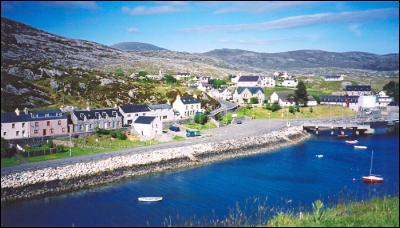
tarbert-2001

This island – the Long Island of Lewis and Harris, that is – when the chips are down, will never cease to amaze. It is a community with a mind of its own and a fierce pride in its identity. Don’t ever try to second-guess what we islanders will do because we sometimes don’t know ourselves until we’ve done it.

I did not know what the reaction would be to the creation of a pro-Sunday group on social media. Three of us had spoken about it before, but during my lunch-break on Wednesday, I had one of those dangerous, ‘what the heck are we waiting for?’ moments.

I had just re-read a ludicrous interview in a national newspaper in which one resident compares life in the islands to the experience of those under Sharia Law in Saudi Arabia.

Perhaps it was an off-the-cuff comment, exaggerated by a canny journalist; I don’t know. But, if people are going to persist in the fiction that says this island is under an oppressive regime run by men in black suits who rig elections, but are still not too big on it to notice whether you’ve left a blouse on the line on Sundays, well, there has to be a counter-narrative.

It hardly needs saying that there is a world of difference between an existence under the Sharia regime and the maintenance of a much-loved traditional way of life, which contributes greatly to the winsome character of Lewis and Harris.

But ‘hardly needs saying’ can no longer equate to us remaining quiet. If we value it, if we want to keep it, we have to be prepared to say so.

Our group has started off well and, within 48 hours, had a membership of 1700 and rising. People are sharing reminiscences, photographs, gentle jibes; the group has Christians and those who are not; there are island-dwellers, island-lovers, and emigrants; there are born and breds and here by choices. It is, in short, a microcosm of the Lewis and Harris we recognise and love.

And it has done something that we have not been able to say in a long while – it has united this community behind a common purpose.

That common purpose is, itself, unity.

Standing up for what we believe, and for what we hold in high regard, is a duty that no one else can fulfil on our behalf. But, as I always knew they would, the islanders have risen to their obligation admirably.

This, I can say with some confidence, is the Lewis and Harris we want the world to see.

Men in Black and Other Legends

There was a loch in the moor near where I grew up, and it held a strange fascination for us.  Quiet Sunday walks with my siblings often drew us in that direction. But we always went with warnings from our parents ringing in our ears, regarding mysterious lights and a certain eeriness about the place. My grandfather had warned my mother of its uncanny nature, and she, in turn, was warning us of the same.

Stories abounded throughout the islands, of the each-uisge, the water horse. This mythical creature could assume the form of a handsome man, to entice an unwary maiden, and once she was totally taken in by this charming stranger, he would assume the form of a horse and carry her back into the depths of his watery home.

It is not difficult to understand what the true social function of the each-uisge story was – it performed the dual role of warning children against lurking strangers, and of hanging about near water.

The each-uisge belongs to a world of Gaelic folklore which has largely been consigned to books and the archives of local historical societies. It is part of that great corpus of ‘dualchas’ which the Calvinists destroyed in a rush of evangelistic fervour. St Patrick may have banished the snakes from Ireland, but John Knox went one better and drove the eich-uisge out of the Highlands.

All my life I have been hearing that the Free Church did away with our colourful traditions – our ghosts, and our fairies, our witches, our evil eye and our eich-uisge.  Then again, I have also been hearing how it oppresses women and no one has put a gag on me . . . yet.

It amuses me to think that, if it were not for the Disruption of 1843, and all the hard-line fellows in black hats and collars, we would all still be putting out a dish of milk for the fairies before going to bed. Perhaps the local secularists would be mocking us for pouring our beer into the Minch to appease the sea-god, Seonaidh, instead of deriding us for our Christian beliefs. They might even be calling for the closure of pubs on Sundays to prevent us from indulging the superstition.

In the middle of the nineteenth century, the Free Church was born out of a great act of faith. Ministers and congregations turned their backs on the security of manses and stipends for the uncertainty of a new denomination, loosed from the bonds of patronage which had so stifled their spiritual freedom.

Of course, it was not uncertainty as the world knows uncertainty: they had put their trust in God and knew that He would prosper their endeavours for the furtherance of His kingdom.

This church taught a people hungry for the good news of the Gospel how they might be set at liberty. In the context of forced eviction, of emigration, of famine, of grinding poverty and of disease, the Gaels were hearing something that really does change lives. It was this: none of those things, no earthly suffering, can actually steal the peace from your soul that comes from placing your faith in the risen Christ.

And sometimes, I think we see Him most clearly against a backdrop of fire and pain.

Fire and pain, of course, are not things we desire for ourselves or our loved ones. And atheists will tell you that the idea of suffering outside of Christ is just a story invented by theologians to keep us all under control.

Hell is the Calvinist each-uisge, a story told by ministers so that they can keep the population subdued.

To what end, though? Ministers trudge up the pulpit steps in order to rain down fire and brimstone on the heads of their congregations, threatening them with hell and damnation so that . . . what? So that they can keep their unearned reputations as control-freaks? So that they can be caricatured and vilified by turns? Or, is it really as the more hysterical elements in our midst suggest, all about the fact that they are in a secret pact with the Comhairle to ensure that no one enjoys themselves more than is strictly necessary?

Of course, it isn’t any of those things, as even the people saying them surely know deep down.

The Gaelic folktales warned of theft by the fairies, or drowning by water-horses because people could not see past the threat of sudden death. This is why Christianity displaced superstition, because once people had their eyes lifted to the true horizon, they would never again be in thrall to a fable.

And the only fable we have left is the one which tells people that the Wee Frees are angry and narrow-minded men in black, oppressing the daft women who follow along in their wake.

Saying it over and over does not make it true; telling it to the gawping national media does not make it true. Unlike the traditional tales, this one loses something with every retelling.

Meanwhile, those who think themselves simultaneously wiser than, as well as put-upon by, the power-hungry Calvinists, are at risk of being borne away by a legend of their own making.


Not to be Read by Unbelievers

We were all gathered together in the church hall, when the minister picked up the microphone, fixed us with his most intimidating gaze, and asked, ‘who reads the Bible on an electronic device?’

There was an awkward silence. People tried to avoid his eye. I sat, rooted to the spot in terror, thinking, ‘so this is how it ends’. In my paranoia, I even wondered whether he would be able to tell me for a Kindle-user, just by looking. ‘Put up your hands if you have the Bible on an electronic device’, he ordered in his most threateningly reasonable tone. Still, no one moved. None dared.

And then it happened. A miracle. In the finest ever ‘I’m Spartacus’ move, his wife raised her hand. The whole atmosphere changed in an instant, and suddenly hands were in the air all over the room.

I held my breath. What would happen? Surely this show of defiance could not go unpunished. Yet, what could he do when his own wife had openly admitted to using modern technology herself?

Finally, he spoke.

‘I see’, was all he said.

And then I also saw. Sitting there, with a wireless microphone in his hand, he could hardly castigate his congregation for indulging in the odd Bible app. Especially when his own household was patently guilty of making forays into the modern age.

I wondered whether this was history in the making, a momentous event that would be recorded forever as the night the Wee Frees in Stornoway were finally forced into the 21st century.

But then I remembered – no, of course, that could not be. It had already happened . . . sometime around the end of 1999, I think.

However, it is important to be fair. People cannot help conceiving ill-informed ideas about an organisation that is secretive, and a closed shop. Besides, if it seeks to exercise power and control over an entire community, surely its leadership could be more transparent, less misogynistic,kinder, less controlling . . .

That same day, the membership had been told not to read anything written by me, and not to show anything written by me to others. The decree was issued online with no right of reply, and with an Orwelllian postscript that it would be removed from view in due course.

Who did this, you ask – the Moderator, surely would be the only one with that level of power. Or maybe the Presbytery – was it them? Surely no individual minister would be so egomaniacal as to exert his authority in this way . . .

Oh, you mistake me; I’m not talking about the Free Church. My local elder used to visit the house once a month to check the contents of my bookcase, right enough, but they’ve reduced the visits now to three-monthly. I cunningly hid all my offensively heretical books behind the Diary of Kenneth MacRae and Leabhar Aithghearr nan Ceist, which seemed to satisfy him.

No, it isn’t the Free Church telling its members what to read and what not to read. The organisation which seeks to ban certain writers, and to control what its membership looks at online is not the repressive Wee Frees; it’s the tolerant, welcoming people ‘of all faiths and none’ Western Isles Secular Society.

Yes, like a tinpot dictator, one of their administrators has prohibited my blog from being read by WISS members, or shared to the group.

The reason, of course, is that the last time it was dragged back there, the unruly hordes picked over it and in a frenzy of hatred, unwittingly revealed their true colours.

I was variously described as ‘disgusting’, ‘rude’, ‘racist’, ‘spiritually immature’, a ‘zealot’, ‘an embarrassment to the fellowship of the church’, and an egomaniac in pursuit of martyrdom.

Officially, they must not read it, speak about it or do so much as coimhead an taobh a tha mi because I am an intransigent troll.

But, in reality, they must not read it because there’s a danger in being exposed to the truth. Some things are only recognised as broken when they are held up against the light.So, it is safer to preserve them in darkness.

The secularist response to that blog has made me pity them more than ever. Though they hissed and spat, and even tried to use Scripture against me, it isn’t me they fear at all; it’s Christ.

He is so inconvenient, shaking the foundations of their fictional world. And because they don’t want Him, they attack any who try to speak about who He is and what He’s done. They won’t silence Him, though. If Christ intends that any or all of that Society should hear Him and bend the knee, then hear Him and bend the knee they shall.

It shouldn’t surprise me that the Western Isles secularists have obeyed this edict not to read my work; these are the same people who want their own children ‘protected’ from the Bible because it doesn’t tally with their world view. If they are prepared to attempt silencing the voice of God, I can hardly expect special treatment.

Let me not, though, hear any further suggestions that they are the voice of reason and tolerance, over against the oppression and control of the Free Church.

One has afforded me a voice; one has silenced me. The leaders of one have encouraged me to think for myself; the leaders of the other have suggested that I am incapable of such a thing.

They don’t want Truth. Pilate asked what it was, even as it stood before Him; they are not prepared to risk Christ getting that close.

One day, I hope they’ll be grateful that it was never up to them.


Immovable Object, Irresistible Force?

In his excellent, ‘Lewis: A History of the Island’, the late Donald MacDonald makes the following comment about the churchgoing people of his native land:

‘The religious communities in Lewis are extremely devout. In addition to the two two-hour services held on Sundays, there are midweek prayer meetings. There are also special meetings for communicants and, every year, two communion services are held by each congregation, one in the Spring, and one in the Autumn’.

I would question whether spending six or so hours per week in public worship is any great sign of devotion. It is, rather, indicative of the extent to which other things fill our time – work and family life being the principal distractions when the above was written.

And yet, my own description of church life would be little different today. In a typical week, I attend church twice on Sundays, each service going no more than ten or fifteen minutes over the hour. Mid-week, the prayer meeting lasts for about the same length of time. Our congregation marks the sacrament of communion four times a year, with special preparatory services each time.

We are, as a churchgoing people, more like the world than we used to be, in that we spend less time in community with one another than in years gone by. The spontaneous house gatherings have all but gone, just as the unannounced visitor who would enter your home without knocking is also a thing of the past. In both the Christian community, and the secular world of Lewis, opportunities for the young (in experience, perhaps, as well as years) to learn from their elders have diminished. They come together in neither the taigh-cèilidh nor the taigh-adhraidh.

Our young people are no longer growing up in a secure environment, where God is the acknowledged Creator of all things, in whose hand we rest. They are increasingly encouraged to figure things out for themselves, to look to science – in all things, essentially, to rest on their own wisdom, or the untested wisdom of self-declared wise men.

I am always suspicious of people who admit to there being no higher authority than their own, anyway. Frankly, I don’t know how they can suggest such a thing with a straight face.

But the lack of understanding cuts both ways. I don’t get where they are coming from and they, as is becoming all too apparent, really do not know what Christianity is either.

I don’t want to get into another controversy here. Recent experience has taught me that there is not a lot of secular tolerance of my Christian standpoint; reading and reflection has taught me that this is because the greatest opponents of my faith are people who think they understand it, but don’t.

So, I thought that I would try to lay out, as graciously as may be, what it is I believe, and why.

If there are still any secularists reading my blog after I so offended (and, apparently ‘intimidated’) them with my thoughts on the emptiness of their creed, I would like them to make a bit more effort to understand that my refusal to compromise is not personal; I am not saying, ‘I refuse’, I am saying ‘I cannot’.

A Christian is someone who is persuaded that Christ willingly died for them, and in being resurrected that He defeated death so that it could no longer claim any hold over His followers. The eternal life to which a believer is reborn is spiritual, and it begins the moment they accept Christ as their Saviour. Professing faith – in Lewis, usually ‘going forward’ or becoming a church member – simply means that you are outwardly declaring your oneness with Christ. Inwardly, the believer experiences a deepening spiritual relationship with God through Christ. The more you know Him, the more you want to know Him.

As a Christian, I am aware of God acting in my life – of His interventions on my behalf, of His protection, and of His rebuke. I communicate with Him through prayer; He communicates with me through the Bible and through His providence and, indeed, His people.

Without Christ’s willingness to be the sacrifice for my sin, I would be leading a bleak life in a world without hope. If I had not accepted that same Christ as my Saviour, I would be leading an ultimately meaningless existence with an end destination whose name is desperately unfashionable, but whose reality is undiminished: Hell. Because, despite my inherent unworthiness, He has redeemed me from that eventuality, and because of His gracious dealings with me more generally, I feel immense love towards Him.

I am fully aware that this sounds hilarious to the unbeliever; I was once pretty nonplussed by it all myself.

So, I maintain a position of obedience to Christ, not because I think myself perfect, but because I know that I am not, and never could be. I am obedient to Him because I love Him, and want to please Him. In that light, Sunday is a special day for me because, untramelled by working day cares, I can focus on that relationship with Him, and fellowship with His people. It is God’s gift to us – not a burden to be borne, but a privilege to be enjoyed in the fulfilment of our destiny as people.

That destiny is that we should glorify God and enjoy Him forever. Whether we accept this or not, it is fact. And it is such a relief when we finally accept it, giving up our pointless rebellion that leads nowhere good.

I don’t write what I write, ministers don’t preach what they preach, in order to upset anyone. It really isn’t about power, or control: it’s about love. We have something so wonderful that we want everyone else to share it too.

Not because we’re nice, or good but because He has shown us how to love others, simply by loving us first.

Coming Out of the Wilderness

Among the many things we don’t do in the Free Church – joy, love, peace, freedom, feminism – apparently we are not much into marking Easter either. So I’m told.

We don’t festoon the church with fluffy chicks, or put bunny ears on the elders; and we don’t exit the church en masse to roll eggs down the staran after the Easter Sunday service. The Wee Frees, you would think, are the ideal denomination for an Easter bonnet competition but, well, they’d all look sort of the same, wouldn’t they – black and devoid of fol-de-rols?

Of course, we do mark Easter, in the sense that we have hung onto the heart of it. Next weekend, in Stornoway, we will celebrate the Lord’s Supper – it is a sacrament, dispensed for remembrance of His death, and so that those who believe in Him will meditate upon the benefits they have derived from His sacrifice and, based on that, reaffirm their commitment to Him and the debt they owe.

When, at the beginning of the Supper, the presiding minister utters the words, ‘On the night that He was betrayed . . .’ I shiver. Nowhere else, in no other context could these words be both an accusation of guilt and a proclamation of freedom to the same person. But because Christ died and rose again for us, for the unworthy, we feel both the guilt of His crucifixion, and the freedom in His resurrection.

In other faith traditions, the period of Lent – beginning on February 14th this year, and ending on March 29th – will be observed. My first encounter with it was in school when a classmate from Barra was eating blocks of jelly during our morning interval. I asked her why and she told me that she had given up sweets for Lent. Being teenagers, none of us had much idea of what self-sacrifice was, and the jelly was a good substitute for her, while she technically kept her Lenten vow.

But I’m more than twenty years older now and I still have the same problem with dying to self that my jelly-eating school friend did. As a Christian, I should be working harder to subdue the inner voice that shouts, ‘what about me?’

Recently, I have been subject to some criticism for my beliefs. My last blog touched something of a nerve and the unbelieving community in Lewis, alongside a few professing adherents, were outraged by what I said. Well, no, sorry, let me rephrase that. They were outraged by what I am; no one actually critiqued the writing, unless you consider words like ‘disgusting’ and ‘rude’ a critique (I don’t).

The slurs are mainly inaccurate, but I am not going to bore you with that here. One very kind Christian lady whom I have not yet met, messaged me to point out that people who resort to personal attack when they have never met you, are merely highlighting the fact that they are spiritually bereft. Comments on my personality, lack of Christlikeness (how true), lack of manners . . . well, they are meaningless when they come from strangers.

Some of the arrows hit home, however, as they will do. This is a vulnerable time of year for me. I don’t say that to garner sympathy, nor to claim that I am a victim – I am not and never have been that. But I do make myself suffer. For a little while, I dwelt on the fact that there was no Donnie to make it better; I wallowed in self-pity and the memories of three years ago, when our time was running out. When the going gets tough, I often retreat into that kind of self-harm, picking at the wound, and making everything seem much blacker.

This is Lent. And Donnie’s last weeks were Lent. It is representative of forty days spent by Christ in the wilderness, preparing for ministry and resisting the Devil.

I decided last Saturday that I was going to stop blogging. Or, at least, that I was going to stop commenting on the activities of unbelievers in my own immediate vicinity. When you are alone, and feeling sorry for yourself, you can easily believe the liars. They themselves are speaking, of course, for the great liar. He seems to be fond of hanging about the wilderness.

But I don’t choose to linger there with him; and I am not alone. If the Lord doesn’t come Himself, He sends His people with encouragement and prayer. And His own Word, so full of peace and strengthening – Psalm 31, Isaiah 43 . . . and my own mantra, if a Wee Free can be allowed such a thing: ‘The Lord is my light and my salvation; whom shall I fear? The Lord is the stronghold of my life, of whom shall I be afraid’?

Lent for many who observe it is a pilgrimage. It should bring us, finally, to the very foot of the cross. My journey, three years ago, brought me to rest there, in Him.

On Sunday night, I was powerfully reminded of that once more. Tempted though I had been to find a solution in myself to this latest problem, the preaching reminded me that challenging situations should not be met by doing, but by being.

Your identity, once found in Christ, remains there. He keeps you safe in His hand. Gradually, He takes you, leaning upon Himself, up out of the wilderness. If I am tempted again by the Devil to take refuge in the past, to dwell on my loss and my human frailty; or if I am slandered and inclined to be affronted, I should remember what follows Lent.

At the foot of the cross, and again at the empty tomb, we remember who He is, and who He has made us. No person, no words, no circumstance can ever undo the finished work of Christ.


Wee Free Frankenstein

This time last year, I was a sinner saved by grace, marvelling at the year of blessings I’d enjoyed since coming out for Christ. Today, I am writing my one hundredth blog, almost a year on from where it all began – aptly enough, at the Stornoway communion.

When I met the man who would somehow become my blogging mentor, I was minding my own business, enjoying tea and fellowship and – more than likely – one of the house special pancakes. We discussed other subjects, I think, before we got round to talk of blogging.
‘You should think consider getting your thoughts down in a blog of your own’, he said, casually and unwittingly creating a monster every bit as uncontrollable as the one cobbled together by Dr Frankenstein. I am one of those dim-witted and suggestible Wee Free women you’ve heard tell of and so, I duly trotted off home to dream of blogging.

Only when the communion weekend was over could I even begin to think of beginning. I didn’t want to do anything controversial which might bring the wrath of the Session down on my head, so I wrote an article about the Free Church and the fairies.

I had long been thinking it was high time we aired the positive influence of churches like the Wee Frees (other denominations are available) on our community. The church had not, historically, engaged in debate about its demeanour or influence, maintaining a dignified silence despite heavy and frequently unwarranted criticism.

Someone else less dignified was going to have to speak up for it. And I owed that much.

You see, this time last February, I was able to look back on almost two years without my husband, and see where the church had been his substitute. I was able to appreciate the anchorage it had provided, the purpose, the kindness. Its loving arms had held me up through those hard, hard months. Yes, it was a challenge to be there sometimes, but it was more of a challenge not to be.

And so the blog really began as a labour of love. Love for my community, for my heritage, for my church and, most of all, for my Lord.

I don’t think I appreciated just how much those loves would upset other people. You see, even although I have no power except the one vote that we all get on gaining the requisite age, my opinions seem revoltingly offensive to some. All I have is this blog, through which I continue to voice my loves. It offends me when people say of Lewis that there is no distinctive culture. Somehow, I feel like Scarlett O’ Hara slapping her petulant sister, and saying, ‘don’t say you hate Tara – it’s the same as hating ma and pa’.

It saddens me that in this supposedly enlightened age, I have to explain that loving my heritage – Gaelic, crofting, Free Church – does not make me a bigot. I do not despise people who are different; but I do question why my difference, the distinctiveness of Lewis has to be a problem to solve, not an attribute to celebrate.

I am sad that a narrative has crept in which is entirely critical of this island. It’s backward, it’s repressed, it’s secretive, it’s got a dark side. Well, maybe I’m just the delusional closed mind some say I am, but that is not my Lewis.

My Lewis is warm and welcoming. It is that particular brand of island humour which manages to be sharp and gentle all at once. Lewis people are polite, never ones to push themselves forward or demand a hearing. And they are unfailingly kind. This is an island of hands clasped in friendship, of ‘placing’ one another, of being interested. When you die in Lewis, there will always be someone to attend your funeral.

We respect the dead, but crucially, we don’t wait until then – we respect the living too.

Blogging has been a revelation, then. Like a poultice, it seems to have drawn an awful lot of poison to the surface. It is no surprise in one respect: Christians are prepared to be hated, after all, for the sake of who they follow. But He does not send us out into the field unprepared, or unarmed. Their slings and arrows may graze, but the wounds they leave, like their arguments, are always superficial.

Far and away the greatest revelation, though, has not been the hatred – the anonymous messages, the disrespectful language, the bullying; it has been the fullness of God’s love that I have experienced through writing the blog.

He has brought me into contact with so many of His people through it. These people have encircled me with prayer and upheld me in all manner of trouble – even, I suspect, though they sometimes didn’t know it. Messages of support will come when I am on the point of giving in; a portion of Scripture shared when my grief is too heavy a burden; links to music that will uplift my heart when it is struggling to find joy.

I learned something so important last year, which I know I have alluded to before. Why wouldn’t I – it was life-changing; I will share it every chance I get. And I must apologise to the troll who accused me recently of getting all my thinking from the pulpit, but this DID emanate from just that source.

In all of our trials, we are not to be worried how we will maintain our faith in God; we are to see them as a means to experience more of His love for us.

I have experienced His love so abundantly that one hundred blogs more would not do it justice. He has never left my side, and I will not leave His. Where His name is trodden on and where His church and His people, who are also my people, are spat at, I will also go to be spat at.

Love me, despise me, ignore me – I am not going away.


Fighting Fire With Love

After the morning service last Sunday, I drove past An Lanntair, where a small group of journalists had gathered. The arts centre is opening for three Sundays in the first quarter of the year, in an attempt to establish demand for the particular brand of entertainment it provides. This is newsworthy, I imagine, because people from outwith Lewis lap up news stories about how weird the island is, and how anachronistic. We get the same thing with Gaelic too; we’re used to it.

Sadly, there are local people who all too happily play up to the stereotypes, however, telling the media what they want to hear. They talk broadly of oppression and bullying by the church, of ministers apoplectic with rage because they are losing their death-grip on the local populace. One person even tried to tell me that the opening of leisure facilities on a Sunday would alleviate social exclusion.

Bear in mind that one of the main causes of social exclusion in Scotland is poverty. And bear in mind, also, that a film ticket for An Lanntair costs £7.

But, flawed logic notwithstanding, Sunday was an epiphany for me. I found myself driving home that afternoon, reflecting on the plight of young people in a community which offers them scant opportunities. Leisure facilities are few and far between, and access to these often prohibitively expensive. Political corruption further restricts their chances of personal development and fulfilment. And the church does not want to loosen its hold on them.

The Eastern Orthodox church, that is.

You see, I didn’t go straight home from church but, instead, listened to a presentation from two young Christians to our Sunday School kids, about their trip to Moldova last year. They spoke of a country which is difficult to live in, a society which hardens people because they have to put self-protection ahead of anything else. The teenagers they met at the church camp, funded by donations from Lewis, were getting a week out of a sometimes challenging home life.

The speaker laughed as he recalled seeing the campers arriving. He expected primary school age children, but instead was shocked to see tall, strapping lads with beards disembark from the bus. Later, one of them threw him bodily into the swimming pool, just because he could.

In my head, I knew how the rest of this talk would go. The leaders would tell how they were intimidated by these rough teenagers, but ultimately the week went fine and they themselves returned to Lewis with a renewed sense of thankfulness for having so much, not least a safe place to live and be themselves.
I was wrong.

‘By the end of it we felt quite envious’, the speaker continued. Despite the many challenges in their lives – the poverty, the political corruption, the brutality of society – they were accomplished musicians and sportspeople, each one seemingly full of aptitude in everything they tried. And the people were generous with the little they had. Our speaker mentioned visiting old ladies in the local church congregation and he paid them the highest compliment that anyone can:
‘It was like visiting a cailleach from Lewis, we were plied with so much food’.

Triumphing over adversity; being generous with what little they have; welcoming the stranger. For those of us who are conversant with the Gospel, this is familiar territory, at least in theory. How wonderful to have it illustrated in these teenagers and their wider community; and how wonderful to hear about the tough young man, the ‘trouble’ of the group and the change which was wrought in him through closer acquaintance with Jesus.

These tough exteriors, they are cultivated by the harshness of this world – layer upon layer of resistance builds up over time so that no one can get in.

No one, that is, except the Saviour.

We are all too easily fooled by a façade, but He never is. I see only your outward demeanour, the face you choose to present; and if you try to act tough, or unconcerned about something, I will accept that is who you are.

Jesus, though, He doesn’t even see your exterior. His relationship is directly with your heart. If you are lonely, or afraid; if you are hurt, or angry, He knows.

The folk who went to Moldova were shown something startling while they were there: a fire engine which had once served Stornoway. Emergency services in Lewis and elsewhere in the Gàidhealtachd donated equipment. Works of necessity and mercy, you see, go on wherever we are in the world. Hearts in one place go out to those in another, far away.

There actually is no far away in Christ, though. If we are in Him, then we are brothers and sisters. We do for one another, not because we are good, but because He is. We love because He first loved us.

That love gives the youngsters in Moldova a chance. It is not that their lives are hard, or that they live in dire poverty; though those things are certainly true. The camp is not merely a lovely week of just being young, free from responsibilities and cares, though it is all of that also.

It is actually a chance to see the Saviour’s work in the love of strangers from Scotland. These volunteers go to Moldova, not because they believe in children’s rights to leisure, but because they believe in the children’s need of the Saviour.

They believe because they have seen it in themselves. Charity like this truly means love; how good would it be if that kind of charity really could begin at home.


What Would You Have Me Do?

I am, more often than not, a failure as a Christian. The ways in which I let Him down, get it wrong and just wilfully disobey are seemingly endless. But the sins which hurt the most are repeat offences. It tells me what kind of material He’s got to work with in me when He needs to give the same lesson over and over.

What was it this time? Forgiveness. Largeness of heart. Grace. Denial of self. These are just a few of the many things I don’t do well.

It’s been a practice of mine for a while now to get involved in online conversations where the cause of Christ is being discussed. Remedial Christian I may be, but I do, of course, realise that I cannot change the atheist heart, nor save the unbelieving soul. Neither, however, do I think that I should let ignorance and misrepresentation go unchallenged. So I don’t. Many Christians probably think I should leave it alone; and I know that many atheists feel that way also.

These things can escalate and a discussion forum on local democracy led to a series of misunderstandings between myself and someone I had considered a friend. We were not on speaking terms by the time it was all over.

I should have climbed down -not on matters of Christian principle, of course not, but on my own ego. What people think of me, or say, or write when I am properly witnessing for Christ, that doesn’t matter. The day I accepted Him, I was meant to die to self. All such brickbats are not meant to matter in the light of His glory and grace.

But I couldn’t let this go. No – correction – I wouldn’t let this go.

It took a Quaker to make this Wee Free penitent. He knew, somehow, of the ill-feeling between me and this other person, and suggested very gently that I should show her a modicum of support in something very brave she did recently.

Well, I’m not going to lie. He floored me with his mild common sense, and his pure motive. I thought about it from every angle and realised that the only thing preventing me from doing as he said was my own pride.

So I swallowed it. Not as graciously as I could, or should, have. But she, I think, felt as I did and all these months of bitterness and rancour swiftly evaporated.

And it felt good. I didn’t know what a weight had been pressing on my conscience until it was lifted. All because of grace. Oh, not mine. No, God’s grace at work in this man who has somehow fallen into step with me along the journey. If it had been dependent upon me letting go of my pride . . . well, I shudder to think what a state my life would be in.

It set me thinking about people, and about the latent power of the online community. All of this reconciliation hinged, as I said, on God’s intervention. But it was made possible through digital, not face-to-face, connections.

Some folk dismiss social media as being a bit of a fantasy land, somewhere Christians should avoid. I disagree. It is a mirror-image of this world with all the wickedness and danger that entails. There are people there, teetering sometimes on the edge of danger.

So, shouldn’t Christians be there too, shining a light into the dark corners? Isn’t the internet a digital mission field?

I am profoundly grateful to God for putting the wise Quaker in my life, and for teaching me so gently that forgiveness and love must not be forsaken, especially in defending the cause of Christ.

When Christ was nailed to the cross, His Iove never wavered. He was still every inch the Saviour. Remember Satan, in the last blog – he knows he’s defeated, and wants to take as many with him as he can.

Jesus Christ knew at Calvary that victory was His. And as He looked down on the soldiers casting lots for His garments, what revenge did He plan?

‘Father, forgive them, for they know not what they do’.

Though we may reject Him and plot against His cause, He still loves and wants to take as many with Him in glory as He can.

And if I want to be like Him in the smallest way, I need to cultivate that love too.

Mercifully, He reminds me of this when I need reminding. Pray for me that I will not forget this lesson in humility and grace. And pray that, when any of us speaks up for Christ, we ask Him first:

‘What would You have me do?’