Fools to make war on our brothers in arms

When the national media got hold of the fact that the Muslim community in Lewis was building its own meeting place in Stornoway, they scented blood. The expectation was that the narrow minds in black hats would be out in force, that a trench would be dug with Muslims on one side and ‘Christian fundamentalists (whatever they are) on the other.
Disappointingly for the usual suspects, that is not actually what is happening on the ground. As David Robertson points out in a recent blog, commentators from outwith – and, indeed, within, I would add – our island, fail to distinguish between the different denominations of Presbyterian churches represented here. Far and away the largest denomination is the Free Church of Scotland.

Its size and reach is, I guess, why the responsibility for influencing the Comhairle, rigging elections and intimidating old ladies falls fairly and squarely on the Wee Frees. Other denominations may have taken a different view, but the minister of the largest Free Church in Lewis has voiced what most of us believe: we would prefer that everyone saw the beauty of Christ and gave their lives to Him, but we will not achieve that by force.

Actually, he has articulated an important facet of the misunderstanding many harbour about Christianity: we really are not about power, we are about love.

However – and it gives me no pleasure whatsoever to say this – we need to be better at walking the walk. I can say as many times as I like to the unbelieving public that we are holding them up to God in love, but words alone are not enough. We have to be able to demonstrate our love to win the unbelievers over.

In a famous passage – 1 Corinthians 1: 13 – Paul speaks of the futility of Christianity without love. The older translations render this ‘charity’ which, as we all know, begins at home.

We need to be able, as Christians, to love one another demonstrably, before we are capable of winning the world over. How will an unbeliever be convinced that I am lovingly concerned for him, if I cannot show first that I love my brethren?

As Christ led us to expect, and as my church prepared me for, I have been reviled for my witness. There is no need for me to repeat here what has been said and done against me for His sake. It is because God is the stronghold of my life that I have weathered the excesses of
secular hatred; it is His armour, fastened and refastened by His loving people, that has protected me from the fiery darts of Satan and his – sometimes unwitting – workers.

But who will protect us from one another? When, in the middle of what is undoubtedly a spiritual battle, Christians waste their energy and misdirect their concern, in judging one another, who will make the peace?

Still punch-drunk from having my private grief used against me by unfeeling strangers, I was accused by one of the brethren of being ashamed of my Lord. His justification for this was that I had not, in my election campaign literature, explicitly said that I was a
Christian.

Another of the believing community took it upon herself to ‘name and shame me’ as unsuitable to hold elected office because of . . . well, my many failings. We do not, she said, share the same theology. Indeed
we do not.

But we do share the same Saviour. He is Lord, we are His church – and when we do this to one another, we offend only Him.
The world loves it. I know that unbelievers seize on any chance they can to justify their lack of faith, by pointing to the failings of Christians. It is not, ‘see how they love one another’, but ‘see how
they fight amongst themselves’.

This is a plea to my fellow Christians, of whatever denomination, to think about who it is you wound when you publicly rebuke one of your brothers and sisters in Christ. If we say something that you consider theologically unsound, or otherwise damaging to the cause, then I
believe the correct course of action is private counsel. The Bible has much to say on this subject, but nowhere does it
mention public pillorying, or shaming before the baying mob. In fact, Matthew 18: 15 tells us that our starting point, if we have a grievance against a brother, is to speak privately to him about it.

That’s privately – not on Facebook, not via a letter to the ‘Gazette’, not from a public platform in the Town Hall.

If you are certain that your position is the right one, as a Christian that means right in the eyes of God, and according to His Law. You need, therefore, no other witness than Him, and your erring brother in Christ.

He laid down His life for us; all He asks in return is that we crucify self, and see our brother as greater than we are. If we love our family in Christ, any error is not a subject for public shaming, but for private reconciliation.

Arts Centre with an Inferiority Complex

I turned 11 years old in the centenary year of the Crofting Act of 1886. The social and historical significance of this piece of legislation has never left my consciousness since then – learning about how the Gaels had suffered before security of tenure; of communities broken and scattered; of a way of life halted; of a population depleted; of emigration for want of a better choice. The kernel of truth planted in my young mind in 1986 led me on the path to where I am now, both professionally, and in my concern for this community and this culture.

And the doorway to my own people, to a better sense of my own identity, was opened by none other than An Lanntair.

This was my first awareness that such an organisation even existed. It encouraged schoolchildren all over the island to explore the history leading up to the passage of the Act. The arts centre, operating out of a network of unsuitable rooms in the Town Hall, did a phenomenal job with the iconic Às an Fhearann exhibition. And I cannot have been the only person for whom it was a seminal experience.

It was because of An Lanntair, then, that I set off on a path of discovery which led me to see not just the intrinsic value in Gaelic and crofting culture, but the injustice which our community has suffered down through successive generations.

We were, just a couple of centuries prior to that, a strong, sea-going, Gaelic kingdom. Our laws, our culture, our mindset and, yes, of course, our language, were all thoroughly and completely
Gaelic.

But, by 1886, we were broken, scattered and well on our way to being ashamed of everything that identified us as different.

Different to what, you may ask?

Well, different to the mass culture that surrounded us – the English-speaking, English-thinking, imperialist mindset that could not bear to look upon difference without wishing to homogenise it. They
set about dismantling our language. You have, no doubt, heard tales of
schoolchildren thrashed for using their mother tongue, of the maide-bualaidh, and of the maide-crochaidh.

They didn’t beat our language out of us, though, or our culture – they shamed it out of us. I suppose, they educated it out of us. If you want to get on in the world, you will have to stop being so . . . different. That was the message. And, worst of all, though I say ‘they’, it was more often than not perpetrated by those from inside the culture who had, themselves,been made ashamed of their roots.

Make no mistake, that is still the message. Only now, it is done under a different guise. We are not told to stop being different in order to get on; we are told that preserving our difference breaches equality legislation. And we are told, like before, that our otherness makes us a laughing stock, and an embarrassment to ourselves.

And who is leading the charge against our difference, our otherness?

An Lanntair, sadly, that’s who. Housed these days in an expensive, if ugly, purpose-built centre, the local bastion of arts and culture is turning on the community it was created to represent.

I know the argument, such as it is. It’s all about exploring new horizons, and pushing the boundaries . . . But as a centre for arts in a minority and fragile culture such as ours undoubtedly is, can An Lanntair really look itself in the mirror and say it is doing the right thing? Of course not. This is a clear case of carry on regardless.

We have had two soundings of community opinion in recent times. The Stornoway Trust election showed a real appetite in the community for maintaining the precious remains of our heritage as much intact as we can. And the We Love Lewis and Harris Sundays Facebook group has a membership in excess of 2300 at the time of writing.

An Lanntair has taken no cognisance of what is unquestionably the prevailing
view. It has carried out a frankly bizarre trial, opening one small part of its operation and extrapolating from that to surmise that there will be great demand for its other services. There is no joined-up thinking in evidence here, and there is utter disregard for the culture of the area.

I would support the removal of local authority funding to a different cultural provider. Perhaps the £60k + could be distributed amongst the Comuinn Eachdraidh network, or the Fèis movement to more directly support island heritage. Whatever else An Lanntair is doing, it is not doing that.

Actually, it is complicit in sabotaging a very precious element of who we are, all in the name, not of pushing boundaries, or challenging norms as they pretend, but of appeasing a vocal minority who either understand nothing, or care nothing for the very thing which makes
this place special.

Apologists for this cultural vandalism have tried to invoke equality legislation. Who is being discriminated against? You may well ask.

Well, An Lanntair’s predecessor opened my eyes to who I am, and where I came from, and what is valuable about my history and heritage. My eyes cannot be closed, therefore, to what is being done, or why. This is not about equality; this is not about fairness – it is about shame. An Lanntair is choosing to represent those who are ashamed of this island and its identity, and is disingenuous enough to call that progress.

The shame is all theirs, however. That kind of progress dates back to well before 1886. We fell for it then, but we won’t be falling for it now; we are not ashamed of our heritage, we are not ashamed of who we are.

And I don’t think that an arts centre with an inferiority complex is the kind of thing this community really needs.


God’s Unfinished Business

On Sunday evening in church, I was looking, I suppose, for something soothing – a calming, comfortable message that I could take home with me, and rest upon after a frankly awful few weeks. Instead, I left church feeling like the lowest of the low. I had, I was certain, brought myself, my congregation and – worst of all – the cause of Christ- into disrepute.

We are not to repay ill-treatment with reviling; we are not to threaten. That was the message. I thought of my own recent spiritual warfare. Lies were told blatantly about me; insinuations were made; my name was bandied about by unfeeling strangers; and my husband’s death alluded to as though it were nothing. Had I conducted myself badly in response to this? Was this a rebuke, straight from God, via the pulpit, into my heart?

It felt like it. And I responded as though that’s what it was. Sunday night was troubling; Monday more so. All the turbulence of the past months replayed in my head. Where had I let Him down? What should I not have said?

It’s all words, you see. There has been a storm of words. And I am tired of that storm. I am the weary traveller, disorientated and chilled, who just wants to lie down for a rest, wrapped in comfort, and let oblivion claim me.

But, the comfortable text did not come on Sunday night, nor the soothing words. There was nowhere to set down my weariness, just more words that seemed to accuse me. You should  not pay ill-treatment with reviling.

So, I thought, by Monday afternoon – had I? Was the accuser in my own heart being fair in turning the guilt on me?

The passage in question offers Christ as our template, something all Christians know to be true anyway. How did He behave in His afflictions? Just as He behaved in all other circumstances: perfectly. Now, that’s definitely not true of me. It just is not possible.

God knows that’s the case, though, and does not ask for perfection. He does expect, however, that we do everything mindful of Him.

So, had I been mindful of Him? When I was called a liar, secretive, spiritually immature, disgusting, self-seeking, a disgrace to the fellowship of the church? And when I was bombarded with private messages too hateful to repeat? Yes, I believe I was. Did these words hurt me? Of course they did – for a time. And then I brought them to Him, and He put everything in its proper perspective.

I couldn’t have got through any of this without Him. But I have to be honest, there were times when I had to work hard to remember who I am – not least when confronted recently by one of the secularists in an approach which presumably made sense to her. My claims that I have been bullied upset her, she complained, without a trace of irony.

It is a mammoth struggle to be gracious when your tormentor becomes your accuser. But this is where that other great challenge of the Christian life comes into play: crucifying self. I think I understand it better now.

Just as Christ would not come down from the cross to save Himself, despite the taunts, I should not trouble about my own reputation, as long as it’s being pilloried for Him. All that matters is that I am doing what is just in His sight. My reputation before men does not really signify. We are, all of us, liars and warpers of the truth, far too easily impressed by an outward appearance. God sees what is within.

I have been tested far more than I am capable of putting into words. It is unpleasant to be the target of so much hatred from strangers, to see yourself described in the most unflattering and inaccurate of terms, to be shown no mercy.

And yet I have suffered nothing compared to that same Lord. His agonies were so that I would not have to endure. He was spat at and mocked, beaten, and finally put to death, and he spoke not one word against His enemies. Blasphemed and reviled on all sides, He prayed one of the most beautiful petitions of the Bible, ‘Father, forgive them, for they know not what they do’.

This is the aspect of God I need to be mindful of in these circumstances. I need to imitate His pity and His compassion. I am far from perfect, and I have nothing like the Saviour’s heart, but I have seen His love from both sides now. He has shown me the meaning of forgiveness.

Uncomfortable though it is, then, I want Him to go on speaking His truth to me, testing and questioning my motives, my conduct, my heart. That is how I know this is a living faith, as well as a faith to live by. And if my conscience is troubled by God’s Word, then that tells me I am still His work in progress, and He is active in my life.

I would have it no other way. And, whatever else may be said about me, I would by no means keep all that grace for myself.


The Savour of Life . . . Or Death?

Coming up to the anniversary of Donnie’s death this week, I worried. You see, I’ve learned that you never quite know how you’re going to be. It is almost as though you are watching another person, because you have zero control over your own feelings in this regard.

Nonetheless, you gather yourself inwards, tentatively approaching the dread day on metaphorical tiptoes. I suppose, three years on, I am afraid of waking the sleeping beast of grief.

Sunday was wonderful. I had missed the midweek service because of another meeting. And I felt its absence, limping towards the weekend. So, Sunday and my church family received me into their warm embrace. Preaching, praise, prayer and fellowship somewhere you can just be yourself is not to be beaten. It poured strength into me, reminding me who He is.

And, when Tuesday came, I awoke, feeling . . . fine. Better than fine. Time with Himself, a stroll with the dog, and I was chilled out. There were messages of care and love and prayer – many from people who had never known Donnie but who have become important in my life since then.

Just as He has done three years ago, God surrounded me with His peace. For that day, I could read the barrage of nastiness about me online and not be troubled. Not be troubled for myself, at any rate. The people making snide remarks struck me as rather sad, forlorn figures. What kind of person hates someone they’ve never met to that degree? I felt sorry for them.

But I’m ashamed to admit that the feeling of pity did not last. You can only hold yourself taut for so long and, by the time I went to bed, my heart felt so full of resentment I thought it might splinter.

‘Even today’, I complained to God, ‘they couldn’t leave me alone’.

I have learned to live with the fact that I am despised for being a Christian; I have learned not to be bothered by the casual lies they tell about me. This is not actually about me anyway – I could be their darling tomorrow if I denied Christ. He is the unpopular one, not me. These days, I am reviled for His sake, just as He was reviled for mine.

And there the comparison ends.

He bore His infinitely greater suffering with perfect fortitude. I simply ended up feeling sorry for myself.

On Wednesday morning, I stomped about the house, and went to work in the worst of humours. It was a culmination of things: too much coffee, too little sleep, too much holding it together on my own inadequate strength, and not enough time pouring out my heart to God. At one point, I told my sister that the day was bound to end with me hitting someone – anyone – or bursting into tears.

The day, in fact, ended in laughter and in gratitude.

What effected this miraculous transformation? Not ‘what’ – who? And I think you already know the answer.

First of all, there are friends. The friends God puts in your path are not necessarily those you would expect. Sometimes, the world might look askance at these relationships, and even wonder what you could possibly have in common. But I found the value of those God-honouring friendships right then. While I was seething through my day, these friends were, it transpired, worrying for me.

And, if you’re not a Christian, you may be thinking, ‘that’s nice – but hardly remarkable’.

Wrong. It is extraordinary in the truest sense of the word. Christian concern goes heavenwards. These friends, in their anxiety for me, were bringing me before God. In being on their hearts, I was also on His.

That is not nothing.

In their safe company, I unwound. The venom of poor, misguided people lost its sting. I remembered who I was because these friends showed me what I should be.

And we laughed. Mainly at each other. Together, as well, we reflected on the meaning of integrity, which is really  about being straight before God.

It doesn’t matter what those who are wise in their own sight think of me. They have started off from the false premise that there is no God, and so all the working out from then on is bound to be erroneous.

This is not about them, though. They have taken enough of this week from me.

Actually, this blog is not a blog at all, but a love song – to the Lord, and to His people. It is a thanksgiving.

God moves the hearts of His people to small acts of love. It was they, through Him, who soothed my brittleness this week. In the unexpected heat of this election campaign, a little  band of us have supported one another. Each day, we begin by sharing a reading; and each night, we smooth the cares of the day with a song of praise.

And, there are the messages. One person sent me assurance of their prayers, accompanied by the loveliest sound clip of psalm singing from our church. Ladies I haven’t seen in years, but who knew my parents, sending me word of their solidarity. It is worth so much more than I can ever express.

Then there are the strangers. Not the hate-filled people who abuse my good name for what I believe; not the faux-reasonable secuularists who wish I would just disappear and shut my face about who Christ is.

No, the other kind of stranger. People I have never met, but who are my brothers and sisters because they too have known God’s grace. So, so many of them have reached out and blessed me by doing so.

How can the same words cause some to bitterly hate, and others to brim with love? That, I think, is a question for the unbelievers. God, help them.


Whose providence have we inherited?

Working in the College, which is situated right in the grounds of Lews Castle, I have always been aware of the legacy left by Lord Leverhulme to this island. It has been on my mind rather more this week, however, as I continue in my quest to be elected onto the Stornoway Trust – the body which administers the estate he gifted to the community.

I wish I could say I’m surprised at how little people seem to know of the history associated with the Leverhulme era, but it is one of the greatest frustrations of my professional life. The Gaels are generally ignorant of their own past: that is why it has been possible for many of the wrongs of history to be replicated in the present day. Those who do not learn those lessons are doomed to repeat their mistakes.

That is not what shocked me at all, then, but the response to what I thought was a fairly innocuous comment, left by an outgoing Trustee on my campaign page. He was echoing my endorsement of another candidate, and made reference to the importance of having a ‘God-honouring Trust’.

Cue shrieks and howls of derision. But – honestly – what did people think Christians were going to want, if not that? After all, if an organisation is not honouring God, where does it stand in relation to Him? Our nihilistic friends would probably say ‘nowhere’, but that is a child’s answer; God does not leave us that option. We are, quite simply, with Him, or against Him. And that’s fine, that’s free will; you make your choice, and you take the consequences, as with anything else.

So, you are – as an individual, God-honouring, or God-denying. And, as an organisation, the same is true.

Honouring God, for the Christian, is the foundation and framework of their life. It is their first thought and their best hope. I am a poor example of this, but I do try. When I remember, I ask Him that anything I do would be to His glory and not mine; I ask Him to keep me humble. Clearly, I do a very bad job because there are those in our midst who accuse me of thinking I’m ‘the new Messiah’.

Like we need another one.

So, I don’t make a great job of humility. But I know this, and I work on it, and with His help, I will be kept where I belong. And even when I am making a mess of it, and thinking that anything I’m doing is of myself, in my soul I know it’s Him – it’s all Him.

Which is why I do not understand why this man’s comment caused such outrage, even amongst some Christians. There was one suggestion that it was ‘undemocratic’ to define the Trust this way because Leverhulme’s deed establishing the body which would have oversight of the estate, made no mention of honouring God.

I think, in a week of reading and hearing some pretty astounding points of view, that one knocked the wind out of me most – like a punch in the stomach. Are we, honestly, at this stage, when we need a legal document to permit us to honour God? Do we really think that democracy – a manmade system necessary to mitigate against our sinful tendencies to exploit and bully one another – sits in superiority over the Creator of all things?

In His own providence, I had heard a sermon on our relationship with human authority, just last Sunday evening. Christians have a dual citizenship – in Heaven, in the highest sense, but also in this world. We are required to submit to rightful authority, as long as it does not lead us to sin against God.

The best way of ensuring this is to elect godly people into authority. And the best way of ensuring that we do, is to be a prayerful people. Our voting, our decision-making, our every action must be clothed in prayer that God will guide us to honour Him.

All of this, I realise, reads for those who suspect me of having a Messiah complex, as being a plea for ‘the church’ to hang onto ‘power’. No matter what I say, or how I couch it, my words will be warped and twisted and I will be described as a hateful and bitter killjoy.

Nonetheless, the fact remains that every Christian wants God to be honoured in all that they do. Therefore, in standing for, or serving on the Trust, in doing your day job – whatever that might be – in bringing up your family, in speaking with your friends, in living your life, that is what must come first.

I am still naive enough to hope that people reading this will understand, therefore, that this is how Christians approach service. They wish to honour God first and foremost; and so they should. Far from meaning, however, that they will neglect their duties to the people they are supposed to serve, the opposite should be true. Enemies of Christianity shout, ‘keep them out of government; sweep them off every committee’.

And, as in so many other circumstances of unbelieving life, there is no thought to the long-term consequences of a world without God. People are free to create power structures without Him – but there is a question that remains unasked by many, perhaps because it is too frightening even to contemplate:

If we remove God from every corner of public life, what manner of thing will fill the void?


How many Lewismen does it take to change my mind?

On Sunday morning, the message from the pulpit caused a wry smile from me – ‘following the Lord is an exciting adventure’. Hard on the heels of my reading at home (‘walk by faith, not by sight’) I felt like turning to the Lord and saying, ‘okay, I hear you’. And the thing is, you can speak to Him that way; He wants you to take absolutely everything to Him, to pour your heart and all its cares into His. He wants to hear from us, and He wants us to hear Him.

So, I heard Him. He had been speaking to me for a while on one particular subject. And this was Him, I felt, on Sunday saying, ‘you were right to listen, even if it took you a while’.

I am a stubborn individual who always thinks she knows the right way to do things. It physically pains me to watch other people struggling with just about anything – not because I’m kind or empathetic, but because I am always itching to take it from them and do it myself. Unless they’re doing equations, or changing a wheel. Or icing a cake.

So, I struggle with relinquishing control, even to the Lord. I am getting better at it, but it is inconsistent progress, and He has to keep pausing to wait for me.

For the last couple of years, I have been aware – as have many others – of a growing agenda in public life here in the islands. Anything that relates to the ‘typically island’ manner of doing things has been steadily inferiorised. There are those who seem to think that the way to a Lewisman’s heart is by criticising his culture. Those are people who do not understand Lewismen.

Then again, I also have my moments of that too.

See, God can use any manner of weak vessel to do His work – even the Leòdhasach male. He tried His best to speak to me through them, but He had worked His way through five coves before I eventually got the message. This is not because of their inability to communicate, but my reluctance to hear what they were saying.

And also, at least one of them was a bit of a mumbler.

When the first one suggested that I should consider standing for the Stornoway Trust, I told him that I had no time, reeling off a list of all the other commitments in my life. He’s a reasonable guy so, having planted the seed, he sauntered away. The second one to mention it got much the same excuse. And the third.

But, I was getting no peace about it. All the time I was resisting the very idea, the thought would not go away that it is not enough for us to be watchmen on the wall, alerting others to the danger; we have to be prepared to get our hands dirty in preserving what we value. What is the point in talking – or writing – while the thing you’re talking about saving is being dismantled about your ears.

They used to call it fiddling while Rome burns.

Those who have a secularising agenda have made no bones about the fact that they seek to impose change upon the island by getting themselves appointed or elected onto all the strategic decision-making bodies. And that is absolutely fine – it’s democracy in action; it’s legal; it’s strategic thinking.

So, if we don’t like what they are planning, it is clear that moaning about it is not the way forward. They have stopped making the numbers argument ever since a little Facebook group proved to everyone looking on that the heritage of Lewis and Harris means a lot to more than just the Christians in our midst. Keeping Sunday special for the 2000+ members of that group means just that. It does not mean foisting the will of church elders on the oppressed majority, or denying families the right to be together. We do not tend to be ashamed of those aspects of our own culture which mark us out; if we are ashamed, then perhaps we need to look at ourselves for the reason behind that feeling of inferiority.

The ‘oppressed majority’ have realised that they are not a majority at all. So now, in order to beat their oppressors, they are seeking public office every which way they can. They are prepared to serve because they believe in nothing, and want the rest of us to live our lives according to that.

How much more, then, should those of us who believe in something – in the greatest something of all – be prepared to serve our cause? Its very essence is service. Christ came to serve, and we are to be as like Him as possible in promoting His message to others. It does not matter if we are busy, or we are tired, or we feel inadequate to the task, because He is not actually asking anything of us that requires our strength. If we have that spirit of service, if we are burdened for His cause, then we trust in Him for the rest.

It’s a challenge, but it is one that the Christian can no longer afford to resist.

So, by the time the fourth fellow made his case, I was already beginning to wonder if it wasn’t the right thing to do. The fifth Lewisman called after I had prayed and come to a decision.

That is why I am standing for the Stornoway Trust. I am proud of my upbringing, of my Gaelic, crofting, Free Church, island heritage. For all my joking about the Achmore granny, and the Doune granny, and the Harris connections; for all my gentle irony about the foibles of the Wee Frees and a people sometimes ‘out both ends’, I love this place. There is not a lot wrong with it, and I’m tired of hearing that there is.

This is not a plea for votes, but a reflection on the fact that God sometimes inconveniences us by having a different idea of what we should be doing with our time.  Maybe it will only be for a fortnight, but as always when you listen to Him, it won’t be boring, and I am bound to learn something valuable along the way.

The Real Lewis & Harris

The minister crept up behind me and took the bottle out of my hand. ‘You’re going to need water in this’, he lectured, ‘or this stuff will burn right through’.  I was caught off guard.

It’s not that my fondness for the Laphroaig has got the better of me, in case you’re wondering. No, it was screen wash. And before you think, ‘mo chreach, how far she’s fallen’, it actually was intended for the reservoir under my car bonnet. Not to be trusted with such a masculine endeavour, though, I was rapidly surrounded by a quorum of the Session, and the task taken out of my daft wee hands. They probably thought I wouldn’t manage the child-proof lid.

Sometimes, though, I have to admit that it’s nice when someone comes along and says, ‘shift, you handless clown, I’ll do it’. Not that I’m suggesting for one minute that those were the minister’s words. (Actually, I believe his exact opener was – in Gaelic – ‘what are you up to now?’). That other kind of impatient takeover was more the style adopted by my brother two weeks before when, on communion Sunday, heading to church, my tyre blew out.

It was good to have someone capable – though crabbit- to sort it out, to hand me the keys of his car and to save the day. And it was good to see the minister pour an entire bottle of concentrated screenwash into the windscreen washers because if, as he suggested, it destroys the rubber on my wiper blades, I can blame him. Sort of.

But then there are those things which we have to do ourselves, which no one else can do for us.

I have been to many wakes and funerals simply because, although no one would have missed me if I hadn’t been there, I needed to do it for someone else’s sake. Friends, colleagues, neighbours who have all done as much for me too. Life teems with obligations that we don’t want to fulfil, but are constrained to. We do these things because they are the right things to do, because they are part of life in a community like ours.

A community like ours. Lately, I have been wondering what that is. If you are to believe half of what you read about it in the press, it’s the kind of place where ministers creeping up behind you are most likely planning to influence your vote. Or intimidate you into standing for council.

I have been speaking to a growing number of people who feel that something very precious to them has been trampled underfoot by a vocal minority making this kind of claim. There are, I appreciate, those living in Lewis who do not necessarily share my love for the culture, nor indeed my positive experiences of being an islander where, every six days, the pace is dialled right back.

This, it has been widely suggested, is old-fashioned, embarrassing, anachronistic, a disgrace, and an all-round poor show. Those of us who value all aspects of our heritage have been mocked or lambasted by turns and  told repeatedly that there is nothing so very unique about this island.

Oh, but yes, there is.

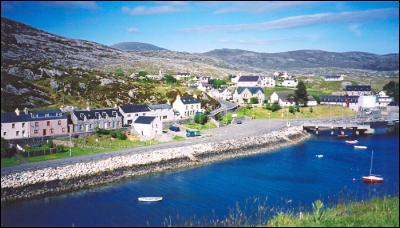
tarbert-2001

This island – the Long Island of Lewis and Harris, that is – when the chips are down, will never cease to amaze. It is a community with a mind of its own and a fierce pride in its identity. Don’t ever try to second-guess what we islanders will do because we sometimes don’t know ourselves until we’ve done it.

I did not know what the reaction would be to the creation of a pro-Sunday group on social media. Three of us had spoken about it before, but during my lunch-break on Wednesday, I had one of those dangerous, ‘what the heck are we waiting for?’ moments.

I had just re-read a ludicrous interview in a national newspaper in which one resident compares life in the islands to the experience of those under Sharia Law in Saudi Arabia.

Perhaps it was an off-the-cuff comment, exaggerated by a canny journalist; I don’t know. But, if people are going to persist in the fiction that says this island is under an oppressive regime run by men in black suits who rig elections, but are still not too big on it to notice whether you’ve left a blouse on the line on Sundays, well, there has to be a counter-narrative.

It hardly needs saying that there is a world of difference between an existence under the Sharia regime and the maintenance of a much-loved traditional way of life, which contributes greatly to the winsome character of Lewis and Harris.

But ‘hardly needs saying’ can no longer equate to us remaining quiet. If we value it, if we want to keep it, we have to be prepared to say so.

Our group has started off well and, within 48 hours, had a membership of 1700 and rising. People are sharing reminiscences, photographs, gentle jibes; the group has Christians and those who are not; there are island-dwellers, island-lovers, and emigrants; there are born and breds and here by choices. It is, in short, a microcosm of the Lewis and Harris we recognise and love.

And it has done something that we have not been able to say in a long while – it has united this community behind a common purpose.

That common purpose is, itself, unity.

Standing up for what we believe, and for what we hold in high regard, is a duty that no one else can fulfil on our behalf. But, as I always knew they would, the islanders have risen to their obligation admirably.

This, I can say with some confidence, is the Lewis and Harris we want the world to see.

Not to be Read by Unbelievers

We were all gathered together in the church hall, when the minister picked up the microphone, fixed us with his most intimidating gaze, and asked, ‘who reads the Bible on an electronic device?’

There was an awkward silence. People tried to avoid his eye. I sat, rooted to the spot in terror, thinking, ‘so this is how it ends’. In my paranoia, I even wondered whether he would be able to tell me for a Kindle-user, just by looking. ‘Put up your hands if you have the Bible on an electronic device’, he ordered in his most threateningly reasonable tone. Still, no one moved. None dared.

And then it happened. A miracle. In the finest ever ‘I’m Spartacus’ move, his wife raised her hand. The whole atmosphere changed in an instant, and suddenly hands were in the air all over the room.

I held my breath. What would happen? Surely this show of defiance could not go unpunished. Yet, what could he do when his own wife had openly admitted to using modern technology herself?

Finally, he spoke.

‘I see’, was all he said.

And then I also saw. Sitting there, with a wireless microphone in his hand, he could hardly castigate his congregation for indulging in the odd Bible app. Especially when his own household was patently guilty of making forays into the modern age.

I wondered whether this was history in the making, a momentous event that would be recorded forever as the night the Wee Frees in Stornoway were finally forced into the 21st century.

But then I remembered – no, of course, that could not be. It had already happened . . . sometime around the end of 1999, I think.

However, it is important to be fair. People cannot help conceiving ill-informed ideas about an organisation that is secretive, and a closed shop. Besides, if it seeks to exercise power and control over an entire community, surely its leadership could be more transparent, less misogynistic,kinder, less controlling . . .

That same day, the membership had been told not to read anything written by me, and not to show anything written by me to others. The decree was issued online with no right of reply, and with an Orwelllian postscript that it would be removed from view in due course.

Who did this, you ask – the Moderator, surely would be the only one with that level of power. Or maybe the Presbytery – was it them? Surely no individual minister would be so egomaniacal as to exert his authority in this way . . .

Oh, you mistake me; I’m not talking about the Free Church. My local elder used to visit the house once a month to check the contents of my bookcase, right enough, but they’ve reduced the visits now to three-monthly. I cunningly hid all my offensively heretical books behind the Diary of Kenneth MacRae and Leabhar Aithghearr nan Ceist, which seemed to satisfy him.

No, it isn’t the Free Church telling its members what to read and what not to read. The organisation which seeks to ban certain writers, and to control what its membership looks at online is not the repressive Wee Frees; it’s the tolerant, welcoming people ‘of all faiths and none’ Western Isles Secular Society.

Yes, like a tinpot dictator, one of their administrators has prohibited my blog from being read by WISS members, or shared to the group.

The reason, of course, is that the last time it was dragged back there, the unruly hordes picked over it and in a frenzy of hatred, unwittingly revealed their true colours.

I was variously described as ‘disgusting’, ‘rude’, ‘racist’, ‘spiritually immature’, a ‘zealot’, ‘an embarrassment to the fellowship of the church’, and an egomaniac in pursuit of martyrdom.

Officially, they must not read it, speak about it or do so much as coimhead an taobh a tha mi because I am an intransigent troll.

But, in reality, they must not read it because there’s a danger in being exposed to the truth. Some things are only recognised as broken when they are held up against the light.So, it is safer to preserve them in darkness.

The secularist response to that blog has made me pity them more than ever. Though they hissed and spat, and even tried to use Scripture against me, it isn’t me they fear at all; it’s Christ.

He is so inconvenient, shaking the foundations of their fictional world. And because they don’t want Him, they attack any who try to speak about who He is and what He’s done. They won’t silence Him, though. If Christ intends that any or all of that Society should hear Him and bend the knee, then hear Him and bend the knee they shall.

It shouldn’t surprise me that the Western Isles secularists have obeyed this edict not to read my work; these are the same people who want their own children ‘protected’ from the Bible because it doesn’t tally with their world view. If they are prepared to attempt silencing the voice of God, I can hardly expect special treatment.

Let me not, though, hear any further suggestions that they are the voice of reason and tolerance, over against the oppression and control of the Free Church.

One has afforded me a voice; one has silenced me. The leaders of one have encouraged me to think for myself; the leaders of the other have suggested that I am incapable of such a thing.

They don’t want Truth. Pilate asked what it was, even as it stood before Him; they are not prepared to risk Christ getting that close.

One day, I hope they’ll be grateful that it was never up to them.


Building Bridges to Nowhere, Sheltering Trolls.

Not far from my home in Tolsta is the famous ‘bridge to nowhere’, an incongruous monument to Lord Leverhulme’s progressive plans to develop this island. The improbably elegant bridge sits between moor and machair, never having performed the function for which it was originally intended – linking two communities divided by miles of untamed wilderness.

Leverhulme thought that his ideas for Lewis were going to bring prosperity and ease of life for a people who had just come through the Great War and suffered the unimaginable tragedy of the ‘Iolaire’, only to be forgotten by the government which had promised homes fit for heroes. The new landlord was filled with philantrophic design, planning to give these hard-pressed people a shiny, modern island.

But they didn’t want his ideas. They didn’t agree with his vision of progress. All they wanted was what they were used to – crofting and the traditional life with which they had grown up. Eventually, Leverhulme understood that he was beaten and retired from the scene with good grace.

Scroll back a few centuries, to 1598, when King James VI high-handedly granted ownership of Lewis by Crown Charter to a group of gentlemen from Fife. The plan was that they would colonise and thereby civilize the island, and the islanders. They would bring in the culture of the outside world and the local barbarians would be forced to conform.

The local barbarians were not in favour of this plan. They razed the new settlement to the ground and forced the interlopers out. King James was outraged and denounced the people of Lewis as ignorant and barbaric.

Well, perhaps they were, but they knew that no one should be able to tell them what to do with their birthright. Centuries of doing things their own way, including the glory days of Tighearnas nan Eilean, the mediaeval Lordship of the Isles, had left them with no appetite to see their cultural heritage further dismantled by the Scottish king or anyone else so wholly ignorant of the Gaelic world and its ways.

Leverhulme gave up when he knew he was beaten; the Fife Adventurers had to be driven away, but both have something in common. They approached Lewis with a mind to ‘improve’ it, giving no thought to whether their idea of progress concurred with that of the people.

Cultural imperialism, they call it. When the representatives of the dominant culture tell those of the minority one that their views do not count, that they are imagining threat where it does not exist, that their interpretation of their own identity is mistaken . . . what else are we to call it?

And yes, I am talking about what is happening in Lewis right now. It needs saying again and again, because I just don’t think it has been taken seriously enough.

Some people in our community believe this is just a wee spat on the internet – the likes of me stupidly debating with trolling secularists who don’t even live in Lewis. There is a creeping, insidious – and let’s call a spade exactly what it is – lying narrative being used by people who call themselves ‘ secularists’ but are actually just negative and bitter enemies of Christ.

They tell us Lewis is centuries behind everywhere else, that we have been duped by a power-hungry church and, like the sheep we are, have followed blindly wherever the ministers have wanted to take us.

It offends me beyond words that anyone thinks that this is acceptable, or that it should go unchallenged.

Christianity does not consist of staying silent when God is maligned by ignorant people; it consists of offering them the truth, that they might have the same chance of being corrected that we were blessed to get. Oh, they will call you names for it. They will say that you too are ignorant, narrow-minded – closed-minded, even. Your intelligence and your integrity will be called into question.

One of them almost silenced me recently by calling me ‘publicly pious’. It would be a deliciously apt way for an unbeliever to shut my mouth, wouldn’t it? By making me believe that my witness is nothing more than Pharisaic.

My silence is what would make me a Pharisee, however. If I opted to remain quiet now, I would be caring more for what my reputation is before men; and I wouldn’t half seem like the ideal meek, quiet Christian – the kind the unbelievers want.

They would love us to be quiet and stand aside; they want us to be ashamed of who we are. Most ludicrous of all, they will have you to believe that they are reasonable, seeking ‘compromise’. You know, that thing where I want the door closed, you want it ajar, so we compromise and have it half-open.

I am not justifying myself to them. They have their opinion of me, which is neither here nor there. But I do have some concern for what other Christians make of everything that is going on. And them I do owe some kind of explanation as to why so much of my writing lately has been on this theme.

This is not a war of words only. Nor is it just happening online – it is having negative and divisive consequences for this community. Our Saviour and His church are being maligned. We, His followers, expect abuse for His sake. But that does not mean we allow lies about who we are in Him to go unchallenged, in case those lies should become a stumbling-block to any as yet outside.

The secularist manifesto in Lewis suggests that they are about unity and progress, while the church is about power and control of the 19th century kind. All I am saying is beware, because theirs is exactly the kind of bridge that leads to nowhere.

And, if I’m not mistaken, it shelters the very worst kind of troll.

Wee Free Frankenstein

This time last year, I was a sinner saved by grace, marvelling at the year of blessings I’d enjoyed since coming out for Christ. Today, I am writing my one hundredth blog, almost a year on from where it all began – aptly enough, at the Stornoway communion.

When I met the man who would somehow become my blogging mentor, I was minding my own business, enjoying tea and fellowship and – more than likely – one of the house special pancakes. We discussed other subjects, I think, before we got round to talk of blogging.
‘You should think consider getting your thoughts down in a blog of your own’, he said, casually and unwittingly creating a monster every bit as uncontrollable as the one cobbled together by Dr Frankenstein. I am one of those dim-witted and suggestible Wee Free women you’ve heard tell of and so, I duly trotted off home to dream of blogging.

Only when the communion weekend was over could I even begin to think of beginning. I didn’t want to do anything controversial which might bring the wrath of the Session down on my head, so I wrote an article about the Free Church and the fairies.

I had long been thinking it was high time we aired the positive influence of churches like the Wee Frees (other denominations are available) on our community. The church had not, historically, engaged in debate about its demeanour or influence, maintaining a dignified silence despite heavy and frequently unwarranted criticism.

Someone else less dignified was going to have to speak up for it. And I owed that much.

You see, this time last February, I was able to look back on almost two years without my husband, and see where the church had been his substitute. I was able to appreciate the anchorage it had provided, the purpose, the kindness. Its loving arms had held me up through those hard, hard months. Yes, it was a challenge to be there sometimes, but it was more of a challenge not to be.

And so the blog really began as a labour of love. Love for my community, for my heritage, for my church and, most of all, for my Lord.

I don’t think I appreciated just how much those loves would upset other people. You see, even although I have no power except the one vote that we all get on gaining the requisite age, my opinions seem revoltingly offensive to some. All I have is this blog, through which I continue to voice my loves. It offends me when people say of Lewis that there is no distinctive culture. Somehow, I feel like Scarlett O’ Hara slapping her petulant sister, and saying, ‘don’t say you hate Tara – it’s the same as hating ma and pa’.

It saddens me that in this supposedly enlightened age, I have to explain that loving my heritage – Gaelic, crofting, Free Church – does not make me a bigot. I do not despise people who are different; but I do question why my difference, the distinctiveness of Lewis has to be a problem to solve, not an attribute to celebrate.

I am sad that a narrative has crept in which is entirely critical of this island. It’s backward, it’s repressed, it’s secretive, it’s got a dark side. Well, maybe I’m just the delusional closed mind some say I am, but that is not my Lewis.

My Lewis is warm and welcoming. It is that particular brand of island humour which manages to be sharp and gentle all at once. Lewis people are polite, never ones to push themselves forward or demand a hearing. And they are unfailingly kind. This is an island of hands clasped in friendship, of ‘placing’ one another, of being interested. When you die in Lewis, there will always be someone to attend your funeral.

We respect the dead, but crucially, we don’t wait until then – we respect the living too.

Blogging has been a revelation, then. Like a poultice, it seems to have drawn an awful lot of poison to the surface. It is no surprise in one respect: Christians are prepared to be hated, after all, for the sake of who they follow. But He does not send us out into the field unprepared, or unarmed. Their slings and arrows may graze, but the wounds they leave, like their arguments, are always superficial.

Far and away the greatest revelation, though, has not been the hatred – the anonymous messages, the disrespectful language, the bullying; it has been the fullness of God’s love that I have experienced through writing the blog.

He has brought me into contact with so many of His people through it. These people have encircled me with prayer and upheld me in all manner of trouble – even, I suspect, though they sometimes didn’t know it. Messages of support will come when I am on the point of giving in; a portion of Scripture shared when my grief is too heavy a burden; links to music that will uplift my heart when it is struggling to find joy.

I learned something so important last year, which I know I have alluded to before. Why wouldn’t I – it was life-changing; I will share it every chance I get. And I must apologise to the troll who accused me recently of getting all my thinking from the pulpit, but this DID emanate from just that source.

In all of our trials, we are not to be worried how we will maintain our faith in God; we are to see them as a means to experience more of His love for us.

I have experienced His love so abundantly that one hundred blogs more would not do it justice. He has never left my side, and I will not leave His. Where His name is trodden on and where His church and His people, who are also my people, are spat at, I will also go to be spat at.

Love me, despise me, ignore me – I am not going away.