May I Speak to Whoever is in Charge?

When I was a teenager, I used to ask my father questions about God, many of which were greeted with, ‘Ist, a Shàtain’. After one such conversation, I overheard him telling my mother that my ‘atheistic streak’ worried him.

But I remember it differently. I was actually trying to better understand this God who, whatever my parents may have thought, was always real to me. So, when people question and criticise Him publicly now, I flinch and fear for them, but it also causes me to hope.

For myself, I was never further away from Him than when He was totally absent from my thoughts.

So, it doesn’t do to dismiss their challenges out of hand. If we disregard people’s concerns as foolish or wicked, there is a risk that we detract from the seriousness of the argument, or fuel the notion tha He is just a fiction and not worth defending . We may say that it is wrong to challenge God – which it is – but it is equally careless of us not to take the opportunity to increase another’s understanding of Him.

Last Sunday, in passing, I heard the familiar verse from 1 Peter ‘always being prepared to make a defence to anyone who asks for a reason for the hope that is in you’. Those were the same words ringing in my ears when I professed faith for the first time. In the final analysis, it all comes down to confession. I knew in my heart and soul what the Lord had done for me, and I could no longer deny it before others.

Equally, then, when someone takes it upon themselves to accuse God, am I not required to gently say, ‘no, you have that wrong’? If they are maligning Him, should I not interpret that as an opportunity to defend the reason for the hope that is in me?

When a person walks into a church (or a school, or a park) armed to the teeth and bent on murder, I do not believe that God is behind him, spurring him on. This is sin, and our Lord has nothing to do with, can have nothing to do with, sin. We are in possession of free will. If, every time I was about to commit a sin, God reached down from Heaven to stay my hand, I would no longer be free, would I?

Yet, if my fellow human being commits such an atrocity, does that not mean that I also have the same capacity for sin? What has stopped me from doing what this man did in Texas? Why do I choose to take a seat among the worshippers instead of turning the full force of anger and murderous intent upon them?

Is it my innate goodness? My kind-heartedness? My immunity from wickedness?

Of course it isn’t. It is nothing in me. Remember that old-fashioned saying, ‘there, but for the grace of God, go I’? That is the reason: His grace. You have it too, even if you don’t believe in Him, you have benefitted from His grace, just as surely as you bear His thumbprint.

After all, if this God is really a despot, why has He not already struck you down for your unbelief?

And if He really is God of all, why would you not speak to Him about what troubles you in the world?

There is a reason why the Christian response to the events of last Sunday was, ‘pray for Sutherland County’, and it isn’t anything to do with ducking the arguments about gun control. These same Christians are, in fact, praying all the time. They pray for themselves, for their families, for their friends, their colleagues, their communities – they pray for this broken, tragic world.

Even if you don’t pray yourself, there’s a good chance that someone else is doing it on your behalf. Someone who cares about you is holding you up to God’s attention and saying, ‘have mercy on them, and open their eyes’.

I could try to tell you who God is and what He is, but you wouldn’t believe me. He isn’t a cold, careless egomaniacal deity, randomly pushing people off cliffs, or sweeping them to destruction. God loves this world, and He sorrows over what we have made of it. Our purpose is, and always has been, to worship and enjoy Him. Sin, however, has so warped that relationship that we commit evil against Him daily and have the temerity then to blame our actions on Him.

If He exists, that is.

So, please, if you don’t already know, find out for yourself who He is. Talk to Him. I promise you this: He’s waiting for you to speak His name. Ask Him to reveal more of Himself to you. Pick up the Bible and read it prayerfully.

You won’t ever get to know Him by alternately denying He exists and calling Him names. And, if you’re a reasonable person, you won’t denounce Him as a fiction whilst trying to hold Him and His people responsible for all the ills of the world.

His grace has given you every chance to see Him as He really is: take it, please. We are praying that you will.
In unity to dwell . . .

Many years ago, my granny used to tell a story about an indignant woman from her own neck of the mòinteach who once nailed a list of her grievances to the door of the manse. While I would in no way suggest this as the best means of communicating with your minister, it certainly would be a non-confrontational means to tell him . . . oh, I don’t know, say, how much he hurt your feelings by implying you wouldn’t get a singing voice till Heaven. If that had happened. Hypothetically-speaking.

Generally, though, nailing stuff to doors is not the way to get taken seriously. Particularly, I would imagine if, like the woman in the story, your missive culminates with a threat to ‘cud of’ the hands of anyone removing your notice. Such dark ravings will only ensure that people avoid you in the street, while also keeping your exploits alive in folk memory long after you have passed away, hopefully to that place where – apparently – everyone will have the voice of an angel. She added, bitterly.

There’s one fellow, though, we remember for the door-nailing carry-on, not because his behaviour was eccentric, but because his influence was so far-reaching and long-lasting. Martin Luther did not like what the church had become and so he took very direct action, according to tradition, hammering his 95 complaints into the door of Wittenberg Castle Church in 1517.

This set in motion the chain of events which history recognises as the Protestant Reformation. It was not a time for subtlety, or gentle implication. Objections had to be nailed to doors, not whispered in corners, or written into politely phrased letters.

These days, though, perhaps we need to hammer our concerns to the inside of the door. It really takes someone exceptional to effect change from outside and, in the case of the church, isn’t it always better that we work together for the greater good, rather than react to external forces?

Luther, and the other Reformers are not remembered and revered because they created the ultimate schism. Surely, we celebrate their legacy because their eyes were opened to the truth, and they were used by God to relentlessly spread that message, whatever the personal cost.

One very important facet of their message was that Christ is head of the church, no one else. As such, then, it is His church – not ours. Logically, therefore , the outworking of that is for us to treat the church as we would wish to treat our Saviour. Of course, I hardly need add that by ‘church’ here, I mean the people, not the building.

Who has not been moved by descriptions of His plight at Gethsemane, and at Calvary? Which Christian has not shed tears over this perfect man being made sin for our sake? And yet, which of us has not harboured ill-feeling towards one of His sheep? Haven’t we had partings of the way which were unedifying and unnecessary? Most would agree that there are few things sadder than a family divided. How much more true is that of God’s family?

Besides, if we are of the reformed faith, then surely we must remember that the Bible is our guidebook. Too often, we act on our own instinct, which is never a good idea.

I don’t know about you, but my instinct is governed and guided by ego, by self-interest, and by pride. I may even be the guiltiest of the sinners in my church; I wouldn’t be surprised.

Nonetheless, I cannot be the only one whose judgement is constantly clouded by self. Yet, if we allow ourselves to react to every perceived slight and wrong and hurt inflicted upon us, and if we think our own behaviour beyond reproach, then we will always be at odds with a church which is full of imperfect people.

Sinners saved by grace are still sinners. I had heard about conviction of sin before, but really only felt the guilt of it once my prison door was opened. This, I imagine, is a truth which applies to all Christians – that we struggle daily with sin.

And as such, ought we not be moved to help one another, rather than to judge? If sin is our common enemy (which it is), we have more to gain by sticking together, and by helping one another with our burdens. The thief, that is Satan, comes to steal, and kill, and destroy. He knows better than any of us that a divided household cannot stand.

That love which we are exhorted by Peter to have for one another, is the same love which he later tells us covers a multitude of sins. When a Christian stumbles, the world purses its lips, and gleefully crows that he is no better than anyone else. It takes pleasure in his misfortune, and holds up his sin as proof that Christianity is a sham.

This is no more than we have come to expect from the enemies of Christ.

If his brothers and sisters in Christ do likewise, however, or stand aloof in his misfortune, how are they different from the world? And how are they showing obedience to the Lord that forgave them so much?

As Christians, we are the body of Christ. One body, of which no part can be afflicted without it causing suffering to the rest. That is why we are to love one another, to help one another, and to bear each other’s burdens.

Armour was always easiest to put on with help from a friend. If the breastplate of righteousness should work loose, who will help me tighten it, if not my brothers and sisters? And if I see theirs slipping, my hand should be first to help, and my lips silent of all reproach.


Humiliated, redeemed, thankful

I was born on Thursday of the Stornoway communion, which is a day of humiliation. It certainly was for me. Whatever test it is they perform (or used to), on newborns, I scored a mere nine out of ten. An under-achiever from the beginning, the pattern of my life was set.

At this communion service, though, forty-two years on, I was struck by something that the visiting minister read from the book of Isaiah:

He saw that there was no man,

and wondered that there was no one to intercede;

then his own arm brought him salvation,

and his righteousness upheld him.

No man. Absolutely no one. I imagined how it would feel for God to scan the Creation that He had made in His own perfection, and find it so damaged that not one person was adequate to be an intercessor. Every last soul was shot-through and warped with sin to the extent that none could stand for us; each and every person was a spiritual under-achiever, a nine out of ten at best.

It is the custom in our church that communicants, on arrival, go straight to the area marked off with white linens, but are only said to be at the Lord’s Table when certain warrants have been read and the table ‘fenced’. This practice has been – like much else that the Calvinist churches do – subject to misunderstanding. People have thought of it as exclusive and as somehow compounding the fallacy that those who take communion think themselves, quite literally, holier than thou.

Consider, though, what a ‘fence’ achieves: it contains and it protects; it keeps in that which is precious. The Free Church, in complete accordance with Scripture, requires baptism in Christ’s name and a profession of faith before believers in their own denomination are admitted to the sacrament. It follows, then of course, that some sort of fence is necessary. The alternative would be to have open communion in which anyone could come, unexamined and potentially unbaptized, to the table.

Sitting there, I can assure you, I was not thinking smugly of my own perfection, nor do I believe that anyone else was entertaining such erroneous thoughts either. We were hearing that of all mankind, even the best person was far short of the mark, and that God’s ‘own arm brought him salvation’.

God is perfectly holy; God created mankind perfect after His own image; mankind sinned; mankind required redemption; God became that Redeemer.

In that whole list, there is only one thing that mankind has actually done: and that was to fall into sin. What would I – or any Christian – possibly feel smug about?

But God’s infinite mercy does not even permit us to dwell too long upon our own shortcomings. Even as we sat there, at what would soon become the Lord’s Table, we were led to muse upon the salvation He supplied in our deficiency. I recalled what our own minister had preached, the previous week, in preparing us for the sacrament. He said, that the Lord’s Supper is not primarily about witnessing to God – it is for us to feed off and be encouraged by.

Those who are not yet communicants watch as their friends who have already made their profession partake of that meal. In the ordinary sense, bread and wine nourish: they give us energy, and are necessary to the sustenance of life. But this meal is spiritual, and the elements consumed are symbolic of the much greater nourishment received when we dwell upon Christ.

It is not always easy to focus as you would wish. The first time I took communion, I was nervous and slightly overawed in human, rather than spiritual terms. This time, though, something about the calm and unhurried delivery of the minister, and of the peaceful spirit pervading the table, was conducive to fixing my mind upon the Saviour.

I rose from that table, fed but – crucially – not sated. Later, I shared a meal with others from the church, and we dined royally. Still, there came a point when we had all certainly had plenty. It is not so with the Lord’s Supper; it is not so with anything about Him.

On the closing evening, which is for thanksgiving, we heard about those who met Jesus on the road to Emmaus, and how their hearts had burned as he spoke to them. They could not stay where they were, they could not sit on the good news that they had received, going immediately to Jerusalem to tell how ‘he was known to them in the breaking of the bread’.

I was born on the day of humiliation, but this year I marked my birthday on the day of thanksgiving, and I had much to be thankful for. As I stood outside the church on Monday evening, wondering what – or who – it is the minister writes in that little red book from time to time, I was subjected treated to a tuneful rendition of ‘Happy Birthday’ from some of the most enthusiastic singers of the congregation.

The really happy birth day for me was not forty two years ago, though, when I only scored nine out of ten; it was that other day, much more recently, when my competence had nothing whatever to do with the matter.

False gods and Free Church outings

I hadn’t been on a Sunday School outing in quite some years, what with me being forty one. On a Saturday, a few weeks ago, however, I found myself boarding the bus for Ardroil in Uig, with thirty or so excited children from the Laxdale Sunday School, where I’ve been a teacher since last August. It was pouring with rain and, as I stuffed the luggage rack with wee fishing nets and plastic spades, I worried that there were going to be a lot of disappointed people heading home that afternoon.

It rained quite hard for the first hour. The kids ate their barbecued food on the bus, while we hardier oldies huddled near the flames and drank cup after cup of tea to keep warm. And then, quite miraculously, the sun came out and we had a magical afternoon down on the sand. Once everyone had eaten a second round of burgers, psalms were sung and the annual event that is the boys versus girls tug of war got underway. Things looked good for the ladies at first, until one of the elders on the boys’ team sat down, which goes to show that Free Church men really will do anything to keep the women subordinate!

When I was first asked to teach in Sunday school, it was by an elder who had run after me into the Seminary on a Wednesday evening. As he rushed up the aisle towards me, my first thought was, ‘what have I done?’ I imagined wildly that he had spotted the Matt Redman CD on the dashboard of my car, or found out about me laughing in the stairwell of the church. But, as he stood, anxiously twisting his hands, it occurred to me that perhaps he only wished to borrow money.

After accepting his suggestion that I might wish to teach in the Sunday school, I panicked. Quietly, obviously – it would be unseemly for a repressed Free Church lady to make a fuss. Ever since Rev.Macrae had made it his avowed intention to ‘give the swooners no latitude’ in the 1930s, fainting has been banned within the environs of Stornoway Free Church. So, I sat silently in my pew and worried. Surely it was too soon? What right had I to presume to teach anyone about Christ when I still had so much to learn myself? Might I inadvertently teach them heresy? And what would I do with all their questions? Despairing, I remembered my own teachers in the same Sunday school, many years before; they seemed so wise, so knowledgeable, so . . . holy.

But then the mists began to clear. People send their children to Sunday school and it is our privilege to share with them the message of salvation, as others shared it with us. What seemed like humility and lack of self-assurance on my part was actually a disgraceful want of faith. Of course I wasn’t going to be adequate to the task; not on my own. Which of us can claim that we are? That’s why Christ promised us a helper in the Holy Spirit. However, if you are called upon to do something for His cause, you do it, asking His aid. In my experience, I can truthfully say that He never fails me.

I cannot, however, say with any certainty whether the children benefit from my classes. Sometimes it’s a struggle to keep their attention. And, oh my word, the questions! ‘Will there be bingo halls in Heaven?’ probably qualifies as the most left-field. The truly challenging moment came, however, when we were discussing the Ten Commandments.

It was, unsurprisingly, idolatry which caused the problem. They struggled with the idea that Jesus must come first in our hearts, before any of their loved ones, or hobbies, or prized possessions. Yes, I had to say repeatedly, before mum and dad, before your kitten, before your mobile phone, before your signed football, or your iPad. I struggle with it too; don’t we all? But then, we got onto talking about other gods, and the worship of false gods. ‘Some people DO worship other gods, though’, one girl said, ‘and they have to be allowed to do that’.

Tolerance. They are taught this in school. All religions are equally valid. Christianity, Hinduism, Judaism, Islam – these are just different stories, and you choose which one you believe. Meanwhile, the same people in our community who howled with derision at the plans for a new church in Stornoway, rushed to publicly welcome the news that an Islamic place of worship was in the pipeline for the town. They were falling over one another in the rush to prove their tolerance of some – though not all – Abrahamic religions. It’s not tolerance, though, is it – it’s tokenism. After all, you cannot accept one faith as valid while defaming another, and say that you are accepting: that would be hypocrisy.

When a petition was launched against the planned building of a High Free Church in Stornoway, no one was terribly surprised. Those opposing it made all manner of justification, including that clearing the chosen site might make some rats homeless. However, one of the comments has stayed in my mind ever since because, for me, it represents that other great misunderstanding at the heart of so much anti-Christian prejudice: ‘they think they’re so perfect’.

So, the people driving the ‘tolerance’ agenda actually understand nothing about the Christianity they deride. If they think that Christianity is a choice, like which political creed to follow, or which shirt to wear today, they have a lot to learn; if they believe that Christians think themselves perfect, then they don’t even know the basics. Following Christ makes such demands on us that our sinful hearts would never opt for it of their own volition. We are drawn, irresistibly, towards Him because we are so very far from perfect.

I don’t mind what they say about me. Christians except to be mocked and criticised for their faith. But I do mind that, in their ignorance, they are depriving children of a proper understanding of what Christ’s message is. We surely cannot allow people who don’t even know what the central message of Christianity is, to dictate how it is taught to the next generation.

That is one reason why Sunday schools are important. Children deserve the truth. Plant the seed and someone else may water it, but God will make it grow. And no one, however tolerant, can stand in His way.


Keep the Faith for Sunday Best (Part 2)

This is the second part of a guest post by Andy Murray of Ragged Theology. Challenging and thought-provoking stuff as ever.

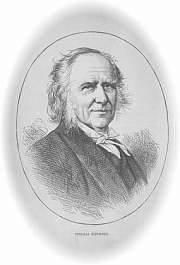
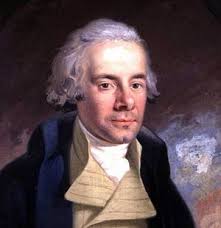
Men like Thomas Guthrie and William Wilberforce inspired a movement rooted firmly in Micah 6 v 8.  They called the church and nation to love justice, show mercy and walk humbly with the God of the Bible.  They wrote, they spoke, they preached, they persuaded and they campaigned for change to the way the poor were treated.  The work went on long after they were dead.  Their work changed whole communities, changed laws and changed the direction of our nation.  When Guthrie died in 1873 not only was education about to be offered to all, but thanks to Christian social reformers children were finally being offered protection and care instead of exploitation.  Men like Guthrie and Wilberforce were hated and opposed because they challenged the powerful vested interests in the alcohol and slave industries respectively.  But through all the challenges, they had an unquenchable hope in the redeeming gospel of the Lord Jesus Christ.  A hope that the most visionary and noble secularist cannot offer.  This is why secularism soon turns to pessimism.  As Blaikie says:

thomasguthrie2

Secularism may try to keep up its spirits, it may imagine a happy future, it may revel in a dream of a golden age.  But as it builds its castle in the air, its neighbour, Pessimism, will make short and rude work of the flimsy edifice.  Say what you will, and do what you may, says Pessimism, the ship is drifting inevitably on the rocks.  Your dream that one day selfishness will be overcome, are the phantoms of a misguided imagination; your notion that abundance of light is all that is needed to cure the evils of society, is like the fancy of keeping back the Atlantic with a mop.  If you really understood the problem, you would see that the moral disorder of the world is infinitely too deep for any human remedy to remove it; and, since we know of no other, there is nothing for us but to flounder on from one blunder to another, and from one crime to another, till mankind works out its own extinction; or, happy catastrophe! The globe on which we dwell is shattered by collision with some other planet, or drawn into the furnace of the sin.

It is the Christian gospel that has been the great agent of change in human history.  Has the church at times been corrupt?  Absolutely.  Has it at times disregarded the poor and even abused them.  Unfortunately, it has.  But what has been the fruit of the revival of true Christianity?  It has always been love, particularly for the poor.  The spirit of self-seeking is supplanted by the spirit of service and love.  Vice is replaced by virtue.  When men love God in sincerity, they will love their neighbour, particularly the poor and the outcast.  The church at its best lives by that early ‘mission statement’ in James 1 v 27 ‘Religion that is pure and undefiled before God the Father is this: to visit orphans and widows in their affliction, and to keep oneself unstained from the world.’  As Thomas Guthrie said about the kind of Christianity that brings transformation to communities;

We want a religion that, not dressed for Sundays and walking on stilts, descends into common and everyday life; is friendly, not selfish; courteous, not boorish; generous, not miserly; sanctified, not sour; that loves justice more than gain; and fears God more than man; to quote another’s words – “a religion that keeps husbands from being spiteful, or wives fretful; that keeps mothers patient, and children pleasant; that bears heavily not only on the ‘exceeding sinfulness of sin,’ but on the exceeding rascality of lying and stealing; that banishes small measures from counters, sand from sugar, and water from milk-cans – the faith, in short, whose root is in Christ, and whose fruit is works.


Keep the Faith for Sunday Best (Part 1)

This is a two-part guest post by my blogging (tor)mentor, Andy Murray, author of Ragged Theology. Part two of this excellent piece to follow tomorrow.

Philanthropy is not a casual product; it is not a mere outcome of a zeitgeist, or fashion of the age; its roots are deep in the soil of Christianity; it cannot pick up a living either from Paganism, or Agnosticism, or Secularism, or any other system cut off from the influence of the love of Christ.

This is one of the first paragraphs in William Garden Blaikie’s Leaders in Modern Philanthropy published in 1884.  What follows is a barnstorming tour of all the great Christian philanthropists over many centuries from John Howard, William Wilberforce, Elizabeth Fry, Andrew Reed, Thomas Chalmers, Thomas Guthrie, David Livingstone, William Burns, John Patterson, Agnes Salt and many others.  The claim that some make that Dr Thomas Guthrie was some kind of lone voice in 19th century Scotland is simply not supported by facts.  Guthrie built on the work of Sheriff Watson in Aberdeen and John Pounds in England.  His work was taken up by many particularly Lord Shaftesbury in England.  He was part of a wider movement that rediscovered evangelical theology and roused a sleeping church to the Biblical mandate of fighting for justice and showing mercy to the marginalised.  Their work sprang from their theology.

Wilberforce

William Wilberforce

Despite the UK’s departure from its Christian heritage, much of our society remains rooted in the Bible.  The idea that we are all equal in the sight of the law, the idea of education for all, the concept of compassion for the poor, are all inextricably linked to a Biblical view of humanity.  If you don’t think this is important look closely at other societies and see the radical difference.  The foundational Christian belief that man is made in the image of God has radical implications for the way we treat our fellow man, particularly those who need special protection and care.  Christianity teaches that everyone has dignity and worth.  It also teaches that anyone can be redeemed from their fallen/sinful state.  Man’s fundamental problem is not poverty, housing or power; it is sin (Matthew 15 v 15-20).  The addict, the wife beater, the thief can all be redeemed and transformed by the grace of God.  Christianity is about grace, hope and most of all love.  It is religion of redemption and second chances.

But much more than personal transformation, Christianity places on the believer ‘a strong dynamic impulse to diffuse the love which had fallen so warmly on themselves’ (Blaikie).  Our Saviour, ‘the friend of publicans and sinners, is our ultimate example.  Jesus taught repeatedly about the need to love the poor in parables such as that of the Good Samaritan.  His teaching in Matthew 25 on the sheep and the goats couldn’t be clearer.  He defined true greatness thus: ‘the servant of all being the greatest of all.’  Remember that Jesus was speaking at a time when the order of the Roman empire masked a barbarous culture. Gladiatorial sports slaughtered tens of thousands for nothing but the amusement of the baying mob.  Slavery was commonplace and women were often used as sexual playthings.  Yes, there were occasional spurts of compassion when an amphitheatre collapsed, but there was no systematic relief of the poor.  It was a hierarchical society where groups and classes were systematically oppressed and kept down.  A bit like modern Britain.

It was as the New Testament church grew and spread throughout the Roman Empire that Christianity’s counter-cultural message of love for the poor began to change societies.  As Blaikie says: ‘In the course of time, barbarous sports disappeared; slavery was abolished or greatly modified; laws that bore hard on the weaker sex were amended; the care of the poor became one of the great lessons of the Church.’  This is not to say that the church did not frequently go wrong.  Often the methods of showing love became exaggerated and distorted.  The alms-giving in the mediaeval church became more about the abuse of power than equipping the poor to become self-reliant.   The Reformation was a great return to Biblical Christianity, and while it was a time of great conflict it also saw a return to Biblical philanthropy and care for the poor.  It encouraged education and saw the start of schools, colleges and universities.  The Bible was not only given to the common man but he was also taught how to read it.  This why William Tyndale became a hunted terrorist.  His English New Testament was a threat because it smashed the power of a corrupt church.

So far so good.  Even the most cynical atheist would surely acknowledge that Christian philanthropy has done great good.  But let’s be honest, there have been many inspiring philanthropists who haven’t had an ounce of love for God.  It is wonderful to read of philanthropists such as Andrew Carnegie building libraries, donating ornate organs and building palaces of peace.  My family home in Sutherland has many monuments to the generosity of Carnegie.  We celebrate every effort that is made to relieve the poor and change society for the better whether in Christ’s name or not.  Nobody can deny that many charities have sprung up with little or no Christian inspiration.  History, however, shows us that all too often the greatest social reformers have been compelled by a zeal for God that leads to an enduring love for his neighbour.  They inspire followers who, if not always sharing in their theology, agree with their goals and are willing to follow their example.  Often secular philanthropists (such as Carnegie) are blessed with great fortunes and influence, but it takes an exceptional love to persevere in championing the poor without wealth or power.  It is one thing for an inspiring political leader to rise up, but unless it is underpinned with the theology of Christian compassion, how long will it last?


Did We Lose Our Sins in Translation?

Working in a Gaelic environment, I frequently hear obscure words being used. At least once a year, for example, a student will attempt to revive ‘fa-dheòidh’. I quite like it, but it creates much the same linguistic effect as if I were to pepper this blog with ‘forsooth’.

Recently, the minister, in throwing me a clan-based insult (yes, it still goes on, even all these years after Culloden), introduced me to the word, ‘eanraich’, which is apparently some kind of soup. It was – presumably – in regular use at one time along with ‘fa-dheòidh’ and other linguistic curiosities. When the social and cultural context for vocabulary goes, however, the words themselves swiftly disappear too. People no longer use horses for agricultural work, and so all the Gaelic terminology for a horse’s tack is redundant; likewise crofting, fishing and many other traditional practices besides.

Although you rarely hear it included in that category, churchgoing falls into the realm of traditional Gaelic culture. It had – and has – practices of its own, influences of its own and certainly vocabulary of its own. I know many Gaelic speakers who say that they can’t ‘follow’ a sermon in their own tongue because ‘the language is too obscure’. There certainly IS an ecclesiastical Gaelic, which employs words not in everyday use: ìobairt, ceusadh, aiseirigh, peacadh. I must confess a certain weakness, as it were, for ‘teachdan-geàrr’ And that is a play on words for my bilingual readers which would lose much in translation.

‘Sin’ loses quite a lot in translation too. The word, ‘peacadh’ in Gaelic is used virtually exclusively for the theological concept recognised by every dutiful Wee Free as ‘a want of conformity unto, or transgression of, the law of God’. In English, however, ‘sin’ came to be used in two ways – in ecclesiastical circles of course; but also in a superficial manner. It is not uncommon, for example, to hear non-Christians say, ‘it’s a sin to throw all that food away’, or ‘it’s a sin that Mrs MacLeod’s daughter doesn’t visit her’. The things being described as ‘sin’ frequently are, but the people who label them as . such don’t really mean it in the catechism, ‘want of conformity unto the law of God’ sense. They might just as soon have said, ‘it’s a pity’, or ‘it’s a disgrace’.

Recently, sin has been in the news. Oh, it’s there all the time, of course, but like its master, usually goes under a variety of pseudonyms. On this occasion, however, someone asked a politician whether he thought that homosexuality is a sin. When the journalist sensed prevarication, the politician was harangued and badgered. This happened repeatedly. If you are unfamiliar with the ways of the British media, let me tell you that politicians are not usually asked about sin – it is not one of the top ten issues in any election campaign.

So, Christians should be delighted that, at last, sin has made its way onto the political agenda, right? Wrong. It hasn’t. Tim Farron was only asked about sin because he’s a Christian, in the same way that a multi-millionaire might be asked about tax loopholes. The mainstream media sees Christianity as a weakness, something to humiliate believers with. After all, Farron was not asked about sin as such – he was asked whether he thought that something was one.

Christians are not actually required to have an opinion on sin, other than that held by a famously fiery preacher in the USA in the early 20th century. Calvin Coolidge, the notoriously monosyllabic president had been to hear the man preach. Attempting to draw Coolidge out, a friend asked what the subject of the sermon had been. ‘Sin’, replied Coolidge. Exasperated and wishing for more detail, the friend asked, ‘and what did he say about sin?’ To which Coolidge responded, ‘he said he was against it’.

Sin isn’t a matter of opinion. God has decreed what is an affront to Him, and Christians try to conform in obedience. If you want to know whether something is a sin, should your first port of call really be a sinner, albeit one saved by grace? Why ask fallible Farron, when the word of God is readily available to answer all such questions unambiguously?

Our tolerant, liberal, progressive society does not want the truth about sin. It could not handle the truth about sin. If the doubters opened their Bibles to Romans 3, they would read that ‘all have sinned and fall short of the glory of God’. Set within the wider scriptural context, this tells them everything they need to know about what sin is and, more importantly, what sin does.

It is uncompromising. We can’t debate, barter, bargain or otherwise spin our way out of sin. Something which is sinful cannot be made acceptable in God’s sight just because the world has winked at it. Tolerance, liberalism, progress – these three recognise no sin except one: calling something ‘a sin’. Christians have to be ridiculed, derided, silenced – they are the enemies of a progressive society. Yes, that’s what we have: progress. Who needs the Bible with its backward notions of sin? Humanity knows best, humanity will rule by its own lights. What could possibly go wrong?

Remember, humanity progressed itself right out of Eden.

The Minister and the Otherworld

‘Our minister’s away with the fairies’, might very well have been the intimation from the Rev Robert Kirk’s pulpit following his disappearance in 1692. You see, his congregation did not believe that he had died, but rather, that he had been kidnapped off to fairyland. His interest in the creatures of the Otherworld had finally – they thought – been his undoing.

What was his interest? Well, strange as it sounds now, fairy belief was so prevalent at the time that Kirk felt it necessary to write a treatise on their nature. Two common ideas – that they were the spirits of infants who had died without baptism, or that they were fallen angels – could not be countenanced by him, or by the church. Instead, he sought to displace these heretical theories by investigating for himself and laying out his findings in a book, ‘The Secret Commonwealth of Elves, Fauns and Fairies’.

His conclusion was that they were ‘of a middle nature, twixt man and the angels’. It’s an unusual statement for more than one reason. Firstly, well, a minister who believed in fairies. . . If that was nowadays, the very least he could expect would be some odd looks at Session meetings. Secondly, anyone with the most rudimentary grasp of scripture will know that God made man a little lower than the angels, so Kirk was essentially placing fairies above mankind. Above us, yet not perfect like the angels. The fairies required appeasement, and careful handling. Without warning, they might mete out punishment, or simply take from mankind what they coveted.

The writer, Ronald Black, described the function performed by fairyland for our ancestors as similar to modern soap opera. It was a medium for exploring and working out social dilemmas and concerns. To put it another way, it was humankind trying to sort itself out in a way that excluded God. Poor Kirk was somehow trying to accommodate fairy belief into his theology, but it was always going to end badly.

If we humans are proof of anything, we are proof of our own lostness. No matter how bad we make things for ourselves, we still think it’s somehow up to us to fix it, and that we’re capable of fixing it. And, in the absence of God, we have constructed our own doctrine. Just be nice, do no wilful harm, be kind to the poor. Tolerate everything as long as it hurts no one. It will all be fine in the end.

Not like that, it won’t.

Kirk was making the kind of mistake you would hope no modern minister would make. Sometimes, what secular culture thinks is fine, is really not. There are times when what the world wants has to be opposed by Christ’s church. You can’t always accommodate it and you shouldn’t always try. It falls to His followers to hold up a hand and gently say, ‘no further’. And it’s a challenge. No one wants to be called a killjoy, or a bigot, but then, they called our Saviour worse.

I see our local Christian Party candidate being soundly mocked and derided by the usual social media suspects. He has had the temerity to subscribe to Biblical teaching and not conform to the right-on views of the secular lobby. As far as I can make out, his approach is informed by God; their view is shaped by no authority superior to their own. By that logic, if they say his beliefs, or my beliefs are stupid/bigoted/immature, well, then they are. They probably think I’ve been told by my church to vote for him as well. (Obviously I haven’t – the elders don’t know that women have the vote now, and I’m not going to be the one to break it to them.)

Christians have to live in this world for a time, but they should never belong to it. Kirk’s mistake was to think he could walk too closely with worldly ignorance and still be safe. There were two things which might have released him from the enchantment which held him: iron and salt.

We must pray for a good measure of both in our walk through this world.

Make hay on the day of small things

It used to be a practice in some parts of Lewis, when you were constructing the haystack, to place a pat of butter inside the centre of it. Then, partway through the winter, when household stocks began, inevitably, to dwindle, it would emerge from the diminishing goc as a welcome addition to the table.

Our ancestors were inventive when it came to putting things by. Young women gradually built up a ‘bottom drawer’ with all the things they might need to set up a home of their own, should the joyful day ever arrive. Personal and household linens were stored away, in a custom that combined sentiment with practicality. It would have been impossible for them to purchase all they needed at once and so, it was achieved gradually. Happy anticipation salted their frugality and made it a good thing.

When I was a child, I heard the phrase, ‘na dèan tàir air latha nan nithean beaga’ so often that I thought it was a proverb. I think, actually, the older people used it as a sort of mantra for themselves, a wee memo about keeping things in perspective. It is, of course, from the minor prophet, Zechariah – ‘for who hath despised the day of small things?’ – and serves as a reminder that we should not expect dramatic manifestations of God’s work in our lives, but rather that we should be grateful for his constancy, and his faithfulness. These are not, in fact, small things, but great and wonderful things.

Common grace – God’s mercy enjoyed by all, regardless of whether they believe – is probably not talked about enough. Those who reject Christ would certainly argue that they are who they are, and have what they have, through their own efforts and that of other human beings. Many of us have been fooled into that kind of thinking.

Since becoming a Christian, I look back at the years before and see Him acting on my behalf in so many ways to which I must have been blind at the time. It’s like opening up an old, familiar photograph album and seeing a person that you had never previously noticed in every single picture. What did I feel on realising this? Many things. Sadness that I had carried burdens of worry, guilt and sin needlessly; grief, that I had not listened sooner to His voice; shame at my own pride and arrogance. Yet, overriding all of those feelings was joy – joy that now I am His, but also a sort of retrospective comfort. Past trials and celebrations are past, but I see them differently now, knowing that He was always there in their midst.

We are always looking for something significant. I think that I had been a Christian for quite a time before receiving assurance. Perhaps I expected some sort of fireworks display to show that Christ had saved me. No word that all the drama had already taken place 2000 years ago.
And even those who are already Christians sigh and long for the days gone by when churches were full on a Sunday. That’s natural, and we are all praying daily for an increase of God’s Kingdom. Yet, while we are fixing our eyes and our hearts upon the hope of a great and glorious revival, like the kind we read about in books, what is it we are not seeing and hearing now?

The work goes on. God is present. You pray for family and friends who are without Christ, but you remember that they are not completely alone even now. They have not noticed Him at their shoulder, they have not yet turned into His embrace, but He is there. And people are hearing the Word and being changed, sometimes like water wearing away the stone, but being changed all the same. These are the days of small things. We mustn’t give so much of our hearts to longing for a great and glorious miracle that we forget the daily miracle of God’s grace.

Sometimes, He speaks not in wind, nor earthquake, nor fire, but in the still, small voice of everyday. That is something we can put by for later, until the winter passes and the days of plenty come.

The Family Tree and the Well

If you want to change your identity in Lewis, forget fake passports – you had better be prepared to forge an entire family tree for yourself. Even if you do, though, someone is bound to recognise you on your auntie Effie, or your cousin Angus. We cannot escape our dualchas, it seems, and especially not in a place which has eyes everywhere and a memory as long as time. Whatever you do may very well be written-off as, ‘rud a bh’ anns na daoine’. If Effie had one Babycham too many at her sister’s wedding in 1973, well, chances are you’ve got a weakness for the hard stuff too.

We have an interest in our genealogy here that is stronger, I think, than in many other places. People tend to be aware of relatives that are actually fairly distant. Recently, through the wonders of modern technology, I have been corresponding with just such a person about our shared Achmore ancestry. My maternal granny was from that village and it is nice to have names, dates and addresses to fill out the sketchy pictures in my head. It is good to know about my people, and to see Achmore as somewhere other than just the place my father threatened to move us to if we didn’t behave.

That interest can even transcend geography. Relatives long since emigrated to Canada will follow with interest the news from ‘home’. My great-uncle Henry, brother of my Achmore granny, went off to live in Australia as a young man of eighteen or so. He died, while reading the ‘Stornoway Gazette’ (me too, many times . . .) The point is that he died an old man, but was still keeping up with goings-on in Lewis, until the very end.

When I was a student, one of our lecturers mentioned that his brother, who had lived in New Zealand for the greater part of his life, would soon be coming back to Lewis for his first visit since emigrating. ‘I wonder’, he mused, ‘how many people who don’t even know him, will have heard that he’s coming home’. He made a valid point. That is how news is shared in Lewis: people frequently tell me things about people I have never met. I have felt heart-sore for men and women who I wouldn’t recognise if I tripped over them.

A few months ago, at a church conference, I met a lady and we got talking. She began the process of ‘placing’ me. It didn’t take too long. Being a (fairly) young widow in a wee place like this makes me easy to identify. ‘We didn’t know who you were’, she said, ‘but we prayed for you’. I was moved beyond words. No wonder I had felt the Lord upholding me in my grief, no wonder He had seemed so near – even strangers were bringing me before Him.

God, of course, does not need to be told anything about me, or anyone else – that is why the gravestones of those who die unidentified frequently bear the legend, ‘known unto God’. Prayer is not intended to inform Him, but to involve Him; it is the greatest kindness one human being can do for another. Imagine, in the worst moments of your life, that unseen community of praying people, committing you into the care of the Almighty. Whether you cannot, or will not, do it for yourself, it is their privilege to pray on your behalf.

The woman of Samaria did not enjoy these benefits of community. Her lifestyle might have shocked and offended her neighbours, so she lived a solitary life, even purposely going to the well for water when she knew that none of the other women would be present. There, however, she met a man who told her everything she ever did. He met her where she was, and to her declaration that her people were waiting for the Messiah to come and reveal all, Christ responded with, ‘I Am’.

We islanders were not the first to place value upon family history, and upon names to embody enduring truths about us. In the Old Testament, a person’s name frequently tells of their character, or their greatest attribute. God often renamed them to fit their new life – Abram became Abraham and Sarai, Sarah, for example. Jesus, who had a human genealogy, just like you or I, chose instead to use ‘I Am’ when meeting this marginalised woman.

We are not told her name. Not even a family nickname to go on. Had she been from Shawbost, rather than Samaria, the lack of detail might be frustrating. But then, she’d had five husbands, so perhaps we could place her after all. Jesus didn’t concern Himself too much with her past, though. Yes, He mentioned it, to show that He knew her, but He didn’t cast it up against her. The woman’s inward transformation came through hearing His name and knowing – really believing- who He was.

Just as we need to ‘place’ people within their family trees in order to feel that we know them, this woman also had to hear who Jesus was. Even if she had been told his human name, however, it might have meant nothing to her. On the other hand, hearing, ‘I Am’ caused her to forget her outcast status and run headlong towards the very people who had shunned her.

That’s the change of identity we should all be striving for. Your DNA might say you’re descended from Vikings, and your family tree tell you that great-uncle Alasdair was a bit of a one for the boireannaich. But your Saviour says, ‘I Am’ –  and none of that other history matters anymore.