Hebridean Revolution, Anyone?

It’s a wonderful thing for a repressed, subjugated and delusional Hebridean woman like myself to know that the mainland has got my back. There are tourists who have visited ‘the isles’ (and renamed them), maybe twice, who can confirm that we’re talking nonsense about the ferries. Much like the chair of transport (I refuse to use ‘transportation’ until he’s in charge of actually sending folk to Botany Bay) at the Comhairle, our mainland protectors can confirm that Calmac are actually doing a brilliant job. So, presumably those Uibhistich marching in Glasgow were labouring under some mass shared delusion.

Despite the direct action taken by our formidable deasach cousins, and despite the Annie Macsween MBEs, and Màiri Vs, and Cathy Bhàns, yet another patronising non-islander was decrying our inability to ‘step up’ as Hebridean women. We are, she opined, under the cosh of . . . yes, yes, the church. She had tried to persuade some girl guides to stand for elected office, she said, when ‘on’ Harris ten years ago, but they merely listened quietly.

Probably for the best. I can only imagine what they were thinking.

However, I’m not a polite wee girl guide, so I’m quite prepared to share my thoughts on all of this. In fact, despite being a Hebridean woman and a communicant member of the sinister man-cult that is the Free Church, I’m going to tell you EXACTLY what I think.

I think we have had it up to our submissive eyes with mainlanders who think they know better than we do how these islands should be run. In fact, as a demure Presbyterian, I stamp my sensibly-shod feet in frustration at the fact that we still play their game – everything run from Edinburgh and London, and a handful of us begging to be allowed on quangos that decide every last thing that influences life here in our communities.

We are a super-regulated region, the Highlands and Islands. Our language, our land use, our economy, our transport – but we have to scrabble for a seat at the table. How many Gaelic-speakers are on the board of HIE? Is one Crofting Commissioner from the Western Isles sufficient for the area with the highest concentration of crofts? Why is Bòrd na Gàidhlig’s main office in Inverness, and not Ness? How many islanders on the Calmac board?

Good grief, why don’t we wake up? While we’re defending ourselves for there being no women on the Kirk Session, and being told our ferries aren’t broken, these islands are being remade in an image that has nothing to do with who we are.

Earlier in the week, I broke my own rule and replied to an obnoxious comment on a social media post about camper van drivers feeling unwelcome in the Hebrides. The mainland-based expert in this case was pontificating that ‘islanders think the islands belong to them’.

Not so, sir, we don’t. No islander would ever talk about ‘my/our island’ in the sense of ownership. We belong to whichever island on which we were born, not the other way around. 

With that bond goes a sense of responsibility, of stewardship.

And it is to that we must step up – men AND women – so that our land, our language, our economy are shaped as we would want, we who love and understand this place, and who have to live with the consequences.

Besides taking over the boards, trusts and commissions that take the decisions, islanders and their Highland counterparts, ought to read up on the Crofters’ Party. I think, instead of being a minority voice in mainstream political parties whose HQs are invariably urban, the time is absolutely ripe to create a political party from within the region. It has been done before to great effect.

We are not a problem to be solved, we are a community on the cusp of finding its voice.
Crofts, Crofting and Councillors

If I live long enough to become an old woman, I hope to do so independently. That’s how I live now, and though it wasn’t entirely a matter of choice, I can’t deny that it has its blessings. My home belongs to me and I arrange it the way I want. When I close that door, no matter what horrors lurk outside, nothing much can bother me here.

It’s a house full of memories. I enjoyed almost twelve happy years of marriage here. Indeed, I was proposed to in this house. 

But, if I reach a stage of infirmity where strangers have to care for me, my house will eventually be sold to foot the bill. This home that I have loved, that I would give up willingly to no man, would become the property of Comhairle nan Eilean Siar.

There is nothing particularly outrageous or immoral about this. No local authority is so rich that it can fund limitless care for an ageing population. If outrage and immorality have any place in the debate, they have to appear a little higher up the chain of command. The financial assets of the person in receipt of care inevitably get cashed in to pay expenses incurred.  It’s just the way it is.

Some councillors, however, argue that crofts ought to be exempt from this. They wheel out the expected arguments: protect the heritage of crofting; ensure succession within crofting families; crofting is unique . . .

And it all sounds very worthy. Until you remember the prices that some crofts – bare land or with a dwelling house – have been fetching on the open market. Then you might wonder why the Comhairle should treat crofting like a sacred cow when absolutely no one else does, least of all some crofters themselves. 

Which brings us to one of the great unanswered questions of our age: what IS a crofter? At the moment, it’s defined as anyone holding the tenancy of a piece of land legally recognised as a croft. It doesn’t matter whether that person spends every waking moment tilling the soil and tending livestock, or whether they once visited the place when their granny was alive and got boxed by a ram . . . in the eyes of the law, s/he is a crofter.

So, the law, sir, is an asal. It’s the only conclusion we can come to. The crofter with sheep and hay and turnips gets the same protection as the one planning to sell granny’s acres to a housing developer. 

For, the law doesn’t define crofting, really. It defines ‘croft’ and it defines ‘crofter’, but not the verb. Therefore, we are bound by laws designed to protect a  nineteenth-century subsistence lifestyle that no longer exists. It is  actually an obscene warping of the ideals set out in the 1886 Act that croft land has become – to many, though not all –  nothing more than real estate. 

I understand where the councillors are coming from when they suggest tenancies not be regarded as assets. They cite some vague notion of crofting having a worthiness all of its own. There’s a general agreement that it’s part of our heritage, that we have a duty to protect it, and to stop the Comhairle’s finance department getting its mucky paws on granny’s lot.  

But why, when the minute granny is laid in the dust, her heirs will flog it for the most they can get, and pocket the cash? If I was the Director of Finance, I’d feel pretty darn cheated, I can tell you. 

I don’t think, taking fiduciary responsibility and common sense into account, councillors ought to even try taking the local authority on this particular guilt trip. As surely as Chamberlain looked at ‘national affairs through the wrong end of a municipal drain pipe’, I’m afraid these fellows are doing much the same in trying to make their local council carry the burden for national legislative failure.

In the process of depriving the municipal purse, they will also create a two-tier citizenry. And they still won’t be able to define what crofting is . . . which makes all the words about its importance and the case for protecting it ring a little hollow.

The land, the language, the people

Last night, I dreamt I went to Mangersta again. It seemed to me I stood in a passing place leading to the village, and for a while, I could not enter, for the way was barred to me. There was a padlock and chain upon the gate. I called in my dream, ‘fosgail an geata’, and had no answer, and peering closer through the rusted spikes of the gate, I saw that the houses were empty of anyone who could understand me.

Before this vision of mine is entirely fulfilled, can’t we utter some of the forbidden words? Isn’t it past time to talk about why one of Scotland’s last indigenous communities, wrapped and bandaged though it is by legislation, has failed to be protected by any of these measures?

We have reached a point where serious academic research backs up what we have all known for some time: the Gaelic language is in crisis because the community that nurtured it is in crisis.

This is not a problem that can be solved by Gaelic agencies because, quite honestly, this isn’t a purely linguistic problem. And it’s hard to talk frankly about the real issues because people will rush to call you ‘racist’ for using vocabulary that excludes – words like ‘native’ and ‘indigenous’ for example. Because the struggle has focused purely upon language acquisition for so long, they walk among us who will claim, ‘is Gàidheal mi’ just because they’ve learnt to speak Gaelic.

Well, I have news for such people: is not Gàidheal thu; is Gaelic speaker thu. There is much more to being a Gael than just speaking the language.

And there is much more to being an islander than just living here. People, sadly, are failing to recognise this, and that is contributing to the death of community. I have firsthand experience of people who bought crofts here in (yes, in) Lewis expressly for the purpose of starting a business. They, and many others like them, think that, because they have bought and paid for a parcel of land here, they have become islanders.

But, just as learning Gaelic does not make you a Gael, owning property in Lewis does not make you a Leòdhasach. And that’s okay, because – presumably – you’ve got your own cultural identity.

So, we get ourselves a culturally diverse Gàidhealtachd and everyone is agreed that this diversity is a good thing.

Except, not everyone. I don’t, for one. At this point, some of you will have decided that I’m just being racist. I’m not; I’m being realistic. We have reached a point where an indigenous people with its own language and way of life is under threat. It’s time to stop being so damned polite and right-on. And so, I am now going to launch into saying the unsayable.

We need a new approach. A complete sea-change in how things are done ought to begin with legal recognition of the indigenous people who inhabit the Western Isles. Once that status is conferred, there has to be robust support for crofting and for Gaelic. I’d like to see the Crofting Commission and Bòrd na Gàidhlig working together – they already share a building (in Inverness, for now, Rome wasn’t built in a day) anyway. One might almost say gun robh e meant.

And we have to look at land ownership legislation. Much is made of the community right to buy – but it’s largely meaningless in the nurturing of real community as long as anyone with a fat enough purse can bag a croft, regardless of background. Young local people cannot hope to compete with that, or with the other blight on our society: housing for tourism.

Tourism is low-hanging fruit for people hoping to make a fast buck, or development agencies looking for an easy ‘win’. It is used as a battering ram to foist change (Sunday opening) or to oppose development (wind farms).

‘What will visitors think’?’ is the constant refrain.

I don’t care what visitors will think. This isn’t a reservation or a living museum exhibit. We were born and brought up here and we are committed to it. But we have complacently permitted the ongoing vandalism of our way of life, and smiled politely as it is dismantled around us.

The recent publication of ‘The Gaelic crisis in the vernacular community’ is a wake-up call. We need legislation that will empower the Crofting Commission and the landowning community trusts to put land the way of young islanders. Under the ‘new normal’, people like me will be at home a lot more during daylight hours. At a stroke, this providence has reduced the sad phenomenon of dormitory communities. What if we saw the economically active generation combining their main occupation – broadcasting, lecturing, weaving, graphic design or whatever – with crofting? Imagine land being worked, and villages where you see activity in the middle of the day; imagine Gaelic being spoken as the older folk pass their skills on.

Maybe I’m a dreamer. I hope I’m not the only one.

I am not saying that incomers shouldn’t be welcome, that would be ridiculous. But I am saying that if we really are serious about our culture, we have got to stop it being reduced to a commodity. If we don’t act now to stop the exploitation of our heritage, one day we’re going to wake up and realise that the thing we’re selling no longer exists. Native islanders – and I include myself in this – have been remiss in not providing a better welcome for those who come to live among us. We consistently fail to demonstrate that there is more to places like Lewis than just scenery and much more to our culture than a few songs or scraps of tweed.

Community, like heritage, is codified in our conduct, and in our relationship, both with the place we call ‘home’ and with one another. You can’t package that up and sell it.

In the post-lockdown period, we have seen the ugly side of tourism. Not just the dirty camping phenomenon, but a disturbing attitude. All over social media, would-be visitors and those seeking to make money from them were talking about ‘rights’. The ‘rights’ of anyone who wanted to visit Lewis, for example. ‘It doesn’t belong to the islanders’ one man said, ‘and I can come if I want’.

No, it doesn’t belong to the islanders; that much is true. But we belong to the island in ways no visitor can comprehend.

As a student, I read Bruce Chatwin’s ‘The Songlines’, a beautiful book about his travels in Australia. In it, he wrote:

‘The whites were forever changing the world to fit their doubtful vision of the future. The Aboriginals put all their mental energies into keeping the world the way it was’.

We are the Aboriginals: custodians of our ancestral lands, speakers of an ancient language through which we construct and comprehend the Gaelic community. It is past time for us to recognise that and to take steps to protect what has been left in our care.

It is time for our indigenous status to be formalised; it is time for everyone to recognise that these communities would be nothing without their people. And it is time for us, as a people, to recognise that we are nothing without the heritage that give us our identity.

Crofting, cùram and the black, black Comhairle

‘The minister and the factor are the cause of all the misery and ruination’, I said last week on live radio. I wasn’t, of course, talking about anyone I know personally, perish the thought. No, I was, in fact, paraphrasing a view held by many of my fellow countrymen, and especially in that context, various writers over the years about the havoc wrought by these two archetypes. 

The Highlands, explored in literary form, invariably appear to have been torn asunder by these two men: the greed of the factor and the creed of the minister. Between them, many people believe, the landlords and the church pulled down the ancient edifice of Gaelic culture and left it in ruins.

Even to this day, nothing is more guaranteed to get a social media debate going than religion or land. The latter blew up into a Facebook squall last week, with the news that Comhairle nan Eilean has taken legal advice on whether it can include crofts in the valuation of assets, when recouping the cost of providing care.

It was always going to be a turbulent discussion. You have a heady mix of poorly-understood legislation, a local authority which is damned either way, and the rampant emotionalism that seems to accompany every invocation of the word, ‘croft’. Crofters are felt by many to have a moral right to the land, and to be automatically justified whenever pitted against authority. There is a sense in which Comhairle nan Eilean cannot win this debate. Like any organisation which finds its views at variance with those of the crofting community, or even one section of it, the council will inevitably be portrayed as a latter-day Dòmhnall Munro.

Crofts and/or houses which are owner-occupied are straightforward enough. The real controversy centres around tenanted crofts. If you are merely paying rent to a landlord . . . how can the croft’s value be calculated as belonging to you?

Unfortunately, the legal opinion sought by the Comhairle states that one possible way is to file for bankruptcy against the crofter, or his estate after he has passed away. This unpalatable course of action would be time-consuming, potentially costly and by no means certain to produce the desired result for the local authority. Insolvent crofters breach the 1993 Crofting Act. Nonetheless, only the landlord can apply for an order to have them removed, and even if they do so, the events that follow are firmly outwith the council’s control.

So, this is clearly an extremely vexed question and, like everything else of the kind, may well be slogged out on Facebook, but it certainly won’t be settled there.

What the discussion does throw up, however, is an interesting attitude around the perceived intrinsic worthiness of crofting. Evidently, from the comments I have read, many of us feel that it is part of island heritage and deserving of protection. Some even accuse Comhairle nan Eilean of instigating a modern version of the clearances.

The conceit there is that crofts and crofting ought to be the province of the indigenous population. That is an argument which, in the context of language and cultural preservation (where, by ‘culture’ I mean way of life and not some tweed nailed to driftwood, calling itself ‘art’) might have some merit.

We suffer, because of our remoteness, a tension between maintaining a viable population in these islands, and protecting our increasingly fragile heritage. How do you reconcile the need for people to keep services running, and shops and schools open, with the desire to shore up these things which are unique and precious about our islands?

For too long, there has been a concentration on Gaelic as a language, and little heed paid to the fact that it has – and requires – an underpinning culture. Crofting is undoubtedly part of that. Unfortunately, the moral argument posited by many against the Comhairle’s position falls down slightly on the fact that tenancies change hands for sometimes eye-watering sums of money.

You simply cannot have it both ways. If tenancies can be sold to the highest bidder, where is the mechanism for favouring – say – young islanders? It doesn’t exist.

Crofting, like Gaelic, has been subject to a tiùrr of legislation, but there has been the same mistake made in both cases: a failure to recognise the plant in its native soil, or to take measures that might have nurtured it there. With language, experts talk about intergenerational transmission – the passing of the language from parent to child, far and away the most natural learning process. The richness of vocabulary and idiom is then preserved in a wider Gaelic community, not least because communities have an inbuilt code that is mutually intelligible to its members.

In fact, now that the language campaign is waking up to the fact that it has neglected community in its working-out, I wonder whether there isn’t greater scope for an integrated approach to the promotion of Gaelic and crofting. Not, I hasten to add, in some twee, ‘living museum’ way, but an acknowledgement that there are vestiges of both traditions still extant here, into which new life could be breathed. And that they have a close relationship with one another in the communities where they grow wild.

It would take vision to realise, of course. Some years ago, the Crofting Commission published a paper which explored the possibility of designating Scottish crofters as an indigenous people. I wonder whether, under the new Islands Act, and with an eye to further crofting legislation in the next parliament, it may not be time to rekindle that spark of an idea.

Imagine: Comhairle nan Eilean Siar, Highland Council, the Crofting Commission, Bòrd na Gàidhlig, all working together on policy for the Gàidhealtachd from the inside.

We have much still to learn from the old slogans: the language, the land, the people; and strength through unity.

Crofting, Calvinism & the Colonised Gaels

Geekery comes in many forms, but I have always been particularly susceptible to the uniquely Teuchter variety. Now, before you leap to conclusions, no, I cannot name you every model of Massey-Ferguson ever to set wheel upon the Isle of Lewis; nor am I qualified to identify a brand of dip merely by its bouquet. However, I enjoy the complexities of Calvinist theology and of crofting regulation in almost equal measure. It has been easier to indulge the former, because there are places you can go and books you can read which will help the picture clear.

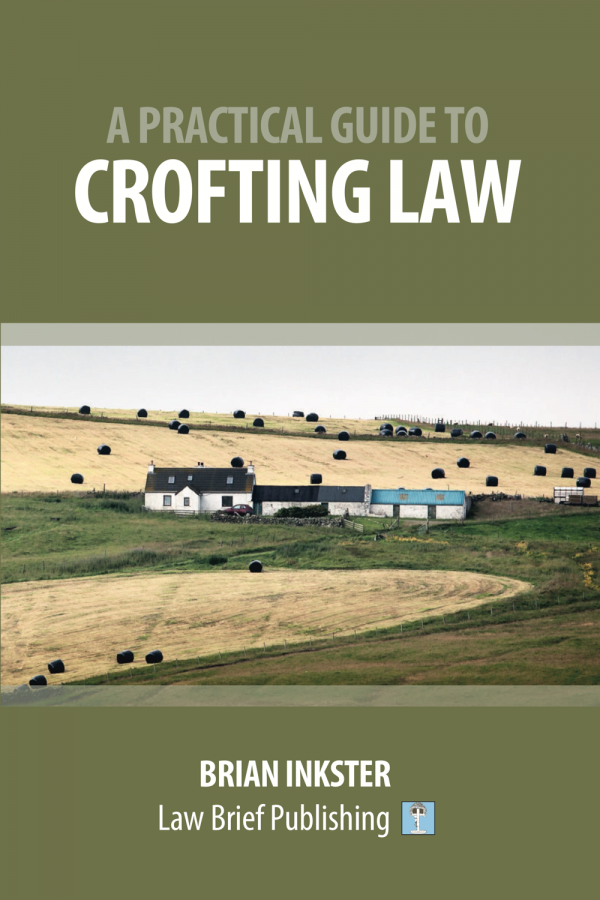
Crofting legislation, on the other hand, has been a right patchwork quilt. Now, however, someone has actually written ‘A Practical guide to Crofting Law’ – that someone being the well-kent lawyer, Brian Inkster, a bit of an expert in the feannag of crofting law and all its associated vagaries. This is not a legal tome for professionals, but a very usable little book which covers all the main aspects of crofting and its relationship with the law of the land (yes, pun intended).

I warmed to it immediately when I saw that page 1 of chapter 1 contained the word, ‘therefrom’. He was only placing crofting in its historical context – something I do myself fairly frequently for bored students – but couldn’t suppress a lawyerly adverb even at this early stage in the proceedings.

136348E5-FE05-4DAA-8344-BFC3DB0FA02B

It’s a depressing feature of life in the Gàidhealtachd that any description of who we are or what we stand for must always involve talking about organisations. We are surely the most regulated people in all of Creation. Reading Mr Inkster’s description of the Crofting Commission and the Scottish Land Court, I couldn’t help smiling to myself. All our resident malcontents (and more than a few non-resident) pile the blame onto churches for the perceived stifling way of life here, but no one ever seems to wonder quite why we need so many bodies to keep an eye on our language, our land, our economy – and that’s before we even get started on the plethora of environmental designations that Scottish Natural Heritage has at its disposal. Before you put a spade in the ground, you’d better find out if it’s a RAMSAR site, an SSSI, an NNR . . .

We have accepted it, though, as our lot (pun eile) in life. Like every other endangered species on the planet, the Gael has to be subject to much monitoring and scrutiny. There are more schemes and safeguards linked to us as a people than your average violent offender.

Everything, from the air that we breathe to the words that we use is subject to policy. If I start a business, join a committee or put up a polytunnel, there is an agency that needs to know. We have island plans, community partnerships, rural networks – all designed to protect us. We are like wayward teenagers, not trusted to get the bus home by ourselves in case we talk to strangers.

Ah, but, Mr Inkster’s book brings us neatly, in chapter sixteen, to that wee glimmer of freedom – the Teuchter equivalent of turning twenty one and being given the key of the door: community buyout. You’ll have heard of it because it’s been quite the apple pie and motherhood of the Gàidhealtachd over the sixteen years since the 2003 Land Reform Act was passed. The Act afforded the crofting community a right to buy and become its own landlord – not piecemeal, croft by croft, but to purchase an entire estate as one crofting body if so desired.

Now, I’m not rubbishing this development. It’s difficult to, when you recollect the heroism of Assynt, and of Eigg, in challenging absentee landlordism before there was tailor-made legislation to assist their endeavour. What I am merely pointing out is that the crofting community right to buy is something that had also to be granted via an Act of – albeit the Scottish – Parliament. It is arguably benevolent in its tendency, but still regulation nonetheless. Mr Inkster refers to the ‘Scottish ministers’ many times in this short chapter, reminding even the most gung-ho of community trusts that they have what they have at the behest of government, and of the reams and reams of law which have made it possible.

It’s easy to fool ourselves that we are freer than we actually are. Human beings are incredibly gullible, and very liable to convince themselves that there exists no authority higher than their own. That anyone from the seven crofting counties still believes this to be the case is extraordinary, when you consider the weight of legislation under which they live, move and have their being.

When I was a child, we marked the centenary of the 1886 Act, which put the word, ‘crofting’ onto the statute books for the very first time. It has always been cited as a great stride forward and, I suppose it was in many ways. But it was also the beginning of state-sponsored interference in a way of life which had existed previously on its own terms. Yes, it mitigated against some of the worst excesses of private landlordism, but it also sank the Gael into that abiding sense of being a permanent ward of state.

I think we are more at risk than ever these days of regarding ourselves as ‘looked after’. By the time the centenary had come and gone, organisations like the Crofters (as it was then) Commission, the HIDB and even the embryonic Scottish Crofters Union were household names. The folk leading the organisations and formulating policy were known to those most affected by their decisions. Even more crucially, those leaders were affected by their own policy too – because they lived in the communities regulated by these organisations.

Quietly, insidiously, the state moves the machinery that regulates Gaeldom further and further from its beating heart. Leadership has to come from within – for our land, for our language, for our economy, for our very way of life.

I, for one, am tired of seeing the Gàidhealtachd being run like a colony from Edinburgh. It’s long past time for the natives to get restless.


Secure Tenure in a Better Country

There is a line in the Runrig song, ‘Flower of the West’, which says that ‘the breathing of the vanished lies in acres round my feet’. For me, that articulates something that I feel very much here in my own community – the almost palpable sense of history everywhere. I know people who claim no interest in the past, who dismiss it as irrelevant. We are here, now, they will say, what’s the point in looking back?

Well, the point in looking back is to see how we got here. I am firmly with William Faulkner on this, when he said, ‘The past is not dead. The past is not even past’. How could it ever be, in a place like this?

That’s why I think it is a tragedy that Gaels do not learn their own history. For many years, the only formal access to it was through the Higher Gàidhlig course where, if you studied the poetry of the 18th and 19th centuries, you would also be taught about the Jacobite cause, the clearances, the famine, emigration and the Land War. And that knowledge is so empowering. When you know about these things, you can see where your community, your family, and you as an individual fit into the bigger picture.

That is where I derive my identity from.  I am a Gaelic-speaking hybrid of Maclean and Macdonald. My father’s people were cleared from Mangersta and settled at Doune: that’s Doune Carloway of the Iron Age broch. And my mother’s folk were from Harris on her paternal side: na Fìdhlearan, hereditary foresters to the Campbells of Scalpay, in the deer forest of Amhuinnuidhe, before relocating to Ardhasaig, via Taransay.

Today, I work in the very college from which I graduated in 1997. Our pretty campus is situated in the grounds of Lews Castle, built by Sir James Matheson in 1851 and gifted by Lord Leverhulme to the people in 1923, when the Stornoway Trust Estate was created – the first community-owned estate in Scotland.

I sit on the board that manages the Lancashire soap magnate’s legacy. Despite all the talk, the iconoclasm, and the liberal sprinkling of meaningless words like ‘progressive’ throughout public rhetoric, I see at least part of my role there as being to maintain the dignity of such an historic organisation. Stornoway Trust has always had a sense of its own historicity, and that’s why I feel an affinity with it: knowing your roots will always strengthen your sense of identity.

Of course, there are other aspects of my identity too. On a Sunday, I worship at the Free Church on Kenneth Street  – itself a relic of that great chapter in our history, when ministers and congregations walked out of the Church of Scotland to form a denomination free from the power of patronage, and outside interference.

Its establishment precipitated other radical acts. Described as ‘the crofting community at prayer’, it is believed that the community cohesion and leadership provided by the early Free Church, contributed to the events that followed, culminating in the Napier Commission and the Crofting Act of 1886, which finally granted security of tenure. Beyond that there were – here in Lewis – the raids which saw crofters clashing with landlord and government in their thirst for land on which to subsist.

I grew up in the relatively new village of Newmarket, where there is a mixture of crofts and of allotments, rented from the Trust. Our home was built on one of the latter, but my father still ran the croft at Doune, shearing and dipping sheep within the tobhta of his old home.

Land, you see, runs through it all. The soil under our feet, and the landscape before our eyes, seem to form the boundaries of our being. We ache for places we have left, and love those in which we make our homes. It is a universal experience, but always rooted in a familiar landscape – one whose form and history is meaningful to us.

And yet, however strong my sense of self is, however anchored here in Lewis, and however much the past whispers to me as I move through the landscape of my life . . . this is not really home. Yet, this is not the contradiction that you might think, because – like many other refugees – I have a dual history and a dual identity.

As much as the Fìdhlearan of Ardhasaig are my people, I would claim kinship also with the Israelites. Their yearning for the land of promise speaks to me in my own geographical and historical context. Because I know who I am as an islander, I can recognise in myself that desire for true belonging.

The most famous articulation of this, unsurprisingly, comes from Paul in 2 Corinthians 5: 8, when he says that he would prefer to depart this world to be with Christ. In a letter he left for us, his family, before his death, my father expressed his love for us all in just those terms. Though he said that another lifetime with us would be wonderful, he was prepared to go and be with his Saviour, which – he wrote – was far better.

Is that not an extraordinary witness? When we are blessed to have family and friends for whom we care deeply; when we are intimately tied in to the landscape and history of a particular place; when our identity here on earth is made of something older and finer than ourselves . . . what a testimony, then, to be able to say that there is something more awaiting us beyond those limits.

I believe that the privilege of heritage and history is there to teach us about this greater gift. God placed each of us within a particular lineage, a particular culture, so that we might identify with that international movement of refugees towards our ultimate home.

Knowing who my people are, and where I came from does not tie me faster to this world, as you might expect; it heightens my expectation of what God has prepared in eternity that is richer even, than the security I enjoy now. There, the father who once walked with me over the acres at Doune, was happy to go; there the husband who loved the vista of Traigh Mhòr was happy to go.

One day, I too will finish my journey, and find true security of tenure.


Land, people & misleading language

The motto of the Highland Land League – ‘An Tìr, an Cànan ‘s na Daoine’ – laid out the pattern of priorities for the region in the second half of the nineteenth century: land, language and people. It also made famous the adage, ‘is treasa tuath na tighearna’; the tenantry is mightier than the landlord.

I would agree that the land, the language and the people (though not necessarily in that order) ought to enjoy the same precedence today. There is a triangular relationship between them, and to try removing any single one is to compromise the integrity of the whole. It is through that prism I understand my community, and wish to present it to the world. It was interesting, therefore, to read of the visit made by a group of Papuans to Lewis recently, under the spiritual guidance of Alastair McIntosh from the Centre for Human Ecology.

Alastair’s theology and mine may differ somewhat, but we can certainly concur on the revelation of God that is manifest in His creation. The maker’s thumbprint is upon everything we see. It was land, of course, and the question of whose it is to possess that drove much of the Old Testament narrative, and this, in turn, inspired some nineteenth century Highland ministers to preach rousingly to their congregations about the inherent right of an indigenous people to steward its own territory.

Those rights were codified first in the Crofting Act of 1886 – and ultimately in the Land Reform Acts of 2003 and 2010.

The 1886 Act was an effective full stop to the worst excesses of clearance – it prevented the eviction of crofting tenants without a very good reason. It also furnished the statute books with the first mention of the word, ‘croft’, and set in motion a whole category of legislation that baffles finer minds than my own right up to the present day. Those laws were once a necessary protection to subsistence crofters, who lived in a region which had been systematically abused and neglected by turns over several centuries.

In more recent times, however, and particularly since the passage of the 2003 Act, the role of crofting law seems to have changed. The nature of crofting communities certainly has, with fewer and fewer being the tenants of a private landlord from whom they may require protection. Indeed, the Point and Sandwick areas visited by the Papuans, are fortunate to have enjoyed the protection of a community landlord since 1923; long before any laws existed to facilitate such models of ownership.

Yet, a small number of people in those communities, persist in the belief that they are the natural successors of those men who raided Aiginish Farm in 1888. Perhaps some are related by blood – I don’t know – but that is where any coincidences begin and end.

The representatives of Point and Sandwick spoke to the Papuans of their aspirations to build turbines on ‘their land’, and I am sure the visitors had no reason to cast doubt upon this version of events. However, in all their travels around the peninsula, I wonder whether any of the delegation inquired as to where the fabled wind farm would be sited . . . because the answer would, truthfully, have to be ‘oh, not in Point – or Sandwick’. In fact, they would be built upon the grazing provided to the crofters of these areas as a supplement, a compensation for the lack of suitable pasturage within their own boundaries.

Crofting law made provision for their forebears to have adequate grazing for their sheep and cattle, when people depended on the land for their livelihood. Now, the story is told that this is an age-old struggle between an oppressed people and its heartless landlord. I wouldn’t mind, but this is such a misrepresentation as to be almost laughable.

I say ‘almost’, because I tend to think that history is too important to be manipulated like this. We can learn a valuable lesson from it, but only if we take events as they really happened. And even then, only up to (pardon the pun) a point.

What the few people in the four townships are engaged in is not, in fact, a fight against ‘officialdom’; it is a struggle against reality. They have painted themselves as latter-day Glendale martyrs and appear now to be taking the fantasy global.

There is no doubt in my mind that some of the people who claim to speak for the ‘four townships’ love the land that they were brought up on. Perhaps there is some mysterious and spiritual link there; I don’t know. But it is stretching credulity somewhat to suggest that their souls ache for a bit of grazing,  upon which – likely – few of them set foot before the photo opportunities made it expedient.

Living under community land ownership is something of which I’m sure many truly oppressed people dream. What Point and Sandwick Trust have apparently failed to convey to their visitors is that they are in that happy position already: they were born into that situation, indeed, both individually and corporately.

I would suggest that, if they want to pick a fight with officialdom, a good place to start might well be the UK government. They it was who signed up to all the UN legislation for the protection of indigenous peoples . . . secure in their mistaken belief that no such categories exist in the whole of the British Isles. Take up that fight if you really feel that the land, the language and the people are worthy of the effort.

That particular slogan may well have some mileage left in it, if the people stop fighting one another for the land that they already possess. And, as for ‘the tenantry is stronger than the landlord’ – I’d say that sentiment is obsolete in a world where these are one and the same.


Who Should Inherit the Wind?

This week, I have a guest blogger. He is originally from the village of Sandwick, and has strong connections to crofting and farming, with a particular interest in sheep husbandry. I decided to let him air his views on the debate over wind farm developments, just to provide a little bit of balance to my own. Hopefully he won’t bite the hand that feeds him.

His name is Mr Roy MacDonald Murray – over to him . . .

I thought the Blone understood that I would always be a Sandwick dog. After all, she’s the one who said that, when you adopt outside your own culture, it’s important to respect the adoptee’s heritage. That, I think, is why she and the late Cove allowed me to keep MacDonald as a middle name – a wee nod to my origins on Sandwick farm, before the Boss died, and I came to live in North Tolsta, of all fleeking places.

Anyway, we got on okay. The Cove wasn’t that well, but he used to buy me sausage rolls. He wanted me to restore a bit of gender balance in the house – the Blone and the two cats are all . . . well, blones.

Even when the Cove had gone too, myself and herself did okay. We kept each other sane.

Then, last March, it all changed. I couldn’t figure out what was going on, but the cat took a lot of pleasure in telling me. She said that the Free Church had got the Blone a seat on a Truss. Now, I may be a bit dopey, but even I know that sitting on a truss is pointless  – and I informed the cat of this. After staring at me in disdain for what seemed like an eternity, she finally suggested that I read all about the Blone’s new hobby for myself.

So, I went where all the right-thinking people of Lewis go for their information – the interweb.  And I have never read such a catalogue of betrayal in my life. Well, to be fair, I hadn’t done much reading at all up until then, apart from the odd report from the Wool Marketing Board, and the labels on my Pedigree Chum.

The Blone and her Trust (that cat really needs to work on its diction) have, apparently, sold the people of Sandwick (and other, lesser villages) down the river.

Now, I know I live with her, and I’m biased – according to one of the blogs I read, it’s actually against the law for people to be related in Lewis – but in this case, she came late to the party, when most of the betrayal had already happened. The wise people of the interweb are saying that she’s either stupid, or a liar, and I haven’t yet figured out which. ‘Both’, the cat says, but she’s very judgemental, so I’ll keep my own counsel on this one.

Either she’s been duped by the Bad Men of the Trust, or she has become One of Them. I had no idea that living in this island was quite so exciting – it’s like a Cold War thriller, but with tractors instead of submarines. It’s also very hard to work out who the Enemy is, and who the Good Guys are. The internet says the Crofters are the Good Guys, but that doesn’t make total sense.

I mean, a lot of the Bad Men of the Trust are also Crofters, but then people say the Crofters are poor, yet heroic, truaghans, so how can Crofters and Bad Men be one and the same?

I also find it a bit rich that the Blone is suddenly so interested in wind power when she’s always been very scathing about my flatulence. She says that the landlord is doing what’s best by letting the Big Developers come in. Apparently they’re French. I don’t know what the late Cove would have to say about her consorting with them; he wouldn’t buy French wine even years after the BSE crisis. The Blone would tell him not to be so racist and illogical. . . but that stuff must be okay now.

Crofters are allowed not to like the French: coming over here, putting up wind farms, taking our debt . . .

The lease was signed in Trustees’ blood, and will last till all the seas gang dry, or Scotland wins the World Cup – whichever is soonest. And the Chairman’s soul, along with that of his firstborn, also belongs to the French now too. That’s what social media says.

Anyway, the people of Sandwick (and other, lesser villages) simply want to override democracy and run the estate themselves. I’m sure the voters of North Tolsta, Gress, Back, Coll, Tong, Newmarket, Newvalley, Stornoway and most of Point, would be quite happy if we binned their votes and told them they’re now under The Crofters of The Four Townships (which I actually thought was a sequel to Lord of the Rings).

The Blone might be good to me in lots of ways, but I am unamused at what she and the Bad Men are doing to my homies in Sandwick. If they want to overthrow democracy, put themselves into a lot of debt, jeopardise the interconnector (no idea – the cat says it’s like a big extension lead, but what does she know), scupper years’ of development, against the will of the majority . . . well, that’s their right.

It’s very simple, the web says. The Crofters are good; the Trust and the French are bad. Getting stuff done free is evil; debt is virtuous – because it would be OUR debt, apparently.

I’m a black and white kind of dog (geddit?), and a loyal son of Sandwick. So, I say we just let four grazing committees take over from the Bad Men (also the Bad and/or Stupid Blone). What could possibly go wrong?

And if the whole plan does start to fall apart, maybe we can put a Truss around it, to keep things together, like before.

Now the Precious Years are Gone

I was not part of the exodus from the Gàidhealtachd last weekend. The crowds making their way over land and sea were a mildly interesting sideshow – a filler at the end of the Gaelic news, a spectacle from which I tried hard to avert my eyes. It is certainly not that I don’t care for the music of Runrig, because they have been the soundtrack to my life since I can remember. These guys made a song of my outlook and experience over four decades and, all things being equal, I should have been there for the last dance.

Some things are just too much, though. Apart from that long-ago concert in the hangar at Stornoway airport, I shared every other Runrig experience with my husband. If I had gone to listen to them once more, I would only have spent my time looking for him in the crowd.

And so, I spent Saturday and Sunday in an island that seemed emptied of half its population. Sometimes, I would hear a snippet of their music on the radio, or catch a glimpse of them on television, and I would remember . . .

My mind goes back to the year that I turned fifteen, when they came to play in Stornoway, and I was just so excited at the prospect. And then, horror of horrors, a controversy broke out: their gig was going to clash with the preparatory services for the Stornoway communion. With any other band of their reputation, that would have been brushed aside. Runrig, though, were different. The date was changed, plans remade, and the Free Church minister in Stornoway received an apologetic phone call from Donnie Munro.

You are never too big, or too important to be respectful. This, after all, was the band that sang, ‘cum ur n’ aire air an Iar is air an àite a dh’ fhàg sibh/keep remembering the west, and the place you left’.

When I say that I grew up with them, I don’t merely mean that they were there as the years went by. I have already alluded to their part in forming my political consciousness, and for articulating the dumb love that I felt – feel – for home. Every year, when I speak to students about our history as a Gaelic people, I can do no better than quote Runrig’s ‘Fichead Bliadhna’. It expresses far better than I ever could the disgrace of successive generations kept in ignorance of their own past:

I learned many things
The English language, the poetry of England
The music of Germany
The history of Spain
And even that was a false history

Twenty years for the truth
I had to wait
I had to search
Twenty years of lies
They denied me knowledge of myself.

It was because of Runrig I took an interest in the Highland clearances, because of Runrig I cared about politics, because of Runrig I first read Carmina Gadelica, because of Runrig I discovered the land wars, because of Runrig I understood that Gaelic was more than just a dying language.

They sang more than merely big songs of hope and cheer: they were the singers in my bloodstream who have stayed mainline all my life.

Everything that matters to me about being a Gael, about being an islander – I can find it somewhere in the canon of this band’s work. Their polite and deferential approach to the Rev Murdo Alex Macleod in 1991 was indicative of something that owes much to the soil in which they were nurtured. Every word I ever heard them sing was shot through with love of place, love of nature, love of people and that matchless Gaelic spirituality that shaped our best lyricists. So many of their melodies recall congregational worship, with the psalms at its centre:

Song, sacred, eternal
Lift on high the voice of the people
Song, I am reconciled
Let it rise up from the moorlands

One of the most memorable evenings I spent in their company was at the now infamous gig on the banks of the Ness, when the deluge threatened to sweep us all away. We were, Donnie and I, soaked to the skin, shivering and muddy. It took hours to get back to the hotel, to get showered and warm, but we agreed that it was the finest of all our Runrig experiences. Until, that is, they came back to the HebCelt and we watched the sun set over Stornoway to their unmistakeable sound. Home, Runrig, and the man I was sharing my own last dance with, though neither of us knew it then.

Many have paid their own tributes to Runrig; most had the courage to be there with them as they said that aching goodbye. Mine, however, happened that night, out on the castle green. But Runrig’s own words, as always, speak for me more eloquently than I could ever do for myself:

But now I know and I don’t want to believe it
Where does it leave you now
That the precious years are gone

I know you well, you’ll be nothing but grateful
Never let it be said they were spent in thoughtless ways
Warm winds blow ‘cross the ties that bind forever
For a place in the sun and for the hearts of love a home

(Photo credit: Marie MacDonald)


Gaelic Rock, Gaelic Soil and Community

Next Saturday will be a valedictory one for Gaelic rock, as Runrig perform for the very last time. The week preceding promises to be good for Gaelic soil, marking as it does, the fact that so many acres of this beautiful land are now under the care of those who love them best. This, in case you hadn’t heard, is Community Land Week.

It was probably Runrig who contributed most to the awakening of my consciousness of the land issue. When, at age ten, in the centenary year of the Crofting Act, my eyes were first opened to the fact that I lived at the very edge of political power, I began to see the importance of knowing the hand which history had dealt my people. But my love for the music of this band directed my questions – most of which they had asked before me.

In the song, ‘Fichead Bliadhna’, we have the very real anger of young Gaels, demanding to know why they had learned the history of every civilization on earth but the one to which they belonged. Nothing else Runrig has done, however, compares to the album, ‘Recovery’, for making this very valid point. It is filled with an awareness of how much land and crofting have shaped who the Gaels are.

When I was a teenager, still in school, I used to have to purchase the ‘West Highland Free Press’ in secret, and smuggle it into the house. My father had not outright banned it, but he disapproved of its (Labour) editorial bias. I didn’t exactly love it for that myself, but I adored the opinion columns, and the feeling that even local politics here in the island were important.

And now, in this one week, it feels as though all those strands are somehow weaving back together. While I was thinking about this blog, and letting the ideas percolate in my brain, I listened again to ‘Recovery’. It is just as I remember it, raising past wrongs and the small acts of heroism which brought about change. Its closing track, ‘Dust’, brought something else to mind as well, particularly the line that runs, ‘Oh deep the faith and pure the light that shines inside and guides your people’.

You see, my upbringing wasn’t just one of social politics and the plight of the Gael. I, like everyone else of my generation, was steeped in the history of another people whose relationship with land was also a bit complicated: the children of Israel.

It was in connection with them that I was startled to hear the minister use the term ‘security of tenure’ in church recently. Being the central plank of the 1886 Crofting Act, it brought the horror of eviction without just cause to an end. We can scarcely appreciate its importance today, however, if we do not know what went before. That was very much the point that Runrig made so well.

The children of Israel received security of tenure in their covenant with God. Land apportioned to them as part of this was a blessing and only became otherwise whenever the fifth commandment was breached. In other words, when familial relationships broke down, that land of promise became nothing more than a mere commodity to be fought over.

Land is frequently the focus of division – challenged wills, unseemly squabbling over croft tenancies, sibling rivalry carried to the extent of litigation. It is no coincidence that, when you look at the archaeological record, fortifications developed very swiftly after man ceased to be a wanderer on the face of the earth, and began to lay claim to particular territories. Homes were reinforced against marauding intruders; smiths fashioned swords as well as ploughshares.

We are fortunate in Lewis to have so much control over our land, and it is appropriate to celebrate that fact with a special week of events. It would be quite wrong to take the blessing for granted because it is not actually ours by right, but by providence.

Stewardship of God’s providence is not a task to be undertaken lightly, and it is reassuring that it is being done more and more by people who are well-informed, and who genuinely care for the land.

My only worry is when I see attitudes manifest that would suggest land somehow takes precedence over people, which it ought not. Conservationists wish to protect the wildlife and its habitat, even at the expense of human society. Crofting has done much to shape who we are – it has formed the landscape, to an extent, and it has maintained a population where there might otherwise be only ruins and cold hearths. And, in its turn, crofting has been afforded legal protections which allowed a little security, a little breathing space and, eventually, the chance to develop and grow.

I want what is best for the place in which I live. Most of the people here do. We may differ in our opinion on what that is, or how to get there, but we ought to be able to do that respectfully, and without malice.

It was Runrig, channeling the prophet, Isaiah who said it best, I think, in the one song of theirs that I never really liked – ‘Alba’. They sang the prophet’s words in Gaelic, about the accumulation of wealth which so often comes in the form of land:

‘Woe to those who join house to house, who add field to field, until there is no more room, and you are made to dwell alone in the midst of the land.’

This week, and all the time, community is every bit as important as land.


.