Bibles, Burials and way-out Wee Frees

I was in Ness again recently, and visited the spot in the old cemetery where the community buried 400 worn-out Bibles in 2006. They had been donated to the local charity shop but were unsalable because of their condition. Yet, people could not quite bring themselves to place the books in a bin. And so, just as the Hebrews used to do with their tattered, sacred scrolls, the Nisich held a funeral for the Bibles.

It seems to me like rank superstition. The Bible – by which I mean the tangible, paper object – is not in itself Holy. God’s word is holy, but the physical form which contains it is nothing more than a shell. And crucially, the Bible gives us no instruction on its own disposal.

Our unenlightened ancestors also treated the Bible in this talismanic way, using it as an amulet to protect them from fairies, witches and visions of death. Not the Word, you understand, but the book itself – carrying it in their pocket, or placing it under a pillow to ward off evil.

At the beginning of my day in Ness, our guide explained to the 45 Americans with whom I was sharing a spiritual pilgrimage, that my denomination did not believe in sacred places. He somewhat took me aback by adding, ‘because everywhere is sacred to them’.

I remember sipping my tea and wondering if I’d fundamentally misunderstood the Free Church, or if this was something adopted at the most recent General Assembly and not fully understood by anyone who doesn’t regularly use words like ‘anent’ or ‘crave’, or indeed realise that stamping one’s feet might still signify agreement in polite society.

Or, did this lovely, gentle Quaker simply not have the heart to tell our guests that I was an unreconstructed Calvinist of the type that burns fiddles and catechises innocent passers-by? Was it just nicer to say everywhere is sacred to us, rather than explain that we don’t have any of the . . . well, the soft window-dressing that people expect of the ‘Celtic’ church?

Sometimes, it’s kinder to chuck the violin on the bonfire than let someone keep trying to torture music out of it. But island restraint dictates that I didn’t contradict this description of my theology. It is not so much that I disapprove: just that I do not understand the need for places to be deemed holy. They are the work of a Divine hand, yes, but any holiness originates with Him and may be imputed to people. Just not places.

It would have been more honest of me to share this with them. Instead, my innate politeness (yes) forced me to nod and smile benignly as folk shared their perceptions of the spirituality of place. Perhaps it doesn’t matter though. After all, when some of my fellow Wee Frees say after a service, ‘there was a lovely spirit in the church tonight’, I tend to think that it accompanies them wherever they go, that they have – unwittingly – brought it with them. Might the same not be true of others, who mistake it as belonging to the place in which they find themselves?

I had hoped they would be able to come to church with me in Stornoway the following Sunday, but they were all leaving the island that day. It might have helped them to see the pared-back character of our building, which I think reflects the pared-back character of our people.
What would they have made, I wonder, of the simplicity of our worship style? To preserve this picture I would, of course, have had to steer them well clear of any tambourine action that might or might not be happening in the church creche. But anyone who keeps to the church will see something quite  lovely in its truthfulness.

The Bible is foundational to our worship. It seems to me that when you fix your eyes on Jesus, through the Word, there is absolutely no need for any other ornament. Read, sung, exegeted: it is all that we require.

You could say that the Bible is, as an object, quite similar to the Christian. In and of itself, it has no spiritual value; but used by God, and transformed by the Spirit, its effect is boundless. This book has crossed continents; it has transformed lives; gone into prisons and war zones; entered hospitals and schools; spoken to the bereaved, the lonely, the frightened, and brought them comfort.

In physical terms, the Bible is just a book. By the same token, we are just bodies. It is our lot to eventually be buried in the ground, just like those tattered Bibles in Ness. But there are two very important differences.

At the latter day, all the human graves will open, and give up their dead, while the Bibles will remain buried forever.

And the other difference?

God will require the presence of His people in Heaven; but there will be no further need of His book.  By then, the Bible can also rest in peace, for its work will be over and done.

So Good I Thought It Was Dead

The thing about Ness is its unpredictability. It is the sort of place where Dr Who’s Tardis could very well choose to land. After all, no other district of Lewis manages to tread that line between loyalty to the past and faith in the future with quite so much aplomb. If I had to sum it up in one word, it would be, ‘authentic’. On the other hand, if I had no such restriction imposed upon me, I’d also add ‘crazy’ and ‘unpredictable ‘, but would be forced, on balance, to include ‘fabulous’ and ‘inspiring’ too.

Last Wednesday, I visited. Or, I should say, revisited. It was there I had my first proper, grown-up job as development manager for Iomairt Nis, a community-run company. For four years, I worked in the wee office behind the stage at Ness Hall.

When we held our millennial Gaelic-Gaeilge link event, Ceilidh san Iar-Thuath, my office served as a dressing room for Danu, a young Irish band.

Another day, a man breezed in and introduced himself to me as, ‘Wylie. I’m a photographer’. I gaped stupidly at him. ‘N-not Gus . . . Wylie?’ I stammered and, when he answered in the affirmative, I responded with, ‘you’re so good I thought you were dead’.

You never really knew what was going to happen from one day to the next in Ness. Inevitably, it was there I got my first taste of infamy.

When I agreed to rent the community hall to the newly-formed Free Church (Continuing), I naively failed to foresee any hassle. I don’t think I’ve ever been called ‘silly’ by quite so many different people in such a short space of time. Even the media wanted to know why I had done something so ‘controversial’.

If it was now, I would probably agonise, consult, pray . . . but I was young and could only see in black and white. I had the management of an underused and decrepit community facility; here was a community group in need of a temporary home. To me, there was no need for fuss. Nor was there any call for me to side against a group of people who simply wished to gather and worship God in much the same way that I was used to doing myself.

It turns out that I was right, though my method of dealing with the situation might have been less than sensitive. Eventually, the dust settled. Those who spoke against such use of the hall probably also regretted doing so. We are human, we all do things in the heat of the moment which we might wish undone a second later. The thing to remember is that our feelings, our opinions and our egos are not all that important in the grand scheme of eternity, or even in the small scheme of community.

True community is resilient, like family. There may be disagreements, hurts and rivalries but ultimately, when the chips are down, everyone clings together. Ness was like that.

And it’s still the same.

In the Comunn Eachdraidh cafe, people breeze in and out. Gaelic is spoken, patronymics are used. Casual conversations take place, and are often about who such and such a person’s family is, or what someone did for a living in Swainbost in 1922. They are comfortable and easily confident in their identity as Nisich because they know and value their roots.

Annie MacSween, who founded Comunn Eachdraidh Nis – the first of its kind – in 1977, is once again its chairperson. I wanted to use the adjective, ‘irrepressible’ in front of her name, but everyone who knows her will mentally insert it anyway, so I needn’t trouble. She told me that their meetings are still conducted in Gaelic. This is not an organisation which commemorates or even reenacts something which is gone, but one which is naturally and easily protecting something very much alive.

The wee dispute of 2000 did not break the palpable sense of community that one gets in Ness. It was, like all family rifts, weathered and then absorbed into the mythology of the place.

In the few hours I spent in Comunn Eachdraidh Nis last week, I spoke to blog readers from Dowanvale – fellow Christians, indeed fellow Wee Frees whom I had never met. Annie received a phone call while I was there from another gentleman I have also got to know through the blog, though we have not yet met either. We spoke, and I agreed to get involved with a pilgrimage he is organising. To Ness, obviously.

I emerged from my day in Ness, blinking in the light of reality, like Lucy tumbling out of the wardrobe from Narnia.

This is a district for which the past is not a foreign country at all, but part of the here and now. Those who died in the wars are not commemorated as names on a stone tablet, but remembered as vital links in the patronymic chain.

And Ness’ secular and Christian heritage co-exist unselfconsciously. For me, this is Lewis at its best: unadulterated by alien notions about identity and inclusivity. There, being a Christian and a Gaelic-speaker did not make me feel odd; it reminded me that I belong to something with roots and longevity.

Community is so good I thought it was dead. Ness proved me wrong.


Who Stands at the Door and Knocks?

As I ascended into the pulpit, I wondered nervously whether anyone would come through the door today. Turning, I looked across the expanse of empty pews. Not one solitary soul. And no bodies either. Still, it was early.

So early, surely – you’re thinking – that I was still asleep and dreaming. What was a woman doing in the pulpit of Stornoway Free Church, if she didn’t have a can of polish and a duster in hand? Well, the truth is that I was taking a photo from the finest vantage-point in the building. It was the first of many times throughout the day when I would stand there. We have opened our doors to visitors this weekend again, inviting them to come and see the building and learn about the history of the congregation and its mode of worship.

Even the visitors were a little taken aback when offered the opportunity to stand in the pulpit. One lovely Danish lady gasped, putting her hand to her chest, and asked, ‘Really?’ Mo chreach, I thought, maybe she misunderstood and thinks I’ve offered her some sort of permanent post. But no, it’s just that she was making the same mistake that we are all inclined to – thinking of the bricks, mortar, wood and glass as sacrosanct; thinking of them as the church.

Culturally, we have been long attuned to the idea that worship can take place anywhere. One does not need to be in a church to pray. Church buildings are wonderful for corporate worship, but private devotions are just that. When the Lord was instructing His disciples how to pray, after all, He said they were to go into their room ‘and shut the door and pray to your Father who is in secret. And your Father who is in secret will reward you.’ Yet, throughout our programme of open days, I have witnessed the way in which people interact with our building, and it has been very revealing.

So many comment on the simplicity and the absence of distraction. This being the work of dour Wee Frees, there is no gilding, no ornamentation, lest we lose our heads and give our lives over to the worship of idols.

Others have remarked on the cleanliness, which shows how well cared for the space is. And now that we have interpretive boards, the questions about our history have become more challenging. My favourite so far this summer was, ‘So you guys believe that salvation is by faith, it says here, not by works – but you’ve got a cafe raising money for charity next door, so how come?’

It was a better question than ‘when was the church built?’ because it allowed me to talk about not only the Christian hope of salvation, but about the transforming power of the Spirit, who motivates good works.

Many of those who come, though, simply want to sit in a pew and listen to the recording of Gaelic psalm singing, which we have on a loop. Some stay only a few moments, others a bit longer. Perhaps they pray, or contemplate God; it is hard not to when the place is so . . . expectant.

On Friday morning, I entered through the side door and into the church. There in the loveliness of a July morning, this was a place of tranquility. It made me want to linger, to be in God’s presence, just myself and Himself, for a wee while.

Good Calvinists have not traditionally venerated buildings. But that isn’t what I mean, anyway. Think of the generations of worship which these walls have witnessed, the souls moved for Christ in that place. Sit there in the beautiful stillness of the morning, and the very air seems to whisper His name.

I did stop to contemplate. How many prayers had been uttered here, how many verses of psalm? The very grain of the wood must have been nourished with tears: tears of sorrow at times, but so many tears of joy too as the Saviour’s incomparable love became real to one soul after another down through the decades.

The Lord brought people to us this weekend who had need of kindness. This is not an advert for Stornoway Free Church, nor a boast of any kind. It was His work that they came, His provision which supplied their needs – it is all of Him. But He wasn’t, I believe, just speaking to them.

Even as we hold our broken world up to God in prayer, I think He sometimes confronts us with it too. Today, I met some people who have nothing much to their names. I was glad that our church was not covered in gold and draped in velvet; and I was glad it was open.

The same man who asked me about the relationship between faith and works also asked me about Sunday Christians. You know, the kind who ‘put in the time’ once a week, attending services faithfully, but forgetting all about it in between. As I reflect upon that now, I wonder whether the starting point might be having our doors open a little more often.

We have a lovely, clean building, of which we’re very fond; and we use it to worship God for something over two hours a week. Yet, as soon as we opened up on each of these two days, He sent us strangers in need.

How long might others stand at our door and knock, only to find it firmly shut? And aren’t we worshipping Him by helping the least of these?

This afternoon, an Australian visitor said something quite simple and yet so profound that they might have been Jesus’ own words: ‘I have gone to many churches, hoping to find them open, but I am always disappointed by a locked door.’

Our hearts were locked against the Lord for so long; will we grieve Him more by barring the door to His church on those who need it most?

False gods and Free Church outings

I hadn’t been on a Sunday School outing in quite some years, what with me being forty one. On a Saturday, a few weeks ago, however, I found myself boarding the bus for Ardroil in Uig, with thirty or so excited children from the Laxdale Sunday School, where I’ve been a teacher since last August. It was pouring with rain and, as I stuffed the luggage rack with wee fishing nets and plastic spades, I worried that there were going to be a lot of disappointed people heading home that afternoon.

It rained quite hard for the first hour. The kids ate their barbecued food on the bus, while we hardier oldies huddled near the flames and drank cup after cup of tea to keep warm. And then, quite miraculously, the sun came out and we had a magical afternoon down on the sand. Once everyone had eaten a second round of burgers, psalms were sung and the annual event that is the boys versus girls tug of war got underway. Things looked good for the ladies at first, until one of the elders on the boys’ team sat down, which goes to show that Free Church men really will do anything to keep the women subordinate!

When I was first asked to teach in Sunday school, it was by an elder who had run after me into the Seminary on a Wednesday evening. As he rushed up the aisle towards me, my first thought was, ‘what have I done?’ I imagined wildly that he had spotted the Matt Redman CD on the dashboard of my car, or found out about me laughing in the stairwell of the church. But, as he stood, anxiously twisting his hands, it occurred to me that perhaps he only wished to borrow money.

After accepting his suggestion that I might wish to teach in the Sunday school, I panicked. Quietly, obviously – it would be unseemly for a repressed Free Church lady to make a fuss. Ever since Rev.Macrae had made it his avowed intention to ‘give the swooners no latitude’ in the 1930s, fainting has been banned within the environs of Stornoway Free Church. So, I sat silently in my pew and worried. Surely it was too soon? What right had I to presume to teach anyone about Christ when I still had so much to learn myself? Might I inadvertently teach them heresy? And what would I do with all their questions? Despairing, I remembered my own teachers in the same Sunday school, many years before; they seemed so wise, so knowledgeable, so . . . holy.

But then the mists began to clear. People send their children to Sunday school and it is our privilege to share with them the message of salvation, as others shared it with us. What seemed like humility and lack of self-assurance on my part was actually a disgraceful want of faith. Of course I wasn’t going to be adequate to the task; not on my own. Which of us can claim that we are? That’s why Christ promised us a helper in the Holy Spirit. However, if you are called upon to do something for His cause, you do it, asking His aid. In my experience, I can truthfully say that He never fails me.

I cannot, however, say with any certainty whether the children benefit from my classes. Sometimes it’s a struggle to keep their attention. And, oh my word, the questions! ‘Will there be bingo halls in Heaven?’ probably qualifies as the most left-field. The truly challenging moment came, however, when we were discussing the Ten Commandments.

It was, unsurprisingly, idolatry which caused the problem. They struggled with the idea that Jesus must come first in our hearts, before any of their loved ones, or hobbies, or prized possessions. Yes, I had to say repeatedly, before mum and dad, before your kitten, before your mobile phone, before your signed football, or your iPad. I struggle with it too; don’t we all? But then, we got onto talking about other gods, and the worship of false gods. ‘Some people DO worship other gods, though’, one girl said, ‘and they have to be allowed to do that’.

Tolerance. They are taught this in school. All religions are equally valid. Christianity, Hinduism, Judaism, Islam – these are just different stories, and you choose which one you believe. Meanwhile, the same people in our community who howled with derision at the plans for a new church in Stornoway, rushed to publicly welcome the news that an Islamic place of worship was in the pipeline for the town. They were falling over one another in the rush to prove their tolerance of some – though not all – Abrahamic religions. It’s not tolerance, though, is it – it’s tokenism. After all, you cannot accept one faith as valid while defaming another, and say that you are accepting: that would be hypocrisy.

When a petition was launched against the planned building of a High Free Church in Stornoway, no one was terribly surprised. Those opposing it made all manner of justification, including that clearing the chosen site might make some rats homeless. However, one of the comments has stayed in my mind ever since because, for me, it represents that other great misunderstanding at the heart of so much anti-Christian prejudice: ‘they think they’re so perfect’.

So, the people driving the ‘tolerance’ agenda actually understand nothing about the Christianity they deride. If they think that Christianity is a choice, like which political creed to follow, or which shirt to wear today, they have a lot to learn; if they believe that Christians think themselves perfect, then they don’t even know the basics. Following Christ makes such demands on us that our sinful hearts would never opt for it of their own volition. We are drawn, irresistibly, towards Him because we are so very far from perfect.

I don’t mind what they say about me. Christians except to be mocked and criticised for their faith. But I do mind that, in their ignorance, they are depriving children of a proper understanding of what Christ’s message is. We surely cannot allow people who don’t even know what the central message of Christianity is, to dictate how it is taught to the next generation.

That is one reason why Sunday schools are important. Children deserve the truth. Plant the seed and someone else may water it, but God will make it grow. And no one, however tolerant, can stand in His way.


Keep the Faith for Sunday Best (Part 2)

This is the second part of a guest post by Andy Murray of Ragged Theology. Challenging and thought-provoking stuff as ever.

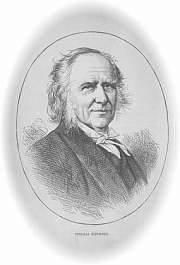
Men like Thomas Guthrie and William Wilberforce inspired a movement rooted firmly in Micah 6 v 8.  They called the church and nation to love justice, show mercy and walk humbly with the God of the Bible.  They wrote, they spoke, they preached, they persuaded and they campaigned for change to the way the poor were treated.  The work went on long after they were dead.  Their work changed whole communities, changed laws and changed the direction of our nation.  When Guthrie died in 1873 not only was education about to be offered to all, but thanks to Christian social reformers children were finally being offered protection and care instead of exploitation.  Men like Guthrie and Wilberforce were hated and opposed because they challenged the powerful vested interests in the alcohol and slave industries respectively.  But through all the challenges, they had an unquenchable hope in the redeeming gospel of the Lord Jesus Christ.  A hope that the most visionary and noble secularist cannot offer.  This is why secularism soon turns to pessimism.  As Blaikie says:

thomasguthrie2

Secularism may try to keep up its spirits, it may imagine a happy future, it may revel in a dream of a golden age.  But as it builds its castle in the air, its neighbour, Pessimism, will make short and rude work of the flimsy edifice.  Say what you will, and do what you may, says Pessimism, the ship is drifting inevitably on the rocks.  Your dream that one day selfishness will be overcome, are the phantoms of a misguided imagination; your notion that abundance of light is all that is needed to cure the evils of society, is like the fancy of keeping back the Atlantic with a mop.  If you really understood the problem, you would see that the moral disorder of the world is infinitely too deep for any human remedy to remove it; and, since we know of no other, there is nothing for us but to flounder on from one blunder to another, and from one crime to another, till mankind works out its own extinction; or, happy catastrophe! The globe on which we dwell is shattered by collision with some other planet, or drawn into the furnace of the sin.

It is the Christian gospel that has been the great agent of change in human history.  Has the church at times been corrupt?  Absolutely.  Has it at times disregarded the poor and even abused them.  Unfortunately, it has.  But what has been the fruit of the revival of true Christianity?  It has always been love, particularly for the poor.  The spirit of self-seeking is supplanted by the spirit of service and love.  Vice is replaced by virtue.  When men love God in sincerity, they will love their neighbour, particularly the poor and the outcast.  The church at its best lives by that early ‘mission statement’ in James 1 v 27 ‘Religion that is pure and undefiled before God the Father is this: to visit orphans and widows in their affliction, and to keep oneself unstained from the world.’  As Thomas Guthrie said about the kind of Christianity that brings transformation to communities;

We want a religion that, not dressed for Sundays and walking on stilts, descends into common and everyday life; is friendly, not selfish; courteous, not boorish; generous, not miserly; sanctified, not sour; that loves justice more than gain; and fears God more than man; to quote another’s words – “a religion that keeps husbands from being spiteful, or wives fretful; that keeps mothers patient, and children pleasant; that bears heavily not only on the ‘exceeding sinfulness of sin,’ but on the exceeding rascality of lying and stealing; that banishes small measures from counters, sand from sugar, and water from milk-cans – the faith, in short, whose root is in Christ, and whose fruit is works.


Your Father’s Side & The Family Name

It is hard to believe that we Hebrideans have any Viking DNA. I imagine that if a young Lewisman had ever said to his parents that he was off on a summer adventure to sack and loot, to raid and pillage, their reaction would almost certainly have been, ‘ach dè bhios daoine ag ràdh?’ What will people say? Surely marauding on this scale would reflect badly on them and therefore would have to be nipped in the bud.

‘What will people say?’ used to be the refrain of parents and grandparents in the island. Nowadays, people think of this attitude as narrow-minded, judgemental and stifling, but I think it helps to reflect a little on how it developed in the first place.

Your village was your world. The neighbours were as familiar to you as those who occupied the same home and shared the same surname as you. Besides, you didn’t go by your surname – you went by a patronymic, a chain of names stretching back into the distant past, connecting you to people you had never known. Perhaps you had some of their characteristics without knowing it. If you did, some cailleach in the neighbourhood would notice. ‘Iain Dhòmhnaill Sheumais used to walk like that’, or if she was feeling acerbic, ‘It’s a shame you took after your father’s side. Your mother’s people were good-looking.’

People knew one another inside-out, which meant knowing their history. Not just their personal history, either, but being able to place them in the context of their lineage. Forget Burke’s Peerage, your average cailleach had an encyclopaedic knowledge of her own people and those of her neighbours. It meant that they could see where your good points and your bad had emanated from. And so, your personal conduct would be added to that. The responsibility not to tarnish a good family name rested equally with each member, and each successive generation. Any deviant behaviour was likely to be dismissed as ‘rud a bh’ anns na daoine’ – a weakness in your people.

Now, of course, we don’t have villages; we have ‘communities’. Some are more community-minded than others and it’s not always the ones you think. I live in a rural village where there is quite a lot of Gaelic spoken and some crofting still taking place. You will even see the odd peat-stack. Nonetheless, when I was widowed, my immediate next-door neighbours visited, but no one else.

Had I lived fifty years ago, I would have been Banntrach Dhòmhnaill Chaluim and the neighbours might have rallied round; nowadays, I don’t have that comfort, or that status. I am not on their radar. People probably don’t even talk about me, no matter what outrageous – hypothetical – thing I do. It doesn’t matter to them because I am a stranger. Community in that sense has gone and many of us now seek that feeling of belonging and identity elsewhere.

For me, it has come from my church. I have been blessed with a close and supportive family, and my church family has been likewise.

My church family has at least as many quirks as my actual relatives. There are those who make you laugh, who laugh at you, who are always ready to help, who always want you to help, those who encourage and those who gently put you in your place. It has its father figures and mother hens, its bossy big sisters and cheeky wee brothers. This family has get-togethers and minor disagreements, outings and heart to hearts.

And this family knows its own heritage. When we are together, no one has to ask, ‘who do you belong to?’ We have the same father. He knows us all more completely than we know ourselves; and yet He loves us nonetheless. Each of us carries the unfortunate burden passed down from our first parents, and each of us has added some particular sins of our own. It is in our DNA to rebel.

Keeping together, though, returning often to our Father’s house, I think, is the only way we can refrain from bringing shame on the family. Reputation is very important when you are responsible for more than just your own. In God’s family, we need to reflect on our conduct more frequently, and ask the question again: ‘what will people say’? We have to fight against ‘rud a bh’ anns na daoine’.

Surely this is one setting where the ultimate goal is for everyone to see that we take after our Father, and that the family have care of each other. I hope that’s what people will say.