Keep the Faith for Sunday Best (Part 2)

This is the second part of a guest post by Andy Murray of Ragged Theology. Challenging and thought-provoking stuff as ever.

Men like Thomas Guthrie and William Wilberforce inspired a movement rooted firmly in Micah 6 v 8.  They called the church and nation to love justice, show mercy and walk humbly with the God of the Bible.  They wrote, they spoke, they preached, they persuaded and they campaigned for change to the way the poor were treated.  The work went on long after they were dead.  Their work changed whole communities, changed laws and changed the direction of our nation.  When Guthrie died in 1873 not only was education about to be offered to all, but thanks to Christian social reformers children were finally being offered protection and care instead of exploitation.  Men like Guthrie and Wilberforce were hated and opposed because they challenged the powerful vested interests in the alcohol and slave industries respectively.  But through all the challenges, they had an unquenchable hope in the redeeming gospel of the Lord Jesus Christ.  A hope that the most visionary and noble secularist cannot offer.  This is why secularism soon turns to pessimism.  As Blaikie says:
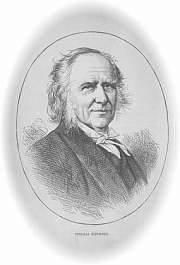
thomasguthrie2

Secularism may try to keep up its spirits, it may imagine a happy future, it may revel in a dream of a golden age.  But as it builds its castle in the air, its neighbour, Pessimism, will make short and rude work of the flimsy edifice.  Say what you will, and do what you may, says Pessimism, the ship is drifting inevitably on the rocks.  Your dream that one day selfishness will be overcome, are the phantoms of a misguided imagination; your notion that abundance of light is all that is needed to cure the evils of society, is like the fancy of keeping back the Atlantic with a mop.  If you really understood the problem, you would see that the moral disorder of the world is infinitely too deep for any human remedy to remove it; and, since we know of no other, there is nothing for us but to flounder on from one blunder to another, and from one crime to another, till mankind works out its own extinction; or, happy catastrophe! The globe on which we dwell is shattered by collision with some other planet, or drawn into the furnace of the sin.

It is the Christian gospel that has been the great agent of change in human history.  Has the church at times been corrupt?  Absolutely.  Has it at times disregarded the poor and even abused them.  Unfortunately, it has.  But what has been the fruit of the revival of true Christianity?  It has always been love, particularly for the poor.  The spirit of self-seeking is supplanted by the spirit of service and love.  Vice is replaced by virtue.  When men love God in sincerity, they will love their neighbour, particularly the poor and the outcast.  The church at its best lives by that early ‘mission statement’ in James 1 v 27 ‘Religion that is pure and undefiled before God the Father is this: to visit orphans and widows in their affliction, and to keep oneself unstained from the world.’  As Thomas Guthrie said about the kind of Christianity that brings transformation to communities;

We want a religion that, not dressed for Sundays and walking on stilts, descends into common and everyday life; is friendly, not selfish; courteous, not boorish; generous, not miserly; sanctified, not sour; that loves justice more than gain; and fears God more than man; to quote another’s words – “a religion that keeps husbands from being spiteful, or wives fretful; that keeps mothers patient, and children pleasant; that bears heavily not only on the ‘exceeding sinfulness of sin,’ but on the exceeding rascality of lying and stealing; that banishes small measures from counters, sand from sugar, and water from milk-cans – the faith, in short, whose root is in Christ, and whose fruit is works.
 

Did We Lose Our Sins in Translation?

Working in a Gaelic environment, I frequently hear obscure words being used. At least once a year, for example, a student will attempt to revive ‘fa-dheòidh’. I quite like it, but it creates much the same linguistic effect as if I were to pepper this blog with ‘forsooth’.

Recently, the minister, in throwing me a clan-based insult (yes, it still goes on, even all these years after Culloden), introduced me to the word, ‘eanraich’, which is apparently some kind of soup. It was – presumably – in regular use at one time along with ‘fa-dheòidh’ and other linguistic curiosities. When the social and cultural context for vocabulary goes, however, the words themselves swiftly disappear too. People no longer use horses for agricultural work, and so all the Gaelic terminology for a horse’s tack is redundant; likewise crofting, fishing and many other traditional practices besides.

Although you rarely hear it included in that category, churchgoing falls into the realm of traditional Gaelic culture. It had – and has – practices of its own, influences of its own and certainly vocabulary of its own. I know many Gaelic speakers who say that they can’t ‘follow’ a sermon in their own tongue because ‘the language is too obscure’. There certainly IS an ecclesiastical Gaelic, which employs words not in everyday use: ìobairt, ceusadh, aiseirigh, peacadh. I must confess a certain weakness, as it were, for ‘teachdan-geàrr’ And that is a play on words for my bilingual readers which would lose much in translation.

‘Sin’ loses quite a lot in translation too. The word, ‘peacadh’ in Gaelic is used virtually exclusively for the theological concept recognised by every dutiful Wee Free as ‘a want of conformity unto, or transgression of, the law of God’. In English, however, ‘sin’ came to be used in two ways – in ecclesiastical circles of course; but also in a superficial manner. It is not uncommon, for example, to hear non-Christians say, ‘it’s a sin to throw all that food away’, or ‘it’s a sin that Mrs MacLeod’s daughter doesn’t visit her’. The things being described as ‘sin’ frequently are, but the people who label them as . such don’t really mean it in the catechism, ‘want of conformity unto the law of God’ sense. They might just as soon have said, ‘it’s a pity’, or ‘it’s a disgrace’.

Recently, sin has been in the news. Oh, it’s there all the time, of course, but like its master, usually goes under a variety of pseudonyms. On this occasion, however, someone asked a politician whether he thought that homosexuality is a sin. When the journalist sensed prevarication, the politician was harangued and badgered. This happened repeatedly. If you are unfamiliar with the ways of the British media, let me tell you that politicians are not usually asked about sin – it is not one of the top ten issues in any election campaign.

So, Christians should be delighted that, at last, sin has made its way onto the political agenda, right? Wrong. It hasn’t. Tim Farron was only asked about sin because he’s a Christian, in the same way that a multi-millionaire might be asked about tax loopholes. The mainstream media sees Christianity as a weakness, something to humiliate believers with. After all, Farron was not asked about sin as such – he was asked whether he thought that something was one.

Christians are not actually required to have an opinion on sin, other than that held by a famously fiery preacher in the USA in the early 20th century. Calvin Coolidge, the notoriously monosyllabic president had been to hear the man preach. Attempting to draw Coolidge out, a friend asked what the subject of the sermon had been. ‘Sin’, replied Coolidge. Exasperated and wishing for more detail, the friend asked, ‘and what did he say about sin?’ To which Coolidge responded, ‘he said he was against it’.

Sin isn’t a matter of opinion. God has decreed what is an affront to Him, and Christians try to conform in obedience. If you want to know whether something is a sin, should your first port of call really be a sinner, albeit one saved by grace? Why ask fallible Farron, when the word of God is readily available to answer all such questions unambiguously?

Our tolerant, liberal, progressive society does not want the truth about sin. It could not handle the truth about sin. If the doubters opened their Bibles to Romans 3, they would read that ‘all have sinned and fall short of the glory of God’. Set within the wider scriptural context, this tells them everything they need to know about what sin is and, more importantly, what sin does.

It is uncompromising. We can’t debate, barter, bargain or otherwise spin our way out of sin. Something which is sinful cannot be made acceptable in God’s sight just because the world has winked at it. Tolerance, liberalism, progress – these three recognise no sin except one: calling something ‘a sin’. Christians have to be ridiculed, derided, silenced – they are the enemies of a progressive society. Yes, that’s what we have: progress. Who needs the Bible with its backward notions of sin? Humanity knows best, humanity will rule by its own lights. What could possibly go wrong?

Remember, humanity progressed itself right out of Eden.

Free Church Android

I have a friend who does not come from a Free Church background. Actually, I have many such friends. In fact, a lot of the people I grew up with have little or no church experience and absolutely no truck with Christianity. Many of them fall into what I think of as the Iain Crichton Smith category – having a pretty tired and hackneyed view of Hebridean Calvinism which is largely based on stereotypes that are no longer true (if they ever were). These stereotypes wear black hats and sombre faces; they shake their heads at mirth and sigh in response to vain worldliness. And they live in the imagination of people who ought to know better.

However, this friend has no such prejudices. She wandered into my life in a haphazard, vaguely work-related way. We hit it off over coffee (me – after all, I’m a neurosis-ridden Wee Free) and herbal tea (her – a bit fancy like that, what with being ‘from away’). One Sunday, I took her to a Gaelic service in the Seminary in Stornoway, which is nothing to do with training priests, despite the name.

And then she came along to some English services too. I was impressed at her tenacity because, the previous summer, on a reconnaissance visit to Lewis, she had been to such a service. The children’s address, about the irrepressible manse dog, had appealed to her, but the content of the sermon had not. She was discomfited, I gather. Now I can’t remember if I explained to her that this would usually be viewed as a good sign in the Free Church. Wallowing in comfort and self-satisfied complacency is not how a spiritually healthy clientele should be. The hard pews, the hard truth, the hard stare from the pulpit: they are all part of the strategy.

Some weeks ago, she and I met up with another friend of mine for dinner on a Wednesday evening. Yorkshire Lass asked Island Girl (yes, I’m aware that they sound like runners in the 3:15 at Aintree) whether she would be coming with us afterwards to the prayer meeting. Island Girl laughed in a mildly hysterical way, ‘On a Wednesday!? No way!’ And so I had to explain why Wednesday was a ‘thing’, whilst simultaneously reprimanding Island Girl for allowing her daft Leodhasach hang-ups to emerge in front of a visitor from the Real World.

Yorkshire Lass has experienced much of what Free Church life has to offer. She has heard fine preaching, beautiful psalm singing, shared in prayer meetings and witnessed the Lord’s Supper being dispensed. This month, she was astounded by the groaning food table at our congregational fellowship. We have experienced the Harris conference together, and the WFM annual dinner. I know she has made lasting friendships besides my own.

Just before our recent ‘off-peak’ communion, she asked whether it would be ok if she attended the Saturday preparatory meeting. When I answered in the affirmative, she said, ‘what do people do who don’t have a you to ask these things?’, as if I’m some kind of Wee Free Siri. A faulty one, at any rate, but perhaps more reliable than Wikipedia.

The fact of the matter is that most people here in Lewis do have plenty people they can ask. They won’t, though, because they’ve already had their heads filled with daft rules. Wednesday night meetings are for communicants only, preparatory services are likewise for the converted . . . the list goes on. Worse, though, is the idea that you may not be welcome, or that people might judge you if you haven’t been to church for a while. They picture it being like the saloon bar in a John Wayne film where the stranger enters and many hostile eyes turn to stare. Wee Frees are gloom merchants and their churches oppressive places. Probably the minister will thump the pulpit, shout a lot about hell and maybe even castigate the newcomer for their sinful lifestyle and lax conduct.

Yorkshire Lass had no such preconceived notions. She came with an open mind and an open heart, but with no very positive formative experience of Christianity. Here in Lewis, she has met Christians whose faith is not about a series of formal steps, but is a living reality. They are far from perfect, but they are authentic. Christ is the centre of their lives. I see my brothers and sisters now through her eyes, as well as my own.

For me, meeting her has been a gift. She may do funny things with nettles, but she has given me the ability to see the Christian heritage of Lewis as something precious. We so often have to defend it against prejudice from within our own community. People get hung-up on the ouward badges and rituals of church life. In her, coming with the heart of a child, to ask questions in good faith, I see Him. I always believed that He had brought her to Lewis so that she might be among some of His believing people. In my blindness, I failed to realise just how much of a blessing her presence might be to us. To me, anyway, because in answering some of her questions, I am answering my own.

When you remove all the inside track stuff that needs explaining – who is allowed to go where, when do we stand and when do we sit – there is only one truth anyway. Christ reigns over all, and His people have been released from bondage.

There is also only one church after all: His, and it is most entirely free.

Your Father’s Side & The Family Name

It is hard to believe that we Hebrideans have any Viking DNA. I imagine that if a young Lewisman had ever said to his parents that he was off on a summer adventure to sack and loot, to raid and pillage, their reaction would almost certainly have been, ‘ach dè bhios daoine ag ràdh?’ What will people say? Surely marauding on this scale would reflect badly on them and therefore would have to be nipped in the bud.

‘What will people say?’ used to be the refrain of parents and grandparents in the island. Nowadays, people think of this attitude as narrow-minded, judgemental and stifling, but I think it helps to reflect a little on how it developed in the first place.

Your village was your world. The neighbours were as familiar to you as those who occupied the same home and shared the same surname as you. Besides, you didn’t go by your surname – you went by a patronymic, a chain of names stretching back into the distant past, connecting you to people you had never known. Perhaps you had some of their characteristics without knowing it. If you did, some cailleach in the neighbourhood would notice. ‘Iain Dhòmhnaill Sheumais used to walk like that’, or if she was feeling acerbic, ‘It’s a shame you took after your father’s side. Your mother’s people were good-looking.’

People knew one another inside-out, which meant knowing their history. Not just their personal history, either, but being able to place them in the context of their lineage. Forget Burke’s Peerage, your average cailleach had an encyclopaedic knowledge of her own people and those of her neighbours. It meant that they could see where your good points and your bad had emanated from. And so, your personal conduct would be added to that. The responsibility not to tarnish a good family name rested equally with each member, and each successive generation. Any deviant behaviour was likely to be dismissed as ‘rud a bh’ anns na daoine’ – a weakness in your people.

Now, of course, we don’t have villages; we have ‘communities’. Some are more community-minded than others and it’s not always the ones you think. I live in a rural village where there is quite a lot of Gaelic spoken and some crofting still taking place. You will even see the odd peat-stack. Nonetheless, when I was widowed, my immediate next-door neighbours visited, but no one else.

Had I lived fifty years ago, I would have been Banntrach Dhòmhnaill Chaluim and the neighbours might have rallied round; nowadays, I don’t have that comfort, or that status. I am not on their radar. People probably don’t even talk about me, no matter what outrageous – hypothetical – thing I do. It doesn’t matter to them because I am a stranger. Community in that sense has gone and many of us now seek that feeling of belonging and identity elsewhere.

For me, it has come from my church. I have been blessed with a close and supportive family, and my church family has been likewise.

My church family has at least as many quirks as my actual relatives. There are those who make you laugh, who laugh at you, who are always ready to help, who always want you to help, those who encourage and those who gently put you in your place. It has its father figures and mother hens, its bossy big sisters and cheeky wee brothers. This family has get-togethers and minor disagreements, outings and heart to hearts.

And this family knows its own heritage. When we are together, no one has to ask, ‘who do you belong to?’ We have the same father. He knows us all more completely than we know ourselves; and yet He loves us nonetheless. Each of us carries the unfortunate burden passed down from our first parents, and each of us has added some particular sins of our own. It is in our DNA to rebel.

Keeping together, though, returning often to our Father’s house, I think, is the only way we can refrain from bringing shame on the family. Reputation is very important when you are responsible for more than just your own. In God’s family, we need to reflect on our conduct more frequently, and ask the question again: ‘what will people say’? We have to fight against ‘rud a bh’ anns na daoine’.

Surely this is one setting where the ultimate goal is for everyone to see that we take after our Father, and that the family have care of each other. I hope that’s what people will say.

Cracking Pots & Wee Free Code

Those who are out both ends, and follow this up by coming out on a Wednesday night, are often expected to go forward. In the Free Church in Lewis at least, this has been the time-honoured course of things. It is code for regular attendance at Sunday services, leading to appearances at weekly prayer meetings, culminating in a profession of faith.

The fact that we have our own terminology surely suggests that it’s of some cultural significance. A social anthropologist would call it ‘ritual’, which word on its own used to be enough to make any respectable Wee Free faint. ‘Ritual’ evokes images of candles and altars, and . . . I’ll stop there out of respect for any of my denomination who might be reading this in possession of a pacemaker.

It is, however, a cultural norm. Not one set in tablets of stone, though. Contemplating going forward, I used to think of all the things I’d be more comfortable doing. Having a chemical peel, bathing the cat, parachuting out of a plane . . . and I settled it with myself that I wouldn’t – couldn’t – do it. You see, I had an image of what it was going to be like. Let me paint you a picture . . .

I knock on the door of the session room. The hubbub of voices from within ceases immediately. There is a long pause. Heavy, Calvinist footsteps. With a creak, the door opens a fraction.
‘Yes?’ the elder says. He doesn’t smile. Their smiles have been left on the pegs outside, along with the black coats and hats.
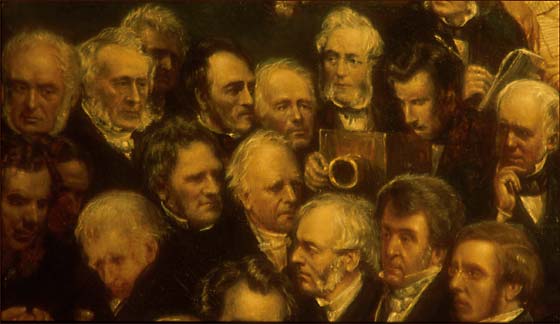
In a tiny voice, I mumble my desire to profess faith. A moment of silence, then a long, drawn-out sigh. The door is opened wider. Behind him, I see a scene exactly like David Octavius Hill’s famous Disruption painting. My eye falls on the minister, who is looking at me in disbelief.
‘You? Really? I mean, really – you?’ he asks incredulously, as the whispers of, ‘who is she?’ rise to a crescendo behind him . . .

IMG_0475

My horrified imagination would go no further and I nursed the label, ‘secret disciple’ to myself. Our cultural norms give you plenty opportunity to justify secrecy. There was, historically, a strange sort of almost-pride in not going forward. It was suggested that such and such a person ‘could’, or even ‘should’. No one ever said it explicitly, but it was always implied that what kept them back was a kind of superior humility – oxymoron, if ever there was one. Nevertheless, secret disciples were a thing and I could be one.

The Lord was having no more of my nonsense, though, and smacked me between the eyes with two truths. First, if He has healed you, you have to tell. Second, if He is everything to you, you must be ready to defend that hope to those who do not yet possess it. And he smoothed my path to obedience. Going forward was not a grim ordeal. There was no one there from the 19th century, but instead a group of Christian men wishing to welcome another person into the visible family of God.

Last Sunday, our church commemorated the Lord’s Supper again. Many outside of this situation misinterpret it. They think those who sit at the Lord’s table see themselves as beyond reproach, perfect and holy. In reality, those who partake of the sacrament do so because of their imperfection, their awareness of the sin that is woven into every fibre of their being. God, we are told, is of purer eye than to bear looking at our sinfulness. We, on the other hand, are of such a sinful heart that we cannot fully appreciate His purity.

Yet, in this sacrament, we are given the chance to contemplate it more deeply.

What a privilege you deny yourself by hanging back. The Kirk Session is not a Heavenly court; it is a group of sinners saved by grace. If you have submitted to your Father in Heaven, what is stopping you from telling them? We allow cultural norms to over-complicate what is actually very simple.

And if the Free Church gets anything right, it is simplicity.

Christ did not ask His church to have lavish festivals in order to commemorate Him; He doesn’t need candles, or gilding, or acres of flowers: His beauty is in His love for us; His love for us is manifest in His sacrifice. That, He asks us to remember.

And how? We are told to remember Him in the two simple elements of bread and wine. These are broken and spilt, as His flesh was broken and His blood spilt for us. His people share these things in communion with one another and their Saviour. To sit at His table is to say that you belong to Him, that you wish to come apart from the world, to die to self, and to identify your life with His.

A perfect man or woman would not need Christ. There is real beauty, therefore, in imperfection – He is the golden weld that mends the pot of clay.