Out of the depths, o Lord

The news that Charlie Kirk had been shot, and the subsequent update that the injury was fatal, cast a gloom over much of the western world on Wednesday night. Like many, I prayed that he would survive, but it was not to be.

So, did the God in whom he so unswervingly believed fail Charlie? That is what the crowing mobs – and, sickeningly, yes, there are such people – would tell you. They are always there, in every disappointment, every terminal diagnosis, every loss, every bereavement, jabbing their fingers and asking, ‘where is your God now’?

He is closer to the broken hearted than any atheist would believe. Indeed, closer than any Christian who has not yet been broken can comprehend. The late Queen, quoting indirectly from Dr Colin Murray Parkes, famously said that ‘grief is the price we pay for love , but I would add – from my own experience, no less – that God’s comfort is the dividend of faith. I have no doubt that the believing family and friends of Charlie Kirk are experiencing that God, and that comfort more viscerally now than ever in their lives before.

‘Pain’, said CS Lewis, ‘is God’s megaphone to rouse a deaf world’, and so maybe this personal, human tragedy for Charlie’s family should be regarded as a wake-up call to the rest of us. The political responses have been predictable: hunt down the person responsible and deal with him as punitively as the law allows; suppress the far left: in short, meet violence and lack of understanding with more violence and lack of understanding.

This is not the way. Any hopelessness that I feel in the face of this tragedy does not stem from a questioning of God, but of the depressingly unchanging way in which people are responding. Yes, it may be possible to locate the gunman . . . and then what? Does dealing with what may be an act of unwarranted inhumanity from someone ideologically opposed to Charlie Kirk end the problem? Of course it does not. The world’s way, as we are seeing daily, is to meet brutality with brutality. We talk more than ever before about understanding, about kindness, and about walking a mile in the other guy’s shoes – but I don’t think this world has ever contained less comprehension of love than it does at this moment.

There is, of course, a way through; there is always a way through if we are prepared to humble ourselves. Therein lies the rub, however. We have made gods of ourselves, of our desires, of our feelings. Nothing must be allowed to hurt me, or even contradict me. If you doubt my word, or dare to pose a counterargument, you are not merely disagreeing, but hating. In their populist stupidity, successive governments have tried to legislate for petted lips, for offended sensibilities, and now stand amidst the wreckage, wondering who to blame.

Blame us, then, the creatures who have tried in vain to usurp our Creator. We did this. Our relentless pursuit of power and glory has wreaked interminable havoc. Ultimately, we tried to run this world on a rogue operating system, having tried every which way to disable the pre-installed software. And we have catastrophically failed.

That, atheists, is why people die in pointless wars and human conflict, and why every day is peppered with innumerable acts of cruelty and depravity, inflicted on one set of human beings by another. It is the reason why, no matter how well-intentioned we think we are, nothing goes to plan. And when – if – the person whose bullet killed Charlie Kirk is found, we still won’t be satisfied. Don’t look for justice in a world that no longer recognises truth, that no longer cares whether a person or an act is good or evil, as long as it aligns with their own world view. We, each of us, think of ourselves as the plumbline for everything: does it sit true against my ideology? No? Ah well, it must be wrong.

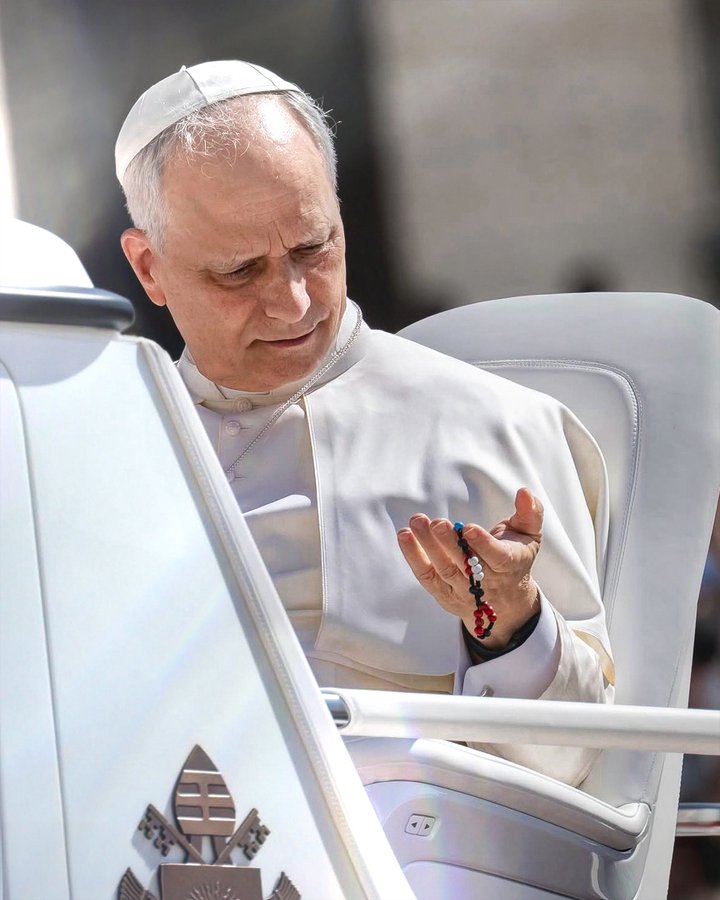
This is no nihilistic assessment of world affairs. It is a call, not to arms, but to peace. I was so moved by the words of Pope Leo (yes, Proddies, him again) earlier in the week in describing the role of tears in situations such as this one. Weeping is not a sign of weakness, but of strength; Christ cried out on the cross to his Father, and that type of anguished plea can be understood, the Pontiff said, ‘as an extreme form of prayer’.

Sometimes, love has no other outlet than to shed tears. I think we have now reached that point as a world. Cry, then, from the depth of your hearts, to the God of all comfort, because he understand us – better, even, I think – without words. 

Popes, Presbyterians and Piety

I have long been a connoisseur of quality bodaich and despite my upbringing and cultural leanings, it was somewhat inevitable that I should add the new Pope to my collection. It’s stretching the definition a little to include a sprightly fellow in his late sixties, particularly when it had been considered that his ‘youth’ might work against him in the conclave. Nonetheless, I’m counting him in.
Now, what is it, you may well ask, that appeals to a Leòdhasach of Calvinist leanings about the head of the Roman Catholic church? Please don’t write in, but here it is: his faith. I mean, yes, he’s photogenic and highly entertaining with his high-fiving, pizza-scoffing, baseball-signing ways. Nuns squeal with delight in his presence, and he has been gifted a truly sensational number of hats and cuddly toys, signalling a general acceptance that he is a cutie pie of the squishiest kind. And yes, I am well aware that this is not quite how the Westminster Confession of Faith refers to him.
But, here’s the crux. If we are Christians, ultimately we are only concerned with one thing: the increase of the Kingdom. Aren’t we? Doctrine has its place, of course, but when you see people who profess Christianity – Protestant or Catholic – wielding points of doctrine and even of liturgy and tradition as a means to gatekeep salvation . . . well, I am reminded of the good sense of God that he didn’t leave it in our hands.
I mean, I have thought for years what a shame it is on us that an island like Lewis hosts so many different (but not) denominations. You can’t get an onion-skin page of your Bible between any two of them in matters of doctrine and confession, but they have put supreme effort into locating even one difference that mandates them to sit in a separate, three-quarters empty building. Never mind that we do not have enough preachers, never mind that increasingly elderly congregations are burdened with heating and lighting churches across the island when we could probably all fit into one or two.
And if our hearts were fixed upon the love and joy of the Lord, that’s exactly what would happen. We’ve all read the revivalist accounts, where people couldn’t bear to be parted from one another, so continued praising God into the wee hours.
Now, we not only put up walls, but we form whole new denominations to show just how wrong those others are. Not us, obviously. We all think we’re worshipping the right way. It started off with eschewing the bells, smells and statues of the Catholic Church. And since then we have divided and subdivided so many times that we’ve now resorted to separating over what kinds of songs are sung in praise of God.
Chan ann san aon àite a tha an olc. This is not just a Calvinist thing. Since finding myself on the RC side of social media (this happens when you follow the Pope’s every move like a fangirl) I have read an awful lot of self-righteous nonsense from Catholics too – only the priest should hold his palms upwards when praying, the Eucharist should be placed directly on the tongue and not into the hands . . . Mo chreach, with all the petty bickering about the correct way to worship, I’m inclined to think that we have more in common than we might care to admit.
Which is my point here. There is one Redeemer, and he is the one route to Heaven. When he comes back to claim his church, I don’t think he’s going to sift us by denomination. Call me bold, but I don’t even think he’s going to ask us which songs we used to praise him, how we held our hands, and if we used beads, prayer cards, or candles. Faithful women who went hatless are probably not going to be counted less than hard-hearted ones who covered their heads.
Unless I have been on a very misleading path all this time, it is not about any of the trappings. God gave us something that is, yes, undoubtedly, mysterious, and in many ways beyond our comprehension. But, more importantly, he gave us something so simple that a child can understand it; indeed, he said that WE must become like children to receive it. Not by squabbling over ritual, and certainly not by telling each other we’re damned because of the way we stand, or kneel, or wear our hair.

No, we must receive his free gift as he offers it. Complicating it is a sin because it may act as a stumbling block to someone else. What is wrong with us when we tell others that they cannot be saved because they have a statue of Mary, or because they allow musical instruments in their churches? Shouldn’t we be saying, ‘never mind HOW you worship, as long as your worship is of him, and for him’? Why aren’t we hungry and desperate to share our loaves and fishes with a multitude?
Yesterday, I watched Pope Leo preside over Mass with a group of people, described in the Vatican briefing as ‘the poor’. The Pontiff urged us to make no difference in our hearts, or in our dealings, between those who minister to people in need, and the needy themselves. Each, he said, meets Christ in the other.
Perhaps I am naïve. There’s a good chance this blog will be taken as further evidence that women are silly about doctrine and definitely shouldn’t have a voice in their churches. Nonetheless, in a world that is buffeted by the enemy, I think we should focus more on being Christlike – as the Pope has modelled throughout his life – saying little, but being and doing what we ought, witnessing effectively in faith. I prefer the white martyrdom of Leo XIV to the whited sepulchres that would damn us all on a technicality.

I’m not religious, but . . .

If the recent discussion of Tesco’s proposed Sunday opening in Lewis is anything to go by, people are pretty selfish. It’s basically been a rehash of Lanntairgate and that perennial favourite, Swimmingpoolgate. Even the arguments are versions of the usual thing: ‘we need to be like everywhere else’ and, in the case of the sports centre, ‘we need to be like Uist’. Smaoinich. It’s on us the two days have come when we can aspire no higher than that as Leòdhasaich.

Now, it’s already been established that the mighty supermarket is a business and, as such, couldn’t really give a stuff what we islanders think. Though they don’t exactly have a monopoly, they also know that we don’t exactly have a lot of choice when it comes to buying the messages. Therefore, Tesco can do what it likes.

Tesco can change the character of the Lewis Sunday without so much as a by-your-leave. Keep that in mind for a moment.

Now take a look at the pitched battle on social media between the pro and anti-opening lobbies. On the pro side, you will see one refrain repeated often: move with the times. Ah yes, the times. The times we live in, which we have every reason to be proud of – the times in which wars are fought over land, the times in which little children die, fleeing their despotic countries, the times in which politicians lie and defraud us. The same times – closer to home – in which old ladies are terrorised by kids who should be at home, in bed; in which respect seems to have died the same death as shame; and in which parents abdicate responsibility for the feral conduct of their offspring. Mmm hmm, those times sure are worth living up to.

The counter-argument and, as far as some of us are concerned, the clinching one, is that Christ said the very opposite. And, even if you’re not a believer, his teaching is worth paying heed to on this. He told his followers not to be conformed to the world. In other words, he exhorted them to keep to the path of truth and right. If he was here at this moment, I am pretty sure he would be reminding us of something important: the Sabbath was made for man, not the other way round. 

What does that mean? Well, it means that the day of rest was created for the benefit of all humanity – not just professing Christians. So, think on that, if you’re one of the ‘you do you’ brigade. And perhaps also consider this from a different perspective to your opinion on whether or not YOU want the supermarket to open on Sundays. Think of the staff whose families will have to make the sacrifice so that you and I have the option of maybe, occasionally, if the need arises, perhaps, nipping to Tesco once in a blue moon if we want.

Is it really worth it? Are we so utterly sure of our own judgement that we are happy to end a particular way of life simply because a corporate giant wishes it. In fact, if their local manager’s statement is anything to go by, this is being proposed because Tesco is too tight to build a bigger store with more parking. The idea, the demand, has not come from the customers. Yet, we are content to allow a company which offers a cut-rate service to alter the very character of our community.

That’s what this comes down to. And the ‘what about visitors’ defence is an extension of the ludicrous way our islands are being run. Where else would you have business interests trampling so blatantly over the local culture with no one to defend it amongst our local leadership? It’s staggering to me that some islanders and island residents are content to let this just be imposed by commercial concerns.

But, then, I’m often fairly shocked by what islanders are willing to permit.

Like many commentators on social media, I’m not religious either. Religion is often the enemy of Christianity and of common sense. It is not religiosity that makes me wish to see the Lewis Sabbath unaltered, but my personal experience that its rest is a godsend. For me, that is a literal thing. However, whether you believe it was ordained by the Lord, or not, the benefit derived from a universal day free from the obligations of commerce is undeniable.

People, community, culture are more important than trade or mere convenience. But once those precious things are altered, they cannot be put back the way they were.

Free trolley image“/ CC0 1.0

A Birthday Tribute

Today, had things gone to plan, I would be celebrating my husband’s sixtieth birthday with him. When I say ‘plan’, I mean ours, not the eternal one. And it has, at times, been a bitter pill to swallow that this isn’t a mistake, or an aberration of some kind – this is precisely what was meant to be. Donnie was meant to die five months short of his fifty-second birthday, and I was meant to be a widow at thirty nine.

I accepted this because, well, I accept the sovereignty of God. And, most of the time, I accepted his wisdom and his goodness. Yet, I am human and sometimes it was hard not to dwell on what I had lost, and on what Donnie would miss out on by dying so young. One of the hardest things was a school photo of his that surfaced on social media, shortly after he died – seeing him as a cute, wee boy with all his life ahead of him . . . it was almost unbearably poignant.

I used to comfort myself with the idea that the grief would get easier, which it does, mostly. What I didn’t know was that it would still wash over me in waves that sometimes feel, even now, like they might utterly engulf. It made a friend laugh recently when I told her that, after he died, I used to wish it was five years in the future so that things would be easier, better . . .

That would be 2020, then, year of Covid. I think Donnie himself would laugh at my unfortunate wishful timing.

On what would have been his sixtieth birthday, therefore, I simply want to pay tribute to a quietly wonderful man. He would never have allowed it had he been here, but there’s no one to stop me singing his praises now.

He proposed to me while wearing a Santa suit – fittingly, as being his wife was without doubt the greatest gift he could have given me. The proposal was cemented initially with a locket he’d bought me because he’d lost his nerve in Ernest Jones after going in to buy a ring. ‘I don’t know what an engagement ring looks like’, he said, as though the whole thing would have been a thorough mystery to the jeweller as well.

Usually he didn’t balk at buying me presents other men might consider embarrassing. I think the ring was different because it symbolised something so important. Donnie understood what mattered, and to him, at thirty nine, this was a big step. The day we went to the manse to discuss the service he was nearly delirious with nerves. Somehow, I think he had it in his head that the minister would catechise him or something. These nerves carried on right up to the big day itself, when only a stern ‘don’t you dare’ from his big sister stopped him from being sick!

It’s funny to think back on how he reacted to these small pressures because, when the ultimate test of his mettle came, we all saw the man he was, and none more than me. He faced his initial diagnosis matter-of-factly, endured treatment with stoicism, and looked upon the end of his life with total reconciliation. If he shed a tear he never did so in my presence, and all his worries were for me – would I be financially secure, would I be taken care of. When I told him that I would be alright, that I would not give way to despair, he seemed surprised at the very idea that I might.

His faith, you see, was far ahead of mine. He was only concerned with practical things, things that he could do for me – things he felt he SHOULD do for me, even at the end. The rest, well, he knew he was leaving that in safe hands.

How often I have imagined his wry comments and mischievous smile over the last eight years. He would have had much to say about world events and local politics. A mild-mannered fellow most of the time, he would have erupted into protective fury at some of the situations I have found myself in – but, then, most of these wouldn’t have happened in the first place had he been here. From almost the first moment we were together he made me feel safe, cared for, and like the most precious object in the world. I was first in everything, the apple of his eye.

Of the few regrets I harbour, one is the fact that many special people who have come into my life since then never knew him. He would have loved them as I do, I’m sure. In moments of weakness, I regret that he will never again insist on running me a bath, or pouring me a glass of wine because I’ve had a hard day. Donnie was the sort of man who filled my life with small kindnesses – flowers from the supermarket, my favourite chocolate, compliments and, though I can scarcely remember why, frequent expressions of gratitude.

Known in his own family as ‘Dòmhnall Beag’, and sometimes just ‘Beag’, I never knew a man of greater moral stature. He genuinely never put anyone ahead of himself, and his first instinct in every time of trouble was to ask what he could do. His bravery, for a man of any size, was titanic.

After he died, I read the diary he’d been keeping in his last months. It was entirely filled with reflections of gratitude and love, just as his life had been. He broke me with this entry, however: ‘I hope Catriona meets someone who will be good to her. She deserved so much more than this’.

The thing is, a Dhòmhnaill, you set the bar impossibly high; I don’t believe there could be more than we had. And though there are days I wish God’s plan had aligned a little more closely with ours, I can hardly be surprised at his haste to bring you home.

Whenever I’m cast down by the way his plan unfolded, or am tempted to question providence, I look at all he has given me, and it is well, it is well with my soul.

Of cemeteries and the death of respect

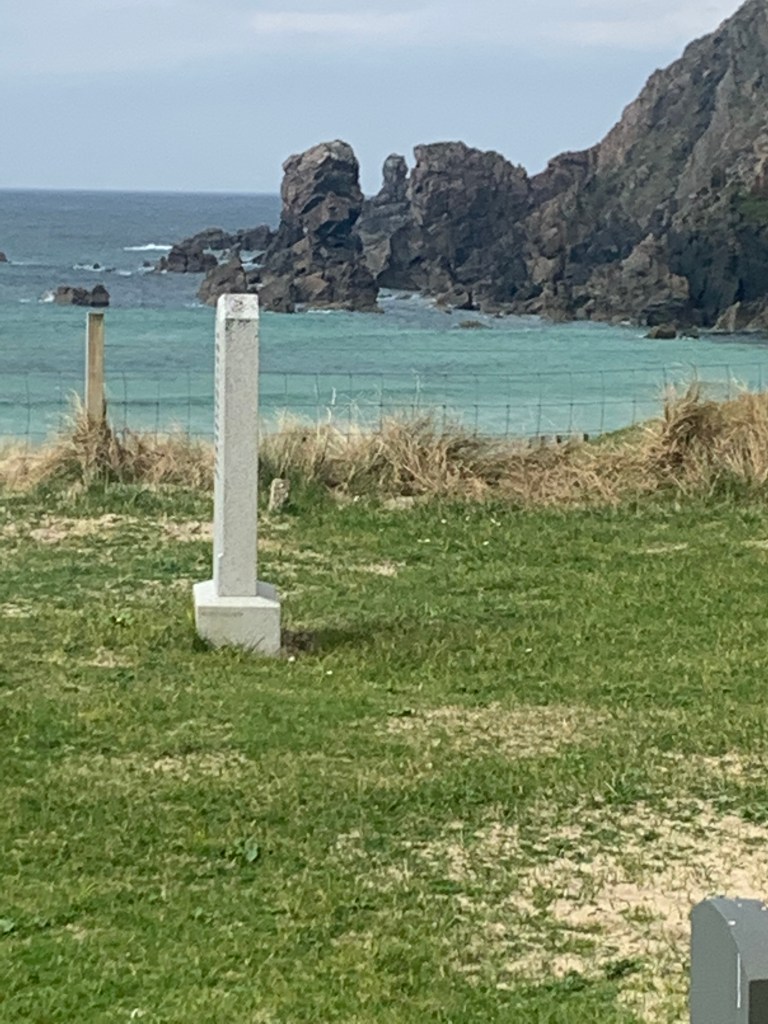
There are two things we used to do well in these islands – death and respect. I remember being at a funeral many years ago and, returning to my car afterwards, passing the local primary school. It was lunchtime, the children were in the playground, and they were absolutely silent. The janitor had seen to it that they were aware of what was happening and how they should behave.

A playground filled with children can behave better, it seems, than the adults frequenting Luskentyre.

Then again, it isn’t entirely the fault of tourists. They are bombarded with images of empty beaches, of empty roads, and the likes of Calmac irresponsibly using words like ‘playground’ to describe a place that is actually a living, working community. That is, a community in the true sense of the word, filled with people whose roots go generations deep, and whose ancestors are buried in the sandy soil of places like Luskentyre and Dalmore.

Unfortunately, these cemeteries, where, respectively,  my grandfather’s people are interred, and where my own father is buried, are adjacent to beaches that people want to visit. This means car parking – and the mundane reality of funerals or mourners visiting graves must not interfere with the Instagram plans of the tourist. Signs reminding folk that some spaces are for cemetery-users only are blithely disregarded. All inconvenient truths go the same way. And the justified backlash from islanders has – unbelievably – met with a mixed reception.

It’s all about respect, you see, and that’s a rare commodity these days. So many (and I don’t say all) visitors display a sense of entitlement that leaves no room for consideration of the fact that this is home to some of us. I have seen the same sort of thing in my own community, where a simple request to respect the cemetery road was not met with the expected, ‘oh, gosh, I’m sorry it’ll never happen again’, but a quite sensational display of me-before-you-ness. Rights trump right for people like these – and I’m afraid the only proper response is to curtail them until the lesson is learned. You cannot appeal to their better nature, nor yet shame them, apparently, and so the only remedy is to put physical barriers in their way.

Not only do I think that cemetery carparks should be kept for cemetery visitors, but I think a message needs to go out about other expressions of respect. Perhaps think about not drying your clothes on the cemetery fence, not tethering your tent to the cemetery wall, and not conducting raucous gatherings within earshot of visiting mourners.

These things are much harder to police because, well, if adults need to be told that this sort of thing is wrong, I feel they may be beyond the reach of improvement.

If you are a visitor, or newcomer to the island, and you’re reading this, I have a wee tip for you: follow what the islanders do. I mean this especially in relation to funerals and cemeteries in this instance, but it’s not a bad watchword for island living in general. We islanders love our home, and we respect it – we have never felt ownership or entitlement because, as any islander will tell you, we belong to it, not the other way around.

The Luskentyre campaign is more important than some seem to realise, not least – apparently – our elected representatives. This is a test case to see whether our councillors and other local leaders are actually prepared to put community first. I hope they too remember a time when this basic level of respect didn’t have to be asked for; I hope they’re not expecting us to beg them to enforce it. 

The Luskentyre campaign is being led by women, and they are still waiting for the support of their council, which is still run by men. I make no comment on what that says about local leadership because you can see that for yourselves.

Hebridean Revolution, Anyone?

It’s a wonderful thing for a repressed, subjugated and delusional Hebridean woman like myself to know that the mainland has got my back. There are tourists who have visited ‘the isles’ (and renamed them), maybe twice, who can confirm that we’re talking nonsense about the ferries. Much like the chair of transport (I refuse to use ‘transportation’ until he’s in charge of actually sending folk to Botany Bay) at the Comhairle, our mainland protectors can confirm that Calmac are actually doing a brilliant job. So, presumably those Uibhistich marching in Glasgow were labouring under some mass shared delusion.

Despite the direct action taken by our formidable deasach cousins, and despite the Annie Macsween MBEs, and Màiri Vs, and Cathy Bhàns, yet another patronising non-islander was decrying our inability to ‘step up’ as Hebridean women. We are, she opined, under the cosh of . . . yes, yes, the church. She had tried to persuade some girl guides to stand for elected office, she said, when ‘on’ Harris ten years ago, but they merely listened quietly.

Probably for the best. I can only imagine what they were thinking.

However, I’m not a polite wee girl guide, so I’m quite prepared to share my thoughts on all of this. In fact, despite being a Hebridean woman and a communicant member of the sinister man-cult that is the Free Church, I’m going to tell you EXACTLY what I think.

I think we have had it up to our submissive eyes with mainlanders who think they know better than we do how these islands should be run. In fact, as a demure Presbyterian, I stamp my sensibly-shod feet in frustration at the fact that we still play their game – everything run from Edinburgh and London, and a handful of us begging to be allowed on quangos that decide every last thing that influences life here in our communities.

We are a super-regulated region, the Highlands and Islands. Our language, our land use, our economy, our transport – but we have to scrabble for a seat at the table. How many Gaelic-speakers are on the board of HIE? Is one Crofting Commissioner from the Western Isles sufficient for the area with the highest concentration of crofts? Why is Bòrd na Gàidhlig’s main office in Inverness, and not Ness? How many islanders on the Calmac board?

Good grief, why don’t we wake up? While we’re defending ourselves for there being no women on the Kirk Session, and being told our ferries aren’t broken, these islands are being remade in an image that has nothing to do with who we are.

Earlier in the week, I broke my own rule and replied to an obnoxious comment on a social media post about camper van drivers feeling unwelcome in the Hebrides. The mainland-based expert in this case was pontificating that ‘islanders think the islands belong to them’.

Not so, sir, we don’t. No islander would ever talk about ‘my/our island’ in the sense of ownership. We belong to whichever island on which we were born, not the other way around. 

With that bond goes a sense of responsibility, of stewardship.

And it is to that we must step up – men AND women – so that our land, our language, our economy are shaped as we would want, we who love and understand this place, and who have to live with the consequences.

Besides taking over the boards, trusts and commissions that take the decisions, islanders and their Highland counterparts, ought to read up on the Crofters’ Party. I think, instead of being a minority voice in mainstream political parties whose HQs are invariably urban, the time is absolutely ripe to create a political party from within the region. It has been done before to great effect.

We are not a problem to be solved, we are a community on the cusp of finding its voice.

Cymbals, symbols . . .

The coronation service for King Charles III was exactly like a typical Free Church service. Okay, there was a bit more cloth of gold, a few extra nods to pomp and circumstance, and an awful lot more women in evidence, but otherwise it was just like being in any Wee Free emporium throughout the land.

The other way in which it was like the Free Church was the way in which sung praise ran like a golden thread through the entire proceeding. Yes, there was a choir, and what psalm 98 calls ‘jubilant song with music . . . music to the Lord with the harp, with the harp and the sound of singing, with trumpets and the blast of the ram’s horn’. It may not be the exact same tradition as ours, but really, what do mere traditions matter if the purpose behind all the clamour is the whole Earth singing to the Lord?

There was the familiar benediction, of course. Our fellows might not wave their hands about quite so much, but the words, the meaning – the intention – is surely the same. It was a service of worship, not of the newly crowned monarch, but his God. Many scoff at the sheer scale and expense of such ceremonies, but it is an unparalleled opportunity to place before the world this timely reminder: God, and he only, is sovereign. Earthly kings may rule, but by his grace alone, and not by anything in themselves, however exalted the family

God is the subject of our worship, whether we are the highest of High Anglican, or plainest of Free Church and all the offshoots thereof. The beautiful sounds that filled Westminster Abbey on Coronation Day testify to that fact. With my personal knowledge of the Lord, I’m inclined to believe that he’s more occupied with the origin of praise than the look of the thing. He’s an inside dealer, pleased – I am given to understand – by the intention of the human heart to glorify him. That being said, he’s almost certainly as pleased with Hubert Parry’s work, or Wesley’s, or Gobha na Hearadh’s as that of King David.

Yes, the psalms are extraordinarily beautiful and wise, speaking into every aspect of the human condition. It is hardly surprising that so many later works, those we consider ‘hymns’, are reworkings of, or meditations on, the work of the shepherd composer.

But David – mercifully – did not have a monopoly on praising God. All his creatures are called on to do likewise. Possessing zero musical aptitude, and almost no creative impulse, I am unlikely ever to write a hymn of praise for him myself. I can (barely) croak those composed by others, however, and depending on the content, and the state of my heart at the time, I can mean every word.

Nonetheless, some people are gifted in that way, and CAN compose beautiful hymns to God. Their words can articulate what the likes of me could never hope to do on our own. They don’t take anything away from the psalms of David; God’s glory, surely, is so great that we will never run out of praise. Indeed, the spiritually mute such as I am search in vain for ways to articulate our love, our gratitude, our imperfect recognition of all he is.

The book of psalms is not big enough. Those who love God want to say so in their own words. They want to sing the psalms, and they want to uplift their voices and their instruments in a myriad of ways to heaven.

When Lewis was blessed with spiritual revival, the people were loathe to part. They met late into the night, and they walked each other home, over and over. There were prayers, of course – ex tempore, not read – and there were readings of scripture. Psalms were sung, but so were hymns, old and new. 

If revival is the outpouring of God’s grace on an undeserving people, then their worship is surely a paean of praise to him, wherever it takes place. And if that praise was good enough on the hillsides, and by the roadsides, why would it not be deemed fit for formal worship?

What, even, is ‘formal  worship’? Please don’t write in – I actually know the answer. Organised, public worship has to follow some kind of form, even an unreasonable harridan like me sees this.

But if the structure is more important than the subject, if the formality trumps the  authenticity, it is not worship. However much we may grow attached to traditions, they are not more important than liberty of spirit; however much we may love the brethren, their preferences do not come before the free and honest worship of God.

Psalm 100 says, ‘Worship the Lord with gladness; come before him with joyful songs’. The psalmist’s vision does not prescribe the songs, but the spirit. Joy, love, peace, forbearance, kindness, goodness, faithfulness, gentleness and self-control come from there, not from blindly clinging to traditions that serve only to keep us comfortable.

Remember Him; He Remembers You

It took the Isle of Lewis a hundred years before it was able to publicly acknowledge the loss of HMY ‘Iolaire’ on the first day of 1919. Things that are true of us individually also tend to be true of communities, so I think I understand a little about the stopper we sometimes place to hold at bay such grief as cannot be borne all at once.

Now that the bottle has been opened, though, we will not stop remembering. The ‘Iolaire’ has been written about, broadcast about and memorialised in a myriad of – as far as I can tell – uniformly tasteful ways. Those doing these things are, after all, a part of the story themselves. They are almost always of this community, and so theirs are the gentlest hands to tend a wound in which they share. 

One of the most notable aspects of the post-centenary period for me has been the freedom to mention the ‘Iolaire’. For a long enough time, it was rarely spoken of, and never at all by those who had survived its wreckage. I was maybe eight or nine years old when my mother told me about it and I experienced a sensation I was to have many times in relation to our own history as islanders: why is this not known? The question was, more properly: why is this  not taught as history?

The answer, of course, is, in the case of the ‘Iolaire’ that Leòdhasaich don’t regard it as history. Yes, it happened 104 years ago and no, there are none alive today who lived through these events. Nonetheless, we bear the marks of it in the shared experience of being islanders.

I like that we loan our minister out each year on the anniversary, to preach words of comfort at the service of remembrance. It gives me a sense of security to know that we islanders are still inclined to look to God for meaning in tragedies that we cannot otherwise understand.

Remembering past griefs is part and parcel of welcoming a new year, of course. For those who experience loss, it is never truly history – just as this community continues to be affected by the ‘Iolaire’, we each carry our private bereavement with us always. And, just as with the ‘Iolaire’, I don’t know how I could do that apart from God. He is in the present with me, comforting and upholding; but that would not be nearly such a blessing if he wasn’t also present in my remembering.

What I mean is that when I look back and recall those I have loved and lost, I don’t see it as pure, meaningless grief. Bereavement is not arbitrarily inflicted by an unfeeling deity, rather, he shares in our sorrows all the way along. So, when I remember my husband, or my father, or my granny, I don’t feel a sense of deprivation – because God is in it all.

Sometimes people do things that hurt us, and we cannot understand why they have behaved as they do. It may well be that even someone you considered a friend might treat you in ways you cannot understand. And, sadly, that can be because they actually meant to hurt you, or they are simply careless of your feelings. With God, however, we can be sure that even those things which rip our hearts open are not inflicted in order to cause pain.

Whoever you are missing this New Year, look back and know that Christ himself sorrowed in your loss, and at the necessity of death itself. But then, look forward, and see him in your future also, leading you ever closer to a reunion with himself, and your loved ones who fell asleep in him.

We freeze Wee Frees who have Christmas trees

There’s a Scottish  gritter that has been christened ‘Wee Freeze’. Well, I say ‘christened’ but surely everyone knows the Wee Frees don’t go in for that sort of carry-on. We’ve never been much for laughing either. After all, mirth may lead to dancing, and dancing to goodness knows what else. (The reason we don’t know what else is largely because Wee Frees have no imagination, Calvin not having been very keen on them either).

This has obviously led to hilarity about the gritter not going out on Sundays. Of course, if the comedians really knew their Wee Frees, they’d actually be expecting it to appear twice on the Sabbath, and again on a Wednesday night. In fact, if Wee Freeze was a Lewis-based gritter, it would be doubly useful, being more than likely out both ends.

All in all, though, we are regarded as joyless miseries, however frequently we’re out. This perception is compounded at this time of year by our failure as a denomination to officially mark Christmas. It’s not for the reasons you might think, either – we were against it long before the invention of tinsel and crackers. I hate to blame everything on Calvin but, well, he was generally opposed to the church doing anything for which there wasn’t a specific biblical warrant.

As a child, I saw lovely Anglican services on the tv (yet it never exploded into flames) and couldn’t understand why some churches were all about the choirs and candles, while we resolutely averted our eyes in the Free Church. I asked at least once and was told that it was because Christ’s death was the crucial thing, the thing he asked us to commemorate. My childish logic answered this with, ‘but he couldn’t have died if he hadn’t been born first’.

And, you know, I wasn’t wrong. Not only was I not wrong, but in fact I was treading unwittingly on a profound truth. He came into this world in order to die. Christmas sometimes glosses over this, or airbrushes it out, opting instead for a narrative that says this baby’s birth brought the world hope and peace . . . Well, yes, indeed it did – but the fulfilment of those things depended entirely on his willingness to die.

He died, not just in the literal sense either. Christ was entitled to glory and honour; Christ IS glory and honour – but made himself of no reputation for our sake. His humble birth, his humble life, the fact that he really was despised and rejected, homeless and, when the chips were down, friendless, all point to a man who truly sacrificed himself in life and in death. 

I am trying very hard this Advent to find that Christlikeness in myself. It’s sadly lacking, and I know it. Recently, a passive-aggressive letter I received suggested that what I write publicly shows me in a better light than my actual lived conduct. Yes, I know. In fact, I try to acknowledge this in all that I DO write. It is not my intention to portray myself as perfect – who would believe it, and what would it prove if they did? 

Being a Christian is not all about my conduct, though I should keep a check on that, without doubt. It’s about who I trust, who I place my faith in, who I look to for strength when I’m failing, or when strangers write only to tell me how bad I am.

This week, my thoughts for Advent are being broadcast on Radio nan Gàidheal. I have spoken about the waiting that is at the heart of Christmas, yes, but also of the Christian life more generally. We wait, not as the shepherds or the wise men waited all those years ago, but as those who know the Saviour for whom we are keeping vigil. 

He is making his way back to us. We know this because we know him, and he has promised. I take comfort in my waiting that he doesn’t expect to find me ‘a perfect Christian’, but an earnest one, whose whole hope is founded on him.

That, I can promise, I am. And so I say, ‘O come, o come, Immanuel, and ransom captive Israel’.

Crofts, Crofting and Councillors

If I live long enough to become an old woman, I hope to do so independently. That’s how I live now, and though it wasn’t entirely a matter of choice, I can’t deny that it has its blessings. My home belongs to me and I arrange it the way I want. When I close that door, no matter what horrors lurk outside, nothing much can bother me here.

It’s a house full of memories. I enjoyed almost twelve happy years of marriage here. Indeed, I was proposed to in this house. 

But, if I reach a stage of infirmity where strangers have to care for me, my house will eventually be sold to foot the bill. This home that I have loved, that I would give up willingly to no man, would become the property of Comhairle nan Eilean Siar.

There is nothing particularly outrageous or immoral about this. No local authority is so rich that it can fund limitless care for an ageing population. If outrage and immorality have any place in the debate, they have to appear a little higher up the chain of command. The financial assets of the person in receipt of care inevitably get cashed in to pay expenses incurred.  It’s just the way it is.

Some councillors, however, argue that crofts ought to be exempt from this. They wheel out the expected arguments: protect the heritage of crofting; ensure succession within crofting families; crofting is unique . . .

And it all sounds very worthy. Until you remember the prices that some crofts – bare land or with a dwelling house – have been fetching on the open market. Then you might wonder why the Comhairle should treat crofting like a sacred cow when absolutely no one else does, least of all some crofters themselves. 

Which brings us to one of the great unanswered questions of our age: what IS a crofter? At the moment, it’s defined as anyone holding the tenancy of a piece of land legally recognised as a croft. It doesn’t matter whether that person spends every waking moment tilling the soil and tending livestock, or whether they once visited the place when their granny was alive and got boxed by a ram . . . in the eyes of the law, s/he is a crofter.

So, the law, sir, is an asal. It’s the only conclusion we can come to. The crofter with sheep and hay and turnips gets the same protection as the one planning to sell granny’s acres to a housing developer. 

For, the law doesn’t define crofting, really. It defines ‘croft’ and it defines ‘crofter’, but not the verb. Therefore, we are bound by laws designed to protect a  nineteenth-century subsistence lifestyle that no longer exists. It is  actually an obscene warping of the ideals set out in the 1886 Act that croft land has become – to many, though not all –  nothing more than real estate. 

I understand where the councillors are coming from when they suggest tenancies not be regarded as assets. They cite some vague notion of crofting having a worthiness all of its own. There’s a general agreement that it’s part of our heritage, that we have a duty to protect it, and to stop the Comhairle’s finance department getting its mucky paws on granny’s lot.  

But why, when the minute granny is laid in the dust, her heirs will flog it for the most they can get, and pocket the cash? If I was the Director of Finance, I’d feel pretty darn cheated, I can tell you. 

I don’t think, taking fiduciary responsibility and common sense into account, councillors ought to even try taking the local authority on this particular guilt trip. As surely as Chamberlain looked at ‘national affairs through the wrong end of a municipal drain pipe’, I’m afraid these fellows are doing much the same in trying to make their local council carry the burden for national legislative failure.

In the process of depriving the municipal purse, they will also create a two-tier citizenry. And they still won’t be able to define what crofting is . . . which makes all the words about its importance and the case for protecting it ring a little hollow.